




Art Deco Powder Dish
An art deco powder dish sits on the dressing table to hold vanity accessories, bringing period geometry and figural charm to the room.
Art Deco Powder Dish
An art deco powder dish takes the form of lidded bowls, trinket boxes, and vanity jars designed for the dressing table. These pieces emerge predominantly from the 1920s and 1930s, capturing an era of distinctive design.
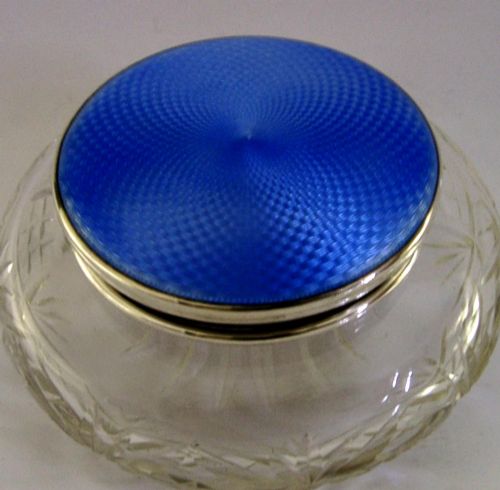
Many examples on this page feature ceramic or porcelain bodies, often topped with figural half dolls representing flappers, bathing belles, and pierrots. Other variations combine cut glass and sterling silver with coloured enamel lids.
Materials and construction
Makers utilised ceramic, porcelain, and glass to form the bowls and jars, applying glaze, gold leaf, and gilt for surface decoration. Metal elements frequently involve sterling silver paired with translucent or opaque enamel.
Figural pieces combine moulded porcelain or ceramic bases with hand-painted details on the half doll lids. Glass vessels rely on pressed or cut techniques, occasionally enhanced with silver mounts.
Listings combine ceramic, porcelain, glass, and sterling silver materials originating from the 1920 and 1930 periods.
Markers of distinction
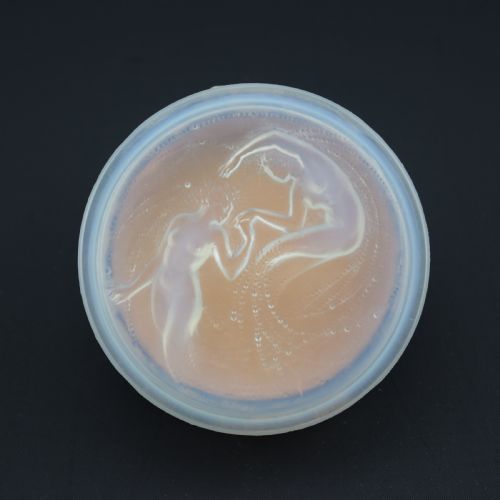
Quality rests in the crispness of the moulding and the precision of the hand-painted enamelling on figures and lids. Finer pieces display careful detail in the facial expressions and attire of the flappers, jesters, and nymphs.
The weight and clarity of the cut glass, alongside the thickness and hallmarks of the sterling silver mounts, separate standard production from superior examples. French and German porcelain manufactories also influence the standing of a piece.
René Lalique·Limoges
The Art Deco Powder Dish Glossary
- Half doll
- A ceramic or porcelain upper figure without legs, made specifically to sit atop the lid of a powder box or brush set.
- Flapper
- A cultural archetype of the 1920s depicting young women with modern bobs and distinct fashion, frequently modelled on ceramic powder box lids.
- Sterling silver
- A silver alloy containing 92.5 percent silver by mass, often utilised for the lidded mounts on cut glass dressing table jars.
- Enamel
- A glassy substance fused to the surface of metal through firing, providing coloured decoration on silver box lids.
- Gilt
- A thin layer of gold applied to the surface of porcelain, ceramic, or metal to add metallic highlights.
Art Deco Powder Dish: Frequently Asked Questions
What were powder dishes used for?
These vessels held loose cosmetic powder on dressing tables before the advent of modern compacts. Women used powder puffs to apply the cosmetic during daily grooming.
They also served as general receptacles for small trinkets and pins, doubling as decorative items in the bedroom.
How do I date an art deco powder dish?
Most pieces originate from the 1920s and 1930s, aligning with the height of the Art Deco movement. Silver mounts often carry hallmarks that reveal the exact year and assay office of production.
Stylistic cues, such as flapper clothing and geometric mouldings, help narrow the timeframe alongside maker marks on the base of ceramics.
Are these pieces French or German?
Both nations produced significant quantities of these vanity items, with distinct regional characteristics. French examples often hail from Limoges or feature glass by Lalique.
German manufactories frequently produced the figural half doll porcelain boxes depicting pierrots, jesters, and bathing belles.
How should I display my powder dish?
Place the dish on a dressing table, vanity, or sideboard where the lid design remains visible. Pairing glass pieces near natural light highlights the cut patterns and enamel colours.
Ensure the surface is stable and away from heavy traffic to protect delicate porcelain half dolls and silver rims.