


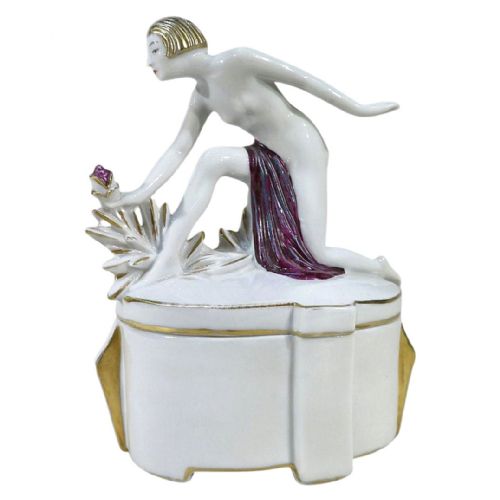

1930s Porcelain Vanity Jar
These charming 1930s porcelain vanity jar selections bring authentic Art Deco character and practical dressing table storage to your home.
1930s Porcelain Vanity Jar
A 1930s porcelain vanity jar encompasses a variety of ceramic and porcelain powder bowls, trinket boxes, and figural powder puff stands designed for the dressing table. Most pieces encountered on this page originate from France, Germany, and Austria, reflecting the vibrant European ceramic output of the period.
The dominant aesthetic across these objects is strict Art Deco design, frequently featuring figural representations such as flapper girls, bathing belles, jesters, and pierrots. These vessels served both a decorative purpose as vanity accessories and a practical function for holding loose powder or small trinkets.
How they were made
Makers utilised porcelain and earthenware as the primary ceramic bodies, shaping them into bowls, jars, and half doll figures. These pieces were then finished with glaze and hand-applied enamel colours to achieve the distinct Art Deco palette.
Many examples incorporate gilt, gold leaf, and fabric elements to accentuate the theatrical and decorative qualities of the figural lids. The combination of moulded ceramic and delicate surface detailing defines the manufacturing standard of the decade.
The listings on this site show production exclusively dated to the 1930 period, featuring porcelain, ceramic, earthenware, and fabric.
What varies in quality
The sophistication of the modelling distinguishes standard production pieces from finer studio and factory outputs. Sculptural fidelity in the figural lids, particularly the facial expressions and dress details of the flapper girls and bathing belles, dictates the upper tier of quality.
The execution of the enamel painting and the application of gold leaf or gilt create visual separation across the range. Finer examples display precise brushwork and well-preserved glaze surfaces that retain their original lustre.
Fasold & Stuach·Limoges
The 1930s Porcelain Vanity Jar Glossary
- Art Deco
- A design style spanning the 1920s and 1930s characterised by stylised motifs and geometric symmetry. This movement heavily influenced the vanity accessories and figural ceramics of the period.
- Porcelain
- A ceramic material made by heating raw materials to high temperatures, resulting in a vitrified, white body. It provides a smooth surface ideal for detailed enamel decoration.
- Earthenware
- A porous ceramic body fired at lower temperatures than porcelain. It forms the structural base for many figural powder boxes and decorative bowls.
- Half doll
- A ceramic torso without legs, commonly manufactured in the 1930s to adorn powder boxes, tea cosies, and whisk brushes. They often depict fashionable women of the era.
1930s Porcelain Vanity Jar: Frequently Asked Questions
What is a 1930s porcelain vanity jar used for?
These vessels were originally designed to hold cosmetic face powder, puffs, and small jewellery on a dressing table.
Today, they function as decorative objects that add period charm and enclosed storage to a modern interior.
How do I identify a 1930s vanity jar?
Look for characteristic Art Deco styling, figural lids depicting flapper girls or bathing belles, and European manufacturing origins.
The use of glazed porcelain, earthenware, and hand-applied enamel further anchors these pieces to the period.
Where were these vanity jars made?
The listings on this page show production primarily centred in France, Germany, and Austria.
Renowned porcelain hubs and specific makers from these regions produced the distinctive figural and lidded bowls.
How should I display a powder bowl?
Place them on a dressing table, mantelpiece, or glass-fronted cabinet where the figural lid can be admired.
Keep them away from direct sunlight and high-traffic edges to protect the delicate enamel and gilt surfaces.