

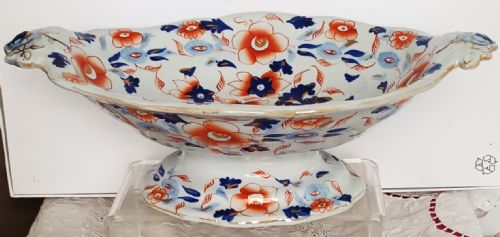
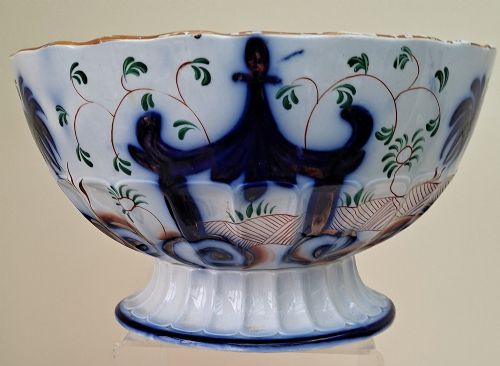


Porcelain Pedestal Fruit Bowl
These porcelain pedestal fruit bowl examples bring centre-stage height to a table, pairing raised basins with footed stands across various periods.
Porcelain Pedestal Fruit Bowl
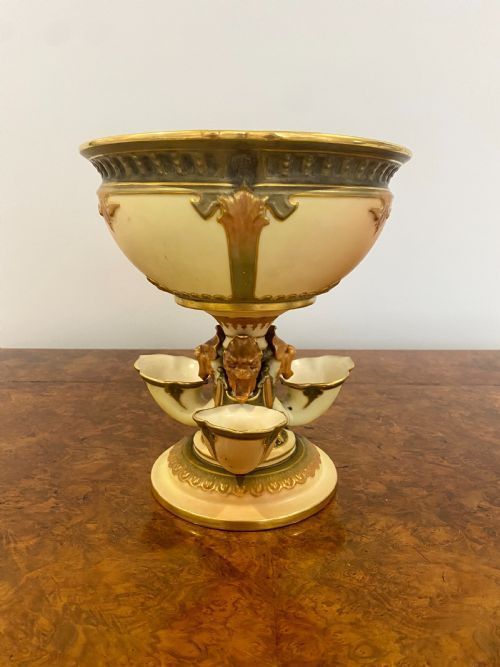
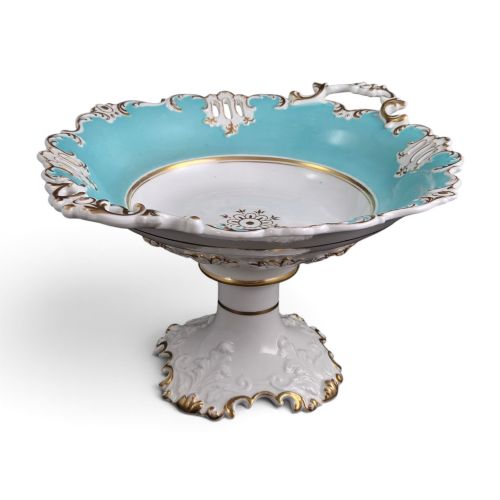
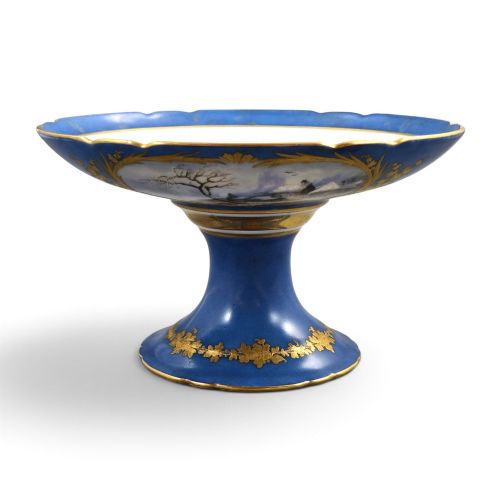
A porcelain pedestal fruit bowl elevates fruit and table arrangements upon a distinct foot, stem, or base. Pieces answering to a porcelain pedestal fruit bowl on this page include comports, tazzas, and large centrepieces dating from the Georgian, Victorian, and Edwardian eras.
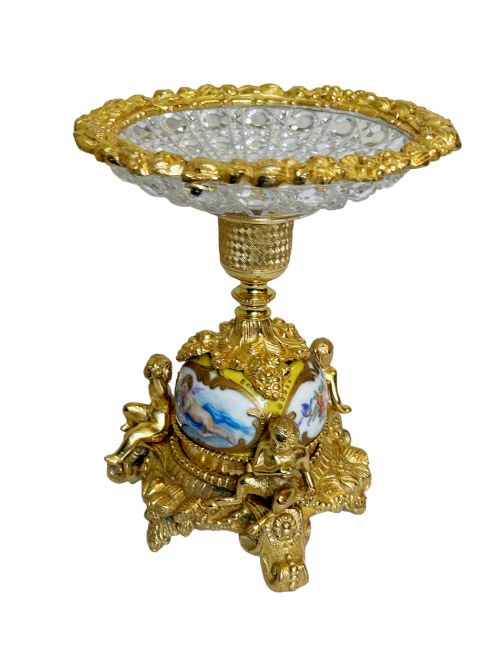
The forms range from footed ironstone comports and Chinese Canton pedestal dishes to elaborate German and English porcelain centrepieces adorned with cherubs or applied roses. Many examples serve as decorative centrepieces, utilising elevated bowls for display rather than everyday dining.
Makers and factories such as Coalport, Sèvres, Minton, Royal Worcester, and Schierholz Plaue produced these footed vessels. Materials span bone china, earthenware, and ironstone, often enriched with gilt and enamel detailing.
Distinctions in quality
The refinement of the modelling separates standard utility wares from exhibition-quality centrepieces, particularly where sculptural figures like cherubs or applied flowers are present. Crisp definition in the hand-painted enamels and the precise application of gold leaf indicate superior craftsmanship.
The structural balance of the pedestal and the purity of the porcelain body, whether bone china, ironstone, or hard-paste German ceramic, dictate the overall standing of the piece. Factory provenance, such as work by Sèvres, Minton, or Coalport, further distinguishes finer examples.
Porcelain Pedestal Fruit Bowl Retail Price Guide 2026
Typical asking prices for porcelain pedestal fruit bowl among the pieces listed under this phrase on Sellingantiques today, from the lower quarter to the upper quarter. They describe what is for sale here now, not the wider market.
Several Victorian centrepieces feature small cherubs clinging persistently to the stems.
Coalport·Sèvres·Royal Worcester·Minton·C.G. Schierholz and Sohn
The Porcelain Pedestal Fruit Bowl Glossary
- Comport
- A shallow bowl raised on a high foot, traditionally used for serving fruit or sweetmeats at dessert.
- Tazza
- A small, broad, saucer-like dish supported on a stem and foot, often used interchangeably with a comport.
- Ironstone
- A heavy, durable type of earthenware patented in the nineteenth century to imitate porcelain.
- Putti
- Depictions of plump, naked infants, frequently used as sculptural supports on nineteenth-century centrepieces.
- Gilt
- A thin layer of gold applied to the surface of the porcelain or metal mount for decoration.
Porcelain Pedestal Fruit Bowl: Frequently Asked Questions
What is a porcelain pedestal fruit bowl used for?
These elevated vessels served primarily as table centrepieces for displaying fruit or confectionery during formal nineteenth-century dining. Their raised profile allowed them to sit above other table settings for visual impact.
Today, they function as standalone decorative objects or centrepieces for sideboards and dining tables. They remain suited for holding fruit or floral arrangements.
How do I date a porcelain pedestal fruit bowl?
Dating relies on factory marks, ceramic bodies, and decorative styles such as Rococo Revival or Aesthetic influences. Nineteenth-century pieces often feature impressed or painted maker ciphers on the base.
The choice of material, from early ironstone and bone china to later German porcelain, helps narrow the decade of production. Stylistic details like hand-painted panels or transfer-printed patterns also anchor pieces to Georgian, Victorian, or Edwardian periods.
Are these bowls safe for serving food?
Most antique pieces use historical glazes and enamels that may contain lead or wear down with modern acidic foods. Gentle hand washing preserves the delicate gilt and enamel work.
Collectors generally use them for dry display rather than practical dining service. This prevents scratching the glaze or damaging applied decorative elements like roses and cherubs.