




Porcelain Jar Lamps
Porcelain jar lamps are converted vessels offering atmospheric light and hand-painted glaze work, suited to traditional and eclectic rooms alike.
Porcelain Jar Lamps
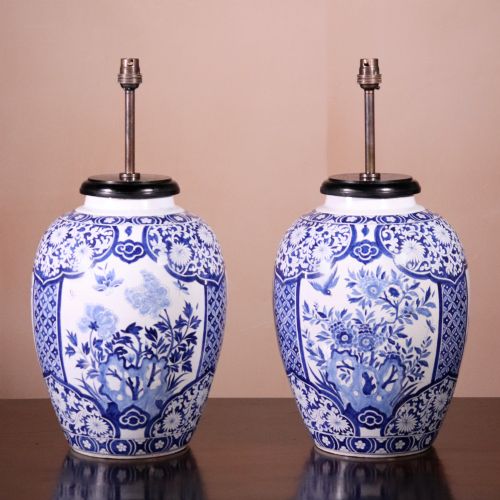
Porcelain jar lamps represent a fusion of historic ceramic containers and functional lighting, turning decorative vessels into structural bases. When searching for porcelain jar lamps, collectors encounter lidded ginger jars, baluster vases, and spill vases adapted into table lamps. These pieces originate predominantly from nineteenth-century Chinese export workshops, alongside eighteenth-century European examples and Japanese production from the Edo and Meiji periods.
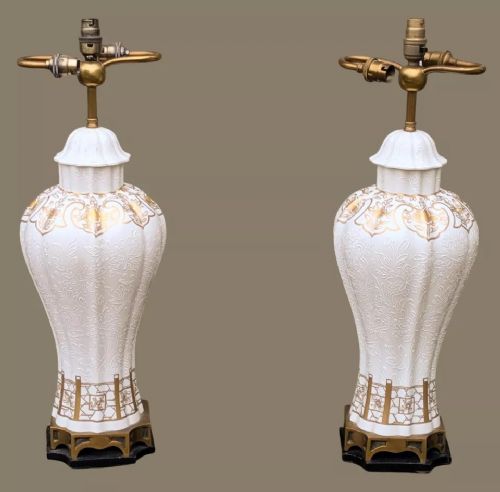
The domestic selection on this page relies heavily on nineteenth-century Chinese blue and white porcelain, alongside famille rose and celadon palettes. Pairs feature frequently alongside substantial single statements, often mounted on brass, wood, or gilt ormolu bases. The forms range from compact ginger jars to monumental vases carrying Chinoiserie, Qing dynasty, or Japanese Kutani and Imari decorative schemes.
Materials and Construction
The primary bodies utilise high-fired porcelain, tin-glazed earthenware, and Paris porcelain, hand-painted under or over the glaze with cobalt, enamel, and gold leaf. These ceramic bodies are subsequently mounted with brass, ormolu, and wood to secure electrical fittings and provide stable feet.
Lighting assemblies are completed with fabric and silk shades, designed to sit atop the converted vase bodies. The conversion process often integrates drilled holes or specialised collar mounts to preserve the integrity of the original ceramic vessel while adapting it for interior table use.
Listings feature eighteenth and nineteenth-century pieces alongside early twentieth-century examples, incorporating brass, silk, and ormolu.
Judging Quality
Quality rests upon the crispness of the hand-painted brushwork and the depth of the glaze, whether handling the cobalt of blue and white wares or the layered enamels of famille rose. Superior pieces display precise control over firing temperatures, resulting in vibrant colour separation and minimal distortion in the ceramic body.
The sophistication of the metal mounts distinguishes finer examples, where cast brass or gilded ormolu work matches the scale and period of the porcelain. Integration of the lamp fittings into the vessel without compromising the historic ceramic body marks the work of skilled workshops.
The Porcelain Jar Lamps Glossary
- Chinoiserie
- European artistic styles reflecting Chinese motifs and decorative techniques. This aesthetic dominated eighteenth and nineteenth-century design, influencing both imported porcelain and domestic European production.
- Famille Verte
- A ceramic palette dominated by green enamels, developed during the Qing dynasty. This palette includes iron red, blue, yellow, and black to create complex polychrome scenes.
- Famille Rose
- A ceramic classification defined by the presence of opaque pink or purple enamel, introduced in the eighteenth century. It allowed for delicate shading in floral and figural depictions.
- Ormolu
- Gilded bronze mounts used to decorate and elevate the status of porcelain vessels. These mounts frequently secure the base and neck of converted lamp bodies.
- Imari
- Japanese export porcelain decorated in underglaze blue, iron red, and gold. This style was produced extensively for Western markets during the Edo and Meiji periods.
Porcelain Jar Lamps: Frequently Asked Questions
How do I clean a porcelain jar lamp?
Dust the ceramic body gently with a soft, dry cloth to prevent accumulation in textured areas or around mounts. Avoid using harsh chemical cleaners that might damage overglaze enamels, gold leaf, or aged metal fittings.
Keep fabric and silk shades separate during cleaning by brushing them lightly with a soft attachment. Ensure the lamp remains unplugged throughout the cleaning process to protect electrical components.
Are these lamps safe to use with modern electricity?
Many historical lamps undergo rewiring to meet modern safety standards while retaining their antique bases. It is advisable to have a qualified electrician inspect older wiring before daily use in the home.
Check that the bulb wattage matches the specifications of the lamp holder to prevent excessive heat near the porcelain and mounts. This preserves both the delicate glazes and the surrounding fabric shade.
How can I tell Chinese export porcelain from European copies?
Chinese export pieces typically display specific clay characteristics, glaze pooling, and hand-painted nuances consistent with Qing dynasty or earlier kilns. European equivalents, such as Paris porcelain or Samson wares, often exhibit distinct paste formulas and lighter or more uniform potting.
Examine the base for potting marks, foot ring finish, and the integration of any metal mounts. Stylistic clues in the enamel application also help distinguish between regional traditions and revival periods.
Can I replace the lampshades on these bases?
Replacing the shade is straightforward provided the fitter matches the harp or gallery dimensions of the original mount. Selecting silk or fabric textures that complement the colour palette of the jar enhances the visual balance of the piece.
Consider the scale of the jar body when choosing a shade height and diameter to maintain proper proportions. A well-proportioned shade directs light effectively while showcasing the painted motifs on the porcelain.