


Porcelain Figure Candle Holders
Porcelain figure candle holders bring sculptural theatre to a mantelpiece, combining figurative modelling with functional illumination.
Porcelain Figure Candle Holders
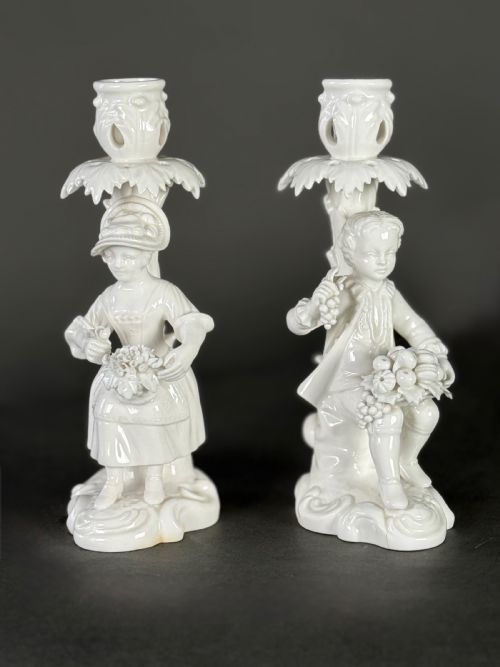
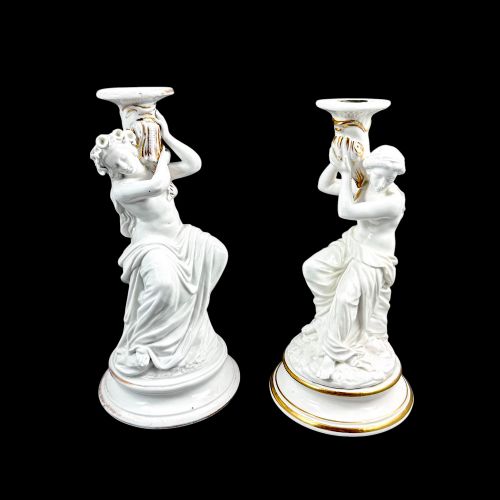
Porcelain figure candle holders combine modelled human, animal or allegorical figures with sockets for wax lights. These pieces span the eighteenth and nineteenth centuries, taking forms from single chambersticks to grand pairs of candelabra.
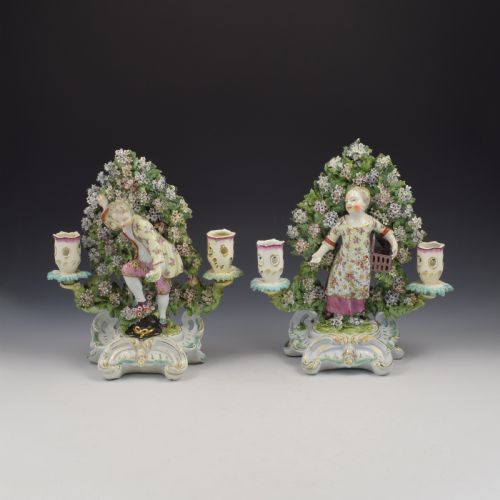
The selections here range from Georgian bocage pieces depicting musicians and dancers to Victorian and later continental examples. Eighteenth-century models often present figures framed by foliage, while later nineteenth-century pieces lean towards ornate rococo revival or neoclassical schemes.
Materials and construction
Makers utilised both hard-paste and soft-paste porcelain, shaping the bodies through intricate moulding and hand-modelling. Fragile details such as applied leaves, blossoms and bocage backgrounds required immense skill to assemble before kiln firing.
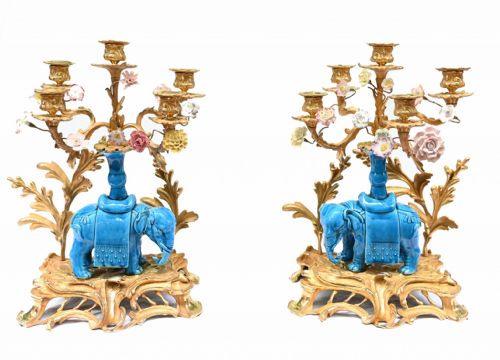
Surface decoration relied on hand-painting with enamel colours alongside application of gold leaf and gilding to accentuate robes, bases and sconces. Some pieces incorporated metal mounts or ormolu to support the ceramic branches.
Listings feature hard-paste and soft-paste porcelain pieces spanning the Georgian, Victorian and later nineteenth-century eras.
Assessing quality
Quality rests primarily in the crispness of the modelling and the delicacy of the hand-painting on the figures' faces and garments. Superior pieces retain their intricate bocage work largely intact without extensive restoration to the fragile applied petals.
The weight of the porcelain and the precision of the gilding further distinguish standard production from exceptional factory output. Matching pairs with original sconces and clear factory marks command greater attention from serious collectors.
Derby·Sitzendorf·Royal Worcester·Minton·Meissen·Chelsea·Bow·Dresden·Volkstedt
The Porcelain Figure Candle Holders Glossary
- Bocage
- A decorative background of carved or modelled foliage and leaves behind a figure. It is typically applied to eighteenth-century porcelain pieces.
- Hard-paste porcelain
- A durable ceramic paste composed of kaolin and petuntse fired at high temperatures. This material resists scratching and shows a bright white finish.
- Soft-paste porcelain
- An artificial ceramic body fired at lower temperatures than hard paste. It possesses a warmer tone and a softer glaze surface.
- Candelabra
- A branched candlestick holding multiple lights. These often incorporate figural shafts and elaborate foliate arms.
- Chamberstick
- A short portable candle holder fitted with a pan to catch dripping wax and a ring handle. They were used for carrying light through a house.
Porcelain Figure Candle Holders: Frequently Asked Questions
How do I clean antique porcelain candle holders?
Use a soft dry brush to gently remove dust from the intricate folds and bocage leaves. Avoid submerging antique pieces in water, particularly those with delicate painted enamels or gold leaf.
For stubborn marks, use a damp cloth with mild soap, testing a small hidden area first. Pat dry immediately with a lint-free cloth.
Were these figures meant for daily use?
Wealthy households utilised these pieces for formal dining tables and drawing rooms during the evening hours. They provided functional illumination while displaying the owner's taste and wealth.
Many delicate examples served primarily as decorative garniture rather than routine lighting. The presence of wax residue often indicates period usage.
How can I tell eighteenth century from nineteenth century pieces?
Early pieces from the eighteenth century typically feature softer paste bodies and hand-modelled bocage with individual variation. The glaze and painting style reflect the artisan methods of early European factories.
Nineteenth-century revivals often display harder porcelain bodies and more uniform casting. Factory marks and stylistic cues help clarify the exact period of production.
Why do many pieces have damage to the leaves?
The delicate applied flowers and foliage known as bocage project outward from the main body. This makes them exceptionally vulnerable to knocks during cleaning or moving over centuries.
Minor losses to these leaves are common and accepted by collectors. Extensive professional restoration alters the desirability of the piece.