
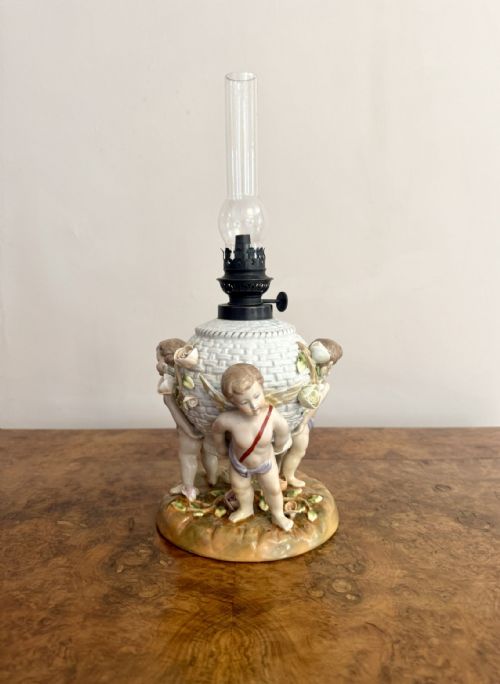


Porcelain Cherub Light
Porcelain cherub light fixtures combine sculptural figures with functional illumination, offering a decorative focal point for period interiors.

Porcelain Cherub Light
A porcelain cherub light brings figural charm to interiors through table lamps, oil lamps, candlesticks, and chandeliers. When searching for a porcelain cherub light, buyers encounter pieces from the nineteenth century featuring modelled cherubs alongside lighting elements.
The available selection spans table lamps, oil lamps, and candelabras produced in European factories during the Victorian era and the late nineteenth century. Styles lean heavily towards Rococo Revival, French Chateau, and Louis XVI aesthetics, often incorporating gilt bronze, ormolu, and beaded shades.
Originating largely from continental workshops and English makers, these pieces integrate glazed or unglazed porcelain figures into functional lighting. The forms range from single table lamps to paired candelabras and larger chandeliers.
Materials and construction methods
Makers shaped porcelain through moulding and hand-finishing, applying detailed glazes and sometimes leaving surfaces in matte blanc de chine. Metal mounts in gilt bronze, ormolu, and gilt brass provided structural support and decorative bases for the ceramic bodies.
Secondary materials such as glass, fabric shades, and gilt toleware complemented the main porcelain and metal structures. Assembly involved securing ceramic figures to weighted metal bases and wiring or adapting them for oil and electrical illumination.
Several cherubs hold oil burners with entirely straight faces, looking remarkably unimpressed by the glowing illumination surrounding them.
Assessing quality and craftsmanship
The integration between ceramic figures and metal mounts reveals the maker's skill, where secure fittings and harmonious proportions maintain the structural and visual balance of the lighting fixture.
Sitzendorf porcelain·Meissen porcelain·French Sevres
The Porcelain Cherub Light Glossary
- Blanc de chine
- A white porcelain finish originating from Chinese kilns and later adopted by European potteries, showing no coloured glaze. It highlights the modelled contours of figural pieces.
- Ormolu
- Finely ground high-carat gold applied to a bronze base using a mercury amalgamation technique, common in French mounts. This process gives a rich, warm metallic lustre.
- Rococo Revival
- A nineteenth-century design style reviving eighteenth-century asymmetrical scrollwork, floral motifs, and shell forms. It frequently frames the porcelain figures in these lighting pieces.
- Bleu celeste
- A bright sky-blue porcelain ground colour popular in nineteenth-century French ceramic decoration. It often serves as a contrasting backdrop for gilt highlights.
- Toleware
- Enamelled and painted sheet metal used historically for light shades and decorative containers. It provides a durable, colourful complement to porcelain bodies.
Porcelain Cherub Light: Frequently Asked Questions
How do I date a porcelain cherub light?
Dating relies on identifying factory marks, stylistic indicators such as Rococo Revival or Louis XVI motifs, and the composition of the metal mounts.
Nineteenth-century pieces often display specific ceramic bodies and hand-finishing techniques typical of European potteries from that era.
Were these originally oil lamps or electric?
Many examples began as oil lamps or candlesticks before being converted for modern electrical use in subsequent decades.
Original burners and fittings often remain visible alongside later wiring adaptations.
How should I clean porcelain and gilt mounts?
Dust porcelain surfaces gently with a soft brush and avoid harsh chemical cleaners that might damage hand-painted details or glazes.
Gilt bronze and ormolu mounts require minimal intervention, using only a dry microfibre cloth to preserve the metallic finish.
What is the difference between ormolu and gilt bronze?
Ormolu specifically refers to mercury gilding applied to bronze objects during the eighteenth and nineteenth centuries, producing a distinct golden depth.
Gilt bronze is a broader term that can include various modern or traditional plating methods over a bronze substrate.