


Polychrome Wooden Saint Figure
A polychrome wooden saint figure brings centuries of devotion, carved detail and layered pigment straight into a room.
Polychrome Wooden Saint Figure
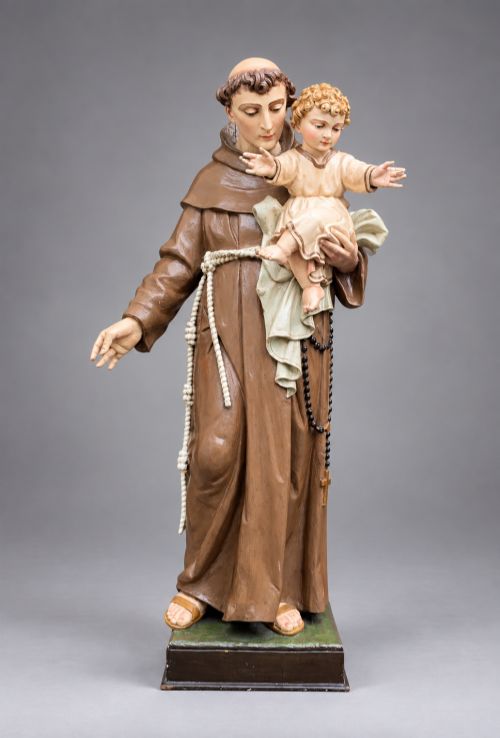
A polychrome wooden saint figure represents centuries of religious devotion and traditional craftsmanship, spanning periods from pre-sixteenth century medieval works to nineteenth-century examples. These pieces take the form of devotional sculptures, religious statues, processional figures, and character heads originating from workshops across Europe.
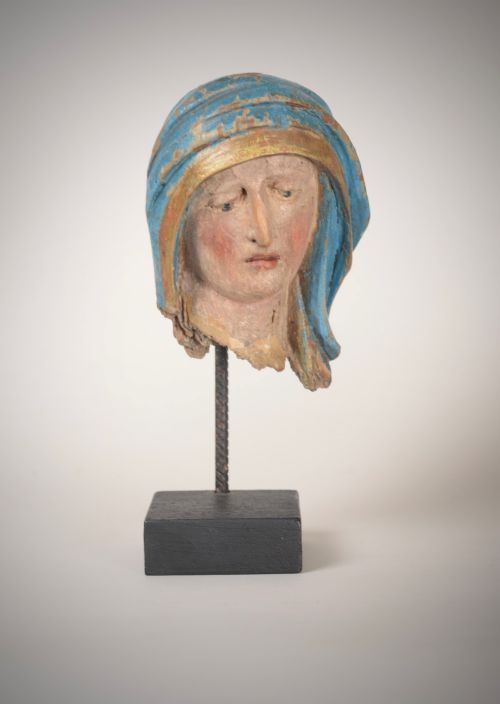
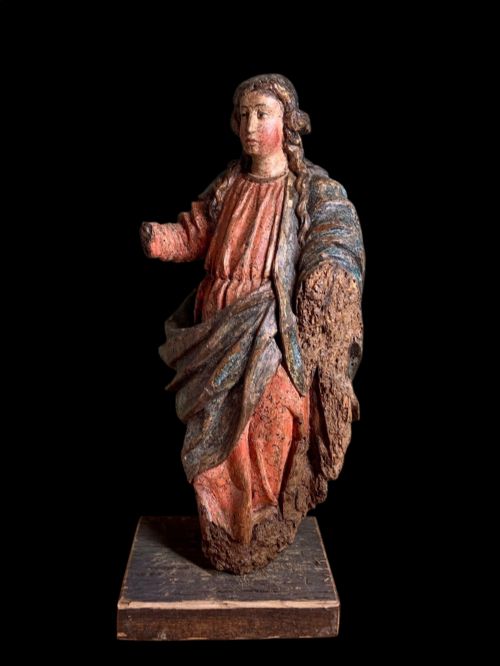
The most common examples encountered on this page date from the seventeenth and eighteenth centuries, reflecting Baroque and Renaissance stylistic influences. They range from full-length figures of saints and bishops to fragments and carved wooden heads displaying remnants of original paint and gilding.
How they were made
The foundation of a polychrome wooden saint figure is carved wood, frequently utilising oak or other durable timber shaped into religious sculptures and statues. Artisans applied gesso as a smooth preparatory layer over the timber before adding pigment and metal leaf.
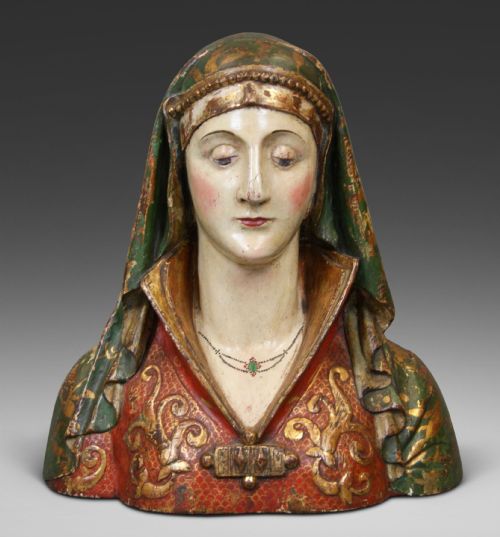
The surface decoration combined polychrome paint and gold leaf to create rich vestments, flesh tones, and ornamental details. This layered technique gave these devotional carvings their characteristic colourful and reflective appearance.
Materials recorded across the selection include carved wood, gesso, gold leaf, polychrome paint, and occasional metal elements.
What varies in quality
The survival and integrity of the original surface finish dictate much of the character in these pieces. Figures retaining undisturbed layers of early gesso, pigment, and gold leaf carry greater visual presence than those with heavily restored or replaced paint layers.
Bohumil Kafka
The Polychrome Wooden Saint Figure Glossary
- Polychrome
- Decorated in a variety of colours. This term describes sculpture and woodwork finished with multiple painted pigments.
- Gesso
- A plaster mix used as a base. Artisans applied this substance to wooden carvings to create a smooth surface for paint and gold leaf.
- Baroque
- An artistic style characterised by movement and drama. This aesthetic influenced many seventeenth and eighteenth-century religious figures.
- Capipote
- A Spanish processional figure with a wooden head and hands attached to a framework. These statues were dressed in real textiles for religious ceremonies.
- Giltwood
- Wood decorated with gold leaf. This material highlights specific garments and halos on devotional statues.
Polychrome Wooden Saint Figure: Frequently Asked Questions
How were these figures used originally?
These figures served as focal points for prayer and contemplation within churches, private chapels, and domestic shrines. Many larger examples also participated in religious processions through town streets.
Devotees lit candles before them, and priests incorporated them into liturgical celebrations throughout the Christian calendar year.
What is a capipote figure?
A capipote is a specific type of Spanish processional figure where only the head, hands, and sometimes feet are carved from wood. The body consists of a hidden armature designed to support actual garments.
Processions required lightweight structures that could be carried for hours, making this hollow construction method practical for religious festivals.
How should I care for a wooden saint?
Keep these figures away from direct sunlight, heating vents, and damp environments to protect the underlying timber. Fluctuating humidity causes wood to expand and contract, which threatens the adherence of old gesso and paint.
Dust them gently with a soft, dry brush without applying modern cleaning solutions or polishes to the historic surface.