
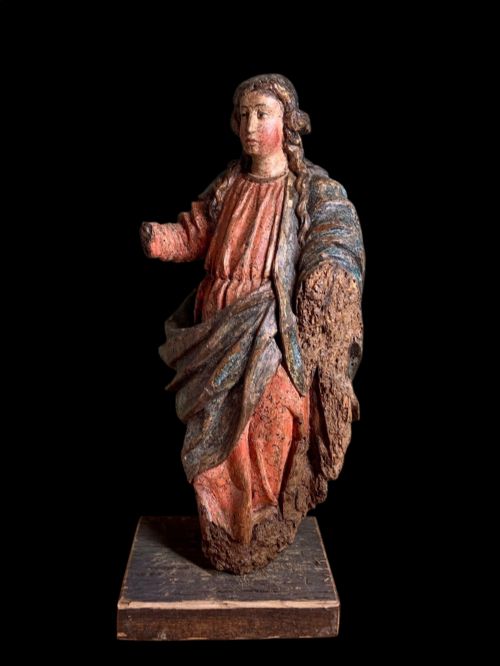


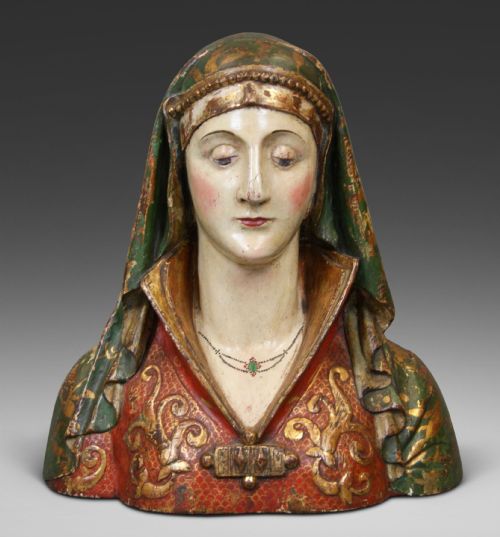
Polychrome Wood Saint Sculpture
These polychrome wood saint sculpture pieces bring devotional presence and historic craftsmanship into a room.
Polychrome Wood Saint Sculpture
A polychrome wood saint sculpture represents religious figures carved from timber and finished with painted and gilded surfaces. These devotional pieces originate from various European traditions spanning the medieval period through the nineteenth century.
The selections available here range from pre-sixteenth century gothic carvings to seventeenth and eighteenth century baroque figures. Buyers frequently encounter Italian and German works depicting saints, angels, and biblical figures.
Forms vary from full-size processional statues and church figures down to carved character heads and busts. Each object reflects the ecclesiastical devotion and artistic vernacular of its particular century.
How they were made
Carvers shaped timber such as oak or softwoods using chisels and gouges to establish the drapery and anatomical details. Artisans then applied a layer of gesso to the carved wood surface to create a smooth ground for subsequent decoration.
Painters and gilders finished these surfaces using polychrome pigments and gold leaf to render lifelike flesh tones, rich garments, and luminous halos. This layered technique protected the timber while giving the devotional sculptures their striking visual depth.
Listings span from pre-sixteenth century medieval works to twentieth-century interpretations, featuring materials such as carved wood, gesso, polychrome paint, and gold leaf.
What varies in quality
The integrity and survival rate of the original gesso and polychrome paint layer heavily influence the character of each piece. Surviving historical pigment and gilding retain the intended theatricality of baroque and gothic religious art.
Bohumil Kafka
The Polychrome Wood Saint Sculpture Glossary
- Polychrome
- Decorated in multiple colours. This term describes sculpture and woodwork finished with various painted pigments.
- Gesso
- A plaster mix applied as a base. Artisans used this substance on wood before adding paint or gold leaf.
- Giltwood
- Timber treated with gold leaf. This finish added reflective brilliance to ecclesiastical statues and architectural elements.
- Processional figure
- A statue carried during religious parades. These pieces often featured hollow or lightweight construction for movement.
- Gothic
- A medieval artistic style. Works from this period display elongated forms and characteristic drapery folds.
Polychrome Wood Saint Sculpture: Frequently Asked Questions
How do I date a wooden saint sculpture?
Dating relies upon stylistic markers such as the cut of the garments, the posture, and the carving technique. Medieval pieces often display rigid symmetry, whereas seventeenth and eighteenth century baroque works emphasise dynamic movement.
Material analysis of the underlying timber and the formulation of the gesso layer also provide chronological context. Comparing the piece with documented church statuary helps confirm the period.
Where were these sculptures originally placed?
These figures stood in churches, private chapels, and domestic shrines as objects of veneration. Some larger statues served specific roles in religious processions.
Smaller busts and character heads often originated from larger altarpieces or devotional tabernacles. Their placement dictated their scale and the level of detail applied to the rear surfaces.
How should I care for polychrome wood?
Maintain stable humidity and temperature levels to prevent the timber from expanding or contracting. Extreme environmental shifts cause wood to split and gesso to flake.
Keep the sculpture away from direct sunlight to protect the historic pigments from fading. Dust the surface gently with a soft, dry brush without using liquid cleaners.
What does polychrome mean in sculpture?
Polychrome refers to the practice of painting sculpture in multiple colours to achieve a realistic or symbolic appearance. Artists used this technique to portray hair, eyes, and rich textiles on wood carvings.
The application of pigments brought static timber figures to life within dim ecclesiastical interiors. Over centuries, these painted layers developed a distinct patina.