


Polychrome Saint Figure
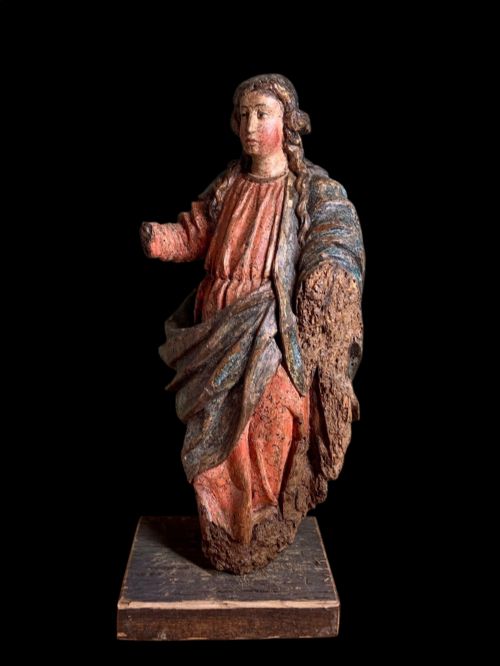
A polychrome saint figure brings devotional presence into a room through carved wood, gesso, and layered paint.
Polychrome Saint Figure
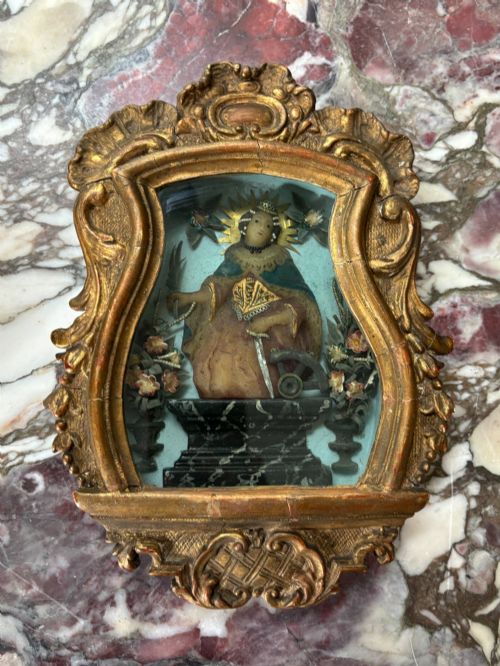
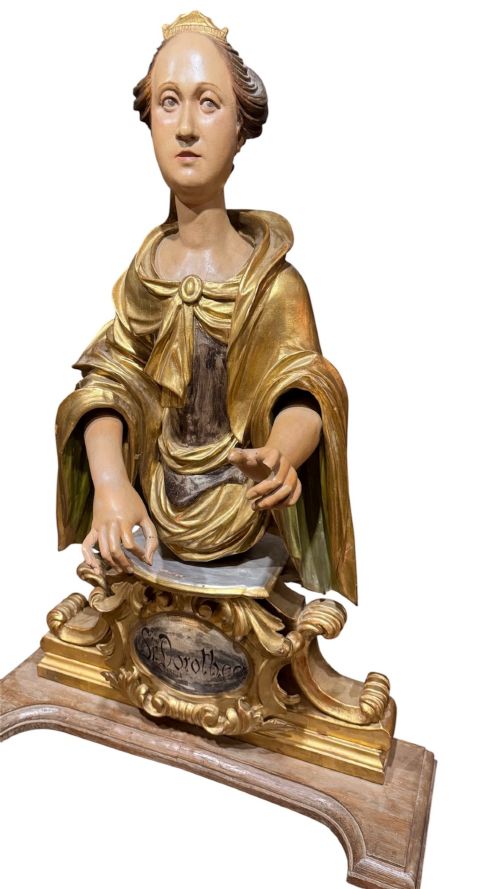
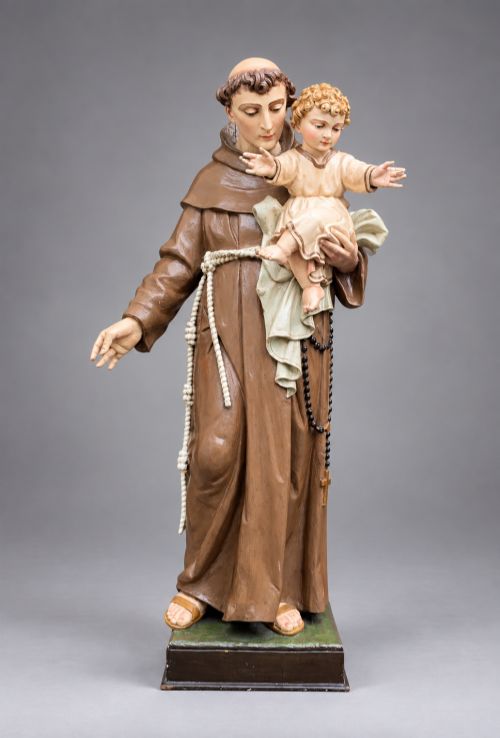
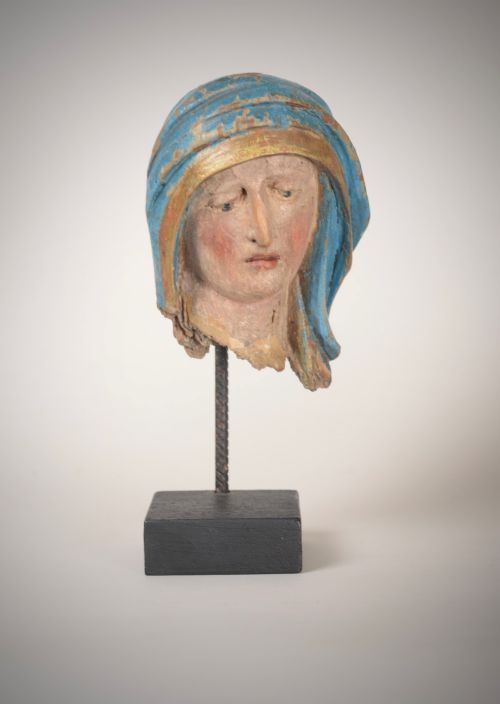
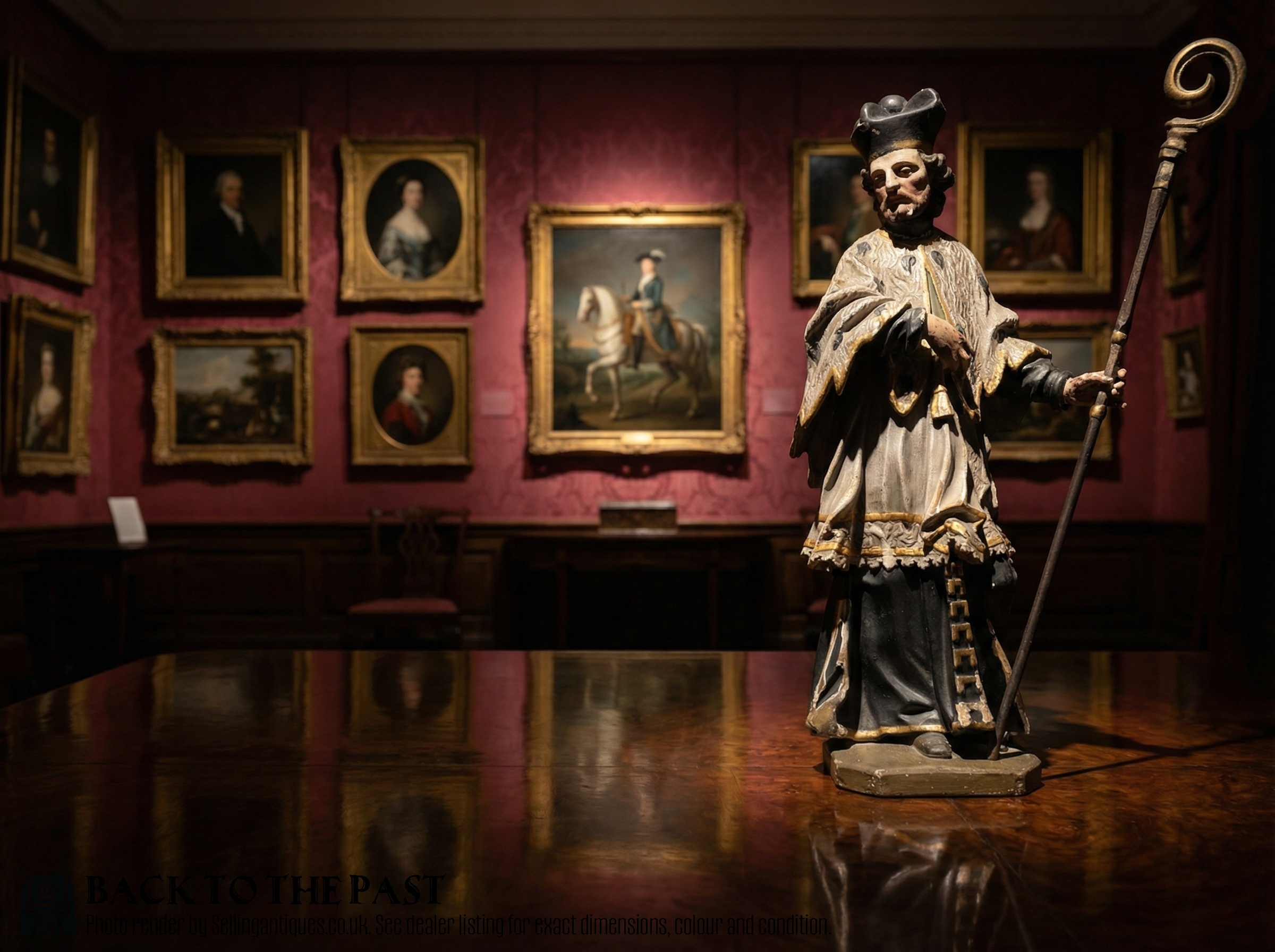
A polychrome saint figure represents holy personages and biblical figures through carved wooden sculpture enhanced with paint, gesso, and gilding. These devotional objects range from full-length processional statues and architectural fragments to isolated character heads and busts.
The versions most frequently encountered on this page span the seventeenth and eighteenth centuries, with notable examples reaching back to the medieval and pre-sixteenth century periods. Italian, Spanish, German, and French workshops dominate the origins of these ecclesiastical sculptures.
Materials and construction methods
Carvers shaped these figures primarily from wood, frequently utilising oak or similar dense timbers to form the core body, head, or architectural fragments. Artisans then applied layers of gesso to create a smooth preparatory ground for subsequent pigment application.
Surface decoration relied on polychrome paint and gold leaf to render garments, flesh tones, and halo details with lifelike or symbolic resonance. Metal components occasionally supplement the carved wooden structures, particularly in processional or regalia elements.
A smiling young saint bishop manages to look genuinely pleased despite centuries of architectural relocation.
Distinctions in craftsmanship and preservation
The integrity of the original gesso and polychrome surface layer heavily influences the standing of a piece. Examples retaining their early or original paint and gilt layers without extensive modern overpainting command greater interest among collectors of religious sculpture.
Rouillard Angers·Bohumil Kafka·Charles René de Saint Marceaux
The Polychrome Saint Figure Glossary
- Polychrome
- Decorated in multiple colours. This technique involves painting the surface of carved wood or plaster sculptures to imitate real garments and flesh.
- Gesso
- A plaster-like mixture applied to a wooden substrate. It acts as a smooth base for subsequent paint and gold leaf application.
- Capipote
- A type of processional statue with a carved wooden head and hands attached to a framework. The body structure is typically dressed in real fabric vestments rather than carved wood.
- Giltwood
- Wood that has been treated with a thin layer of gold leaf or gold paint. This finish frequently highlights the halos, trims, and decorative elements of religious statues.
- Processional figure
- A sculpture designed to be carried during religious festivals or street processions. These statues often feature lightweight construction or specific attachment points for transport.
Polychrome Saint Figure: Frequently Asked Questions
Where were these figures originally displayed?
These religious sculptures primarily stood inside churches, private chapels, and monastic foundations as objects of veneration and focal points for prayer.
Some larger statues and processional figures also left the church interior to participate in outdoor feast day parades and community rituals.
How do I identify the period of a carved figure?
Dating relies heavily on stylistic markers present in the garment folds, facial carving, and the composition of the wood and gesso layers.
Earlier medieval and sixteenth-century pieces display heavier Gothic or Renaissance architectural traits, whereas seventeenth and eighteenth-century examples exhibit Baroque movement and theatricality.
Are fragments and isolated heads common?
Many surviving pieces exist today as isolated heads, busts, or architectural fragments separated from their original larger altarpieces or full-length bodies over the centuries.
These surviving components still demonstrate the sculptural skill and polychrome techniques applied by period artisans.
How should I care for a wooden polychrome sculpture?
These pieces require stable indoor humidity and temperature conditions to prevent the underlying wood from expanding, contracting, or cracking the gesso layer.
Direct sunlight and moisture should be avoided at all times to protect the delicate balance of the aged paint and gold leaf surfaces.