






Polychrome Pottery Pair
When you search for a polychrome pottery pair, you seek matching vessels or figures brought to life with vibrant mineral pigments and glazes.
Polychrome Pottery Pair
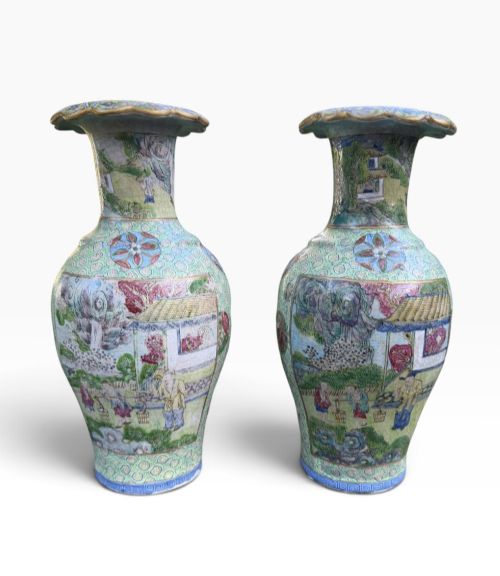
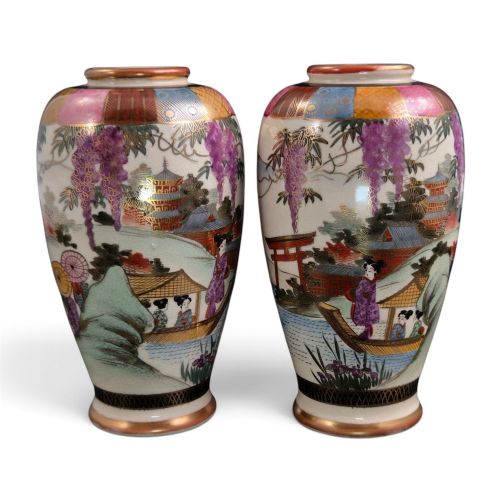
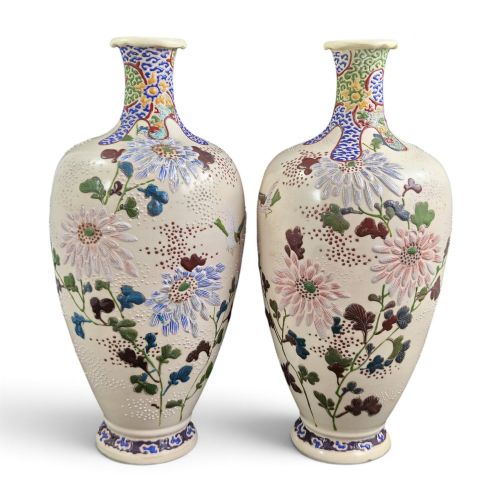
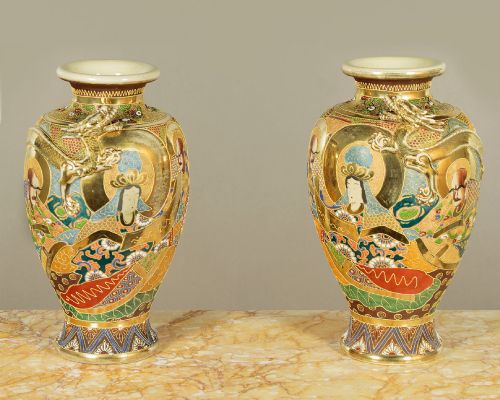
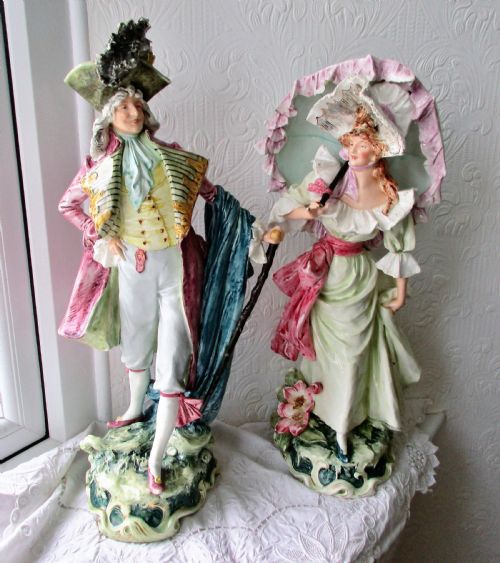
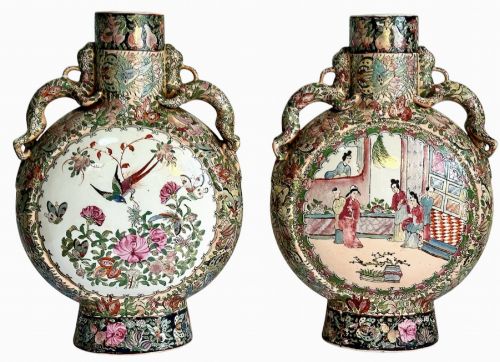
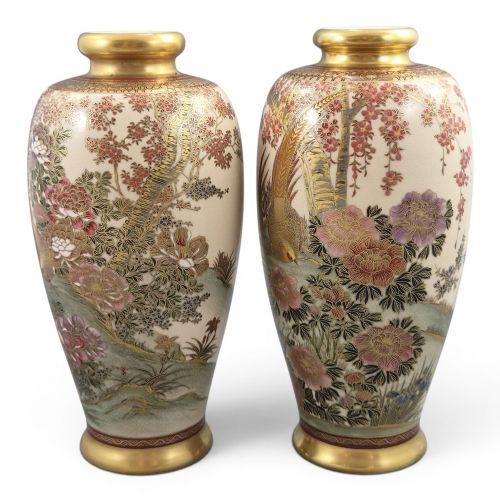
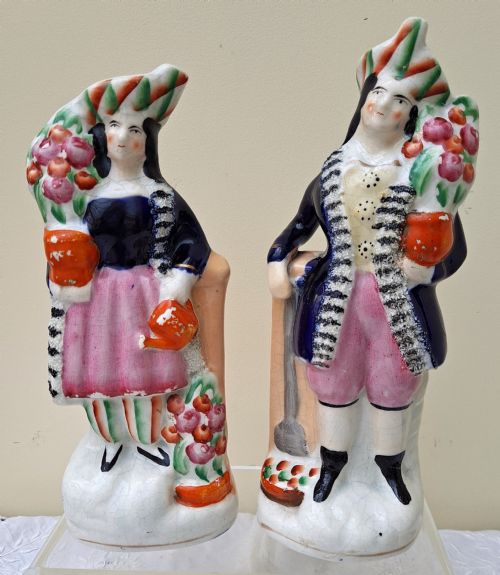
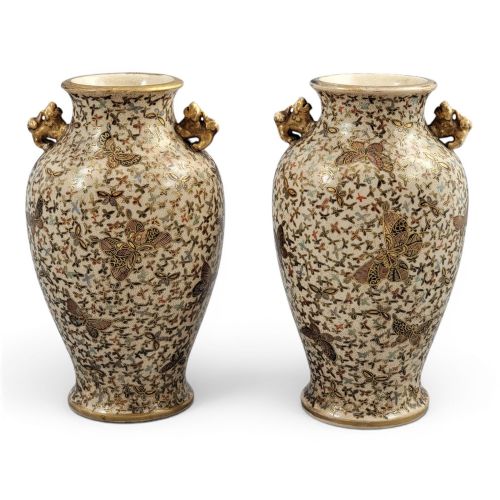
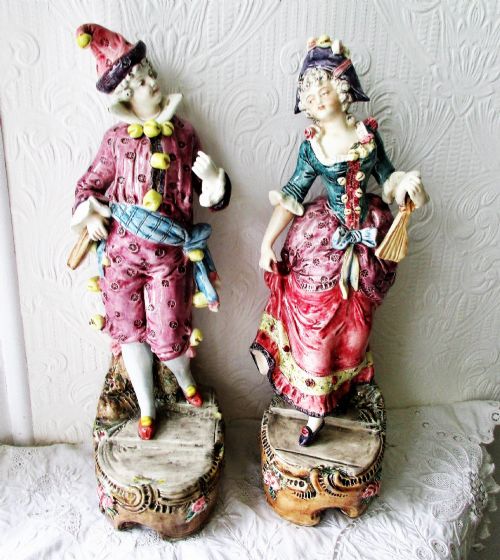
A polychrome pottery pair comprises matching vessels, figures or decorative objects designed to be displayed together, united by a palette of multiple colours. These dual sets emerge across centuries in various global ceramic traditions, taking forms such as Staffordshire earthenware figures, Japanese Satsuma vases, Chinese porcelain flasks and European tin-glazed earthenware.
On this page, buyers most frequently encounter pairs from the nineteenth century, ranging from English Staffordshire pottery figures depicting historical characters to Japanese Satsuma and Kutani vases adorned with intricate hand-painted enamel and gold leaf. European faience and ironstone vessels also appear, reflecting domestic and export ceramic output from the eighteenth century through to the early decades of the twentieth century.
Materials and techniques
Potters shape these pieces using earthenware, stoneware, ironstone or porcelain, applying tin glazes, transparent lead glazes or enamel colours directly to the ceramic body. Many items undergo multiple firings to fix the base glaze before artists add detailed overglaze enamel designs and gold leaf highlights.
Japanese Satsuma and Kutani wares utilise fine earthenware or porcelain canvases finished with dense moriage relief work and intricate brushwork. Meanwhile, English Staffordshire and continental faience employ moulded or slip-cast bodies painted with mineral pigments beneath or above the glaze.
Polychrome Pottery Pair Retail Price Guide 2026
Typical asking prices for polychrome pottery pair among the pieces listed under this phrase on Sellingantiques today, from the lower quarter to the upper quarter. They describe what is for sale here now, not the wider market.
Stout ceramic ducks stand ready to guard your mantelpiece from imaginary household pests.
Assessing quality and execution
Quality rests upon the precision of the hand-painting, the crispness of the moulded form and the preservation of the delicate enamel colours and gold leaf over time. Superior examples display confident brushwork, harmonious colour saturation and well-defined facial expressions on figures or botanical details on vases.
The chemical stability of the glazes and the alignment of the matching pair further distinguish finer outputs from standard domestic ware. Original matching pairs that retain their balanced proportions and minimal pigment loss command greater attention from collectors.
Manpei·Kinzan·Makuzu Kozan II·Rozenburg·Minton
The Polychrome Pottery Pair Glossary
- Polychrome
- Decorated in several colours. This term describes ceramics painted with a diverse palette of mineral pigments rather than a single monochrome glaze.
- Satsuma
- Japanese earthenware featuring a crackle glaze. These items are typically decorated with elaborate enamel patterns and rich gilt highlights.
- Faience
- Tin-glazed earthenware. Originating in Europe, this pottery uses an opaque white glaze that provides a smooth surface for hand-painted pigment.
- Ironstone
- A durable type of British pottery. Patented in the nineteenth century, it bridges the gap between earthenware and true porcelain through its robust vitrified body.
- Moriage
- Raised slip decoration used on ceramics. Artisans squeeze liquid clay through a fine tip to create textured relief patterns beneath the glaze or enamel.
Polychrome Pottery Pair: Frequently Asked Questions
What defines a true pair?
A true pair consists of two matching objects created concurrently by the same maker, sharing identical dimensions, decorative motifs and palette execution.
They are designed to mirror one another symmetrically when placed on either side of a mantelpiece, table or architectural feature.
How should I clean my pottery pair?
Dust these items gently with a soft, dry brush to prevent accumulation in recessed areas or around delicate raised enamel decorations.
Avoid immersing antique ceramics in water, particularly those with overglaze enamels or gold leaf, which can degrade with moisture exposure.
How do I identify Satsuma ware?
Satsuma ceramics are recognised by their characteristic ivory-coloured earthenware body covered in a fine, microscopic network of crackled glaze.
They frequently feature dense polychrome enamel painting combined with heavy gilt highlights depicting figures, landscapes or floral themes.
Where were Staffordshire figures displayed?
Victorian Staffordshire pottery figures were primarily produced for domestic mantelpieces and parlor shelves in British homes.
Designed as affordable ornaments, they portrayed royalty, theatrical performers, animals and contemporary rural characters for the growing middle class.