


Polychrome Porcelain Cherub
These polychrome porcelain cherub figures bring vibrant rococo revival charm and playful mythological energy to any interior table or mantelpiece.
Polychrome Porcelain Cherub
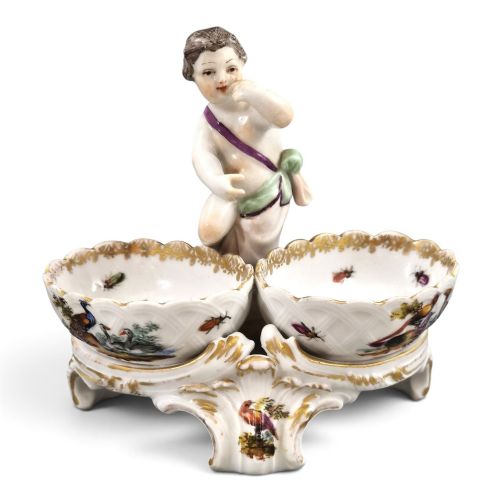
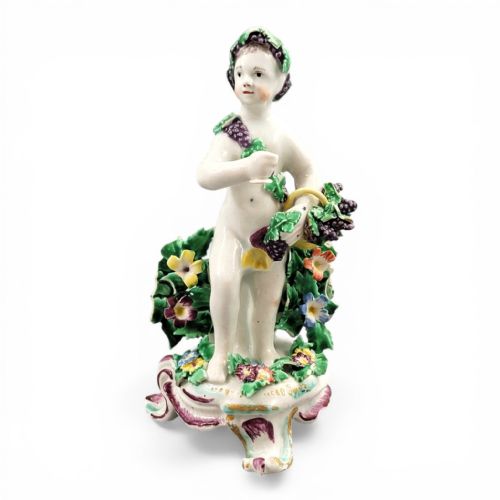
A polychrome porcelain cherub represents the figurative ceramic works commonly modelled as putti, angels, or Bacchic figures, often appearing on this page as centrepieces, salt cellars, vases, and candelabra. These sculptural pieces draw heavily from eighteenth-century English and continental traditions, notably Bow, Meissen, and German factories operating through the nineteenth century.
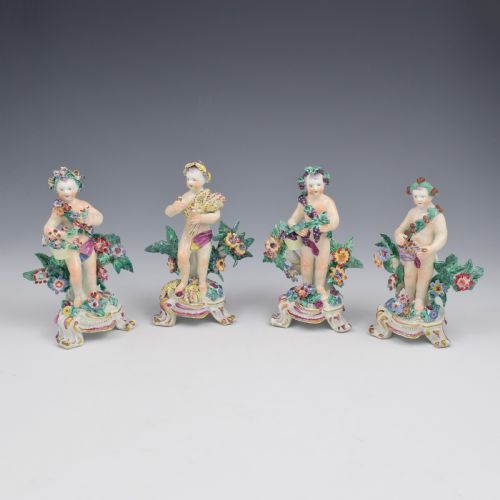
Buyers encounter figures originating from the Georgian, Victorian, and Edwardian eras, spanning soft-paste and hard-paste porcelain bodies. The selection ranges from single dancing putti to elaborate multi-figure allegorical sets depicting the four seasons.
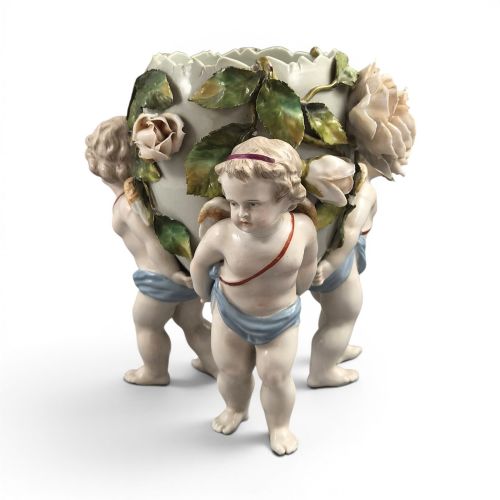
Functional decorative objects dominate the forms, including dressing table mirrors framed with mirror glass and large floral centrepieces populated by playful putti. Collectors seek these pieces for their combination of fine modelling and detailed hand-painted enamels.
Materials and methods
Painters applied overglaze enamel colours by hand, utilising metallic oxides to achieve vibrant multi-coloured palettes alongside hand-applied gilding and gold leaf highlights. Subsequent low-temperature firings fused the enamel and gold to the glazed porcelain surface.
Listings feature hard-paste and soft-paste porcelain bodies across the Georgian, Victorian, and Edwardian periods, utilising enamel, gilding, and mirror glass.
Judging the quality
Quality rests upon the crispness of the porcelain modelling and the delicacy of applied floral work, where finer pieces retain sharp leaf veins and well-defined facial expressions rather than softened, thick contours. The precision of the hand-painted enamel and the consistency of the gilding separate standard production wares from superior factory output.
The complexity of the form dictates distinction, as elaborate multi-figure centrepieces, clock garnitures, and complete sets of the four seasons require advanced technical skill in firing without distortion compared to single standing figures.
KPM Berlin·Bow Porcelain·Sitzendorf Porcelain·Plaue Schierholz·Meissen Porcelain·Volkstedt
The Polychrome Porcelain Cherub Glossary
- Putto
- A plump, naked male child figure frequently depicted in classical art and porcelain sculpture. These figures appear singly or in groups across centrepieces and allegorical sets.
- Overglaze enamel
- Coloured glass decoration painted on top of already fired and glazed porcelain. This technique allows for a wide palette of bright colours that require a final low-temperature kiln firing.
- Hard-paste porcelain
- A durable ceramic paste composed of kaolin and petuntse, fired at high temperatures. It yields a hard, bright white body commonly used by continental European factories.
- Soft-paste porcelain
- An artificial porcelain body containing glass frit and white clay, fired at lower temperatures than hard-paste. Early English factories utilised this material for figures before switching to bone china.
- Sweetmeat
- A small dish or container designed for confectionery, nuts, or dried fruit. In porcelain manufacturing, these often feature cherub supports holding bowls or baskets.
Polychrome Porcelain Cherub: Frequently Asked Questions
How do I date these figures?
Dating relies on factory marks, the quality of the enamel palette, and stylistic cues from the rococo revival movement popular across the nineteenth century.
Earlier eighteenth-century examples exhibit softer paste bodies and distinct hand-modelling traits compared to later continental factory output.
Were these centrepieces used at dining tables?
Many large figural centrepieces and salt cellars served as decorative showpieces for formal dining tables during the Victorian and Edwardian periods.
They held sweetmeats, fruits, or flowers to impress guests during elaborate courses.
What is the difference between putti and cherubs?
While often used interchangeably in trade descriptions, putti derive from classical antiquity as secular winged infants, whereas cherubs originate from biblical imagery.
In porcelain manufacture, both terms describe the plump child figures adorning vases, mirrors, and candelabra.
How should I clean porcelain figures?
Gentle dusting with a soft, dry brush prevents dirt accumulation on delicate applied flowers and intricate hand-painted enamel surfaces.
Avoid submerging pieces in water, particularly older items with cold-painted details or fragile gold leaf highlights.