


Polychrome Earthenware Figurine
A polychrome earthenware figurine brings colourful character and narrative into a room, spanning Victorian Staffordshire flatbacks and continental studio works.
Polychrome Earthenware Figurine
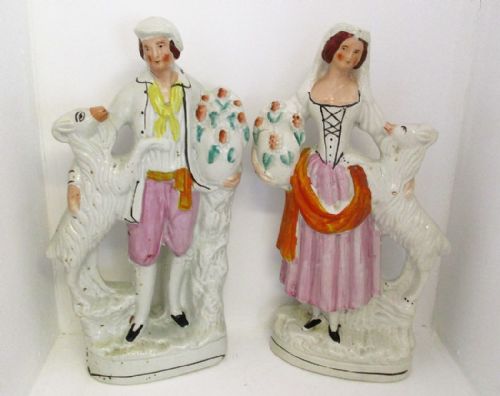
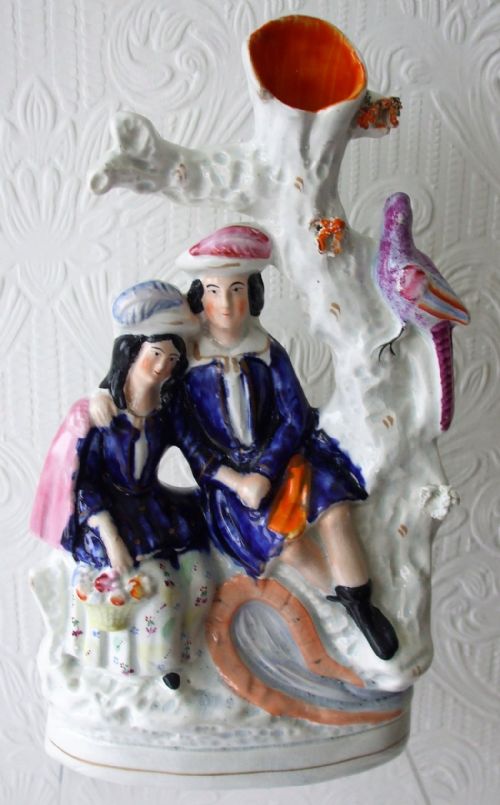
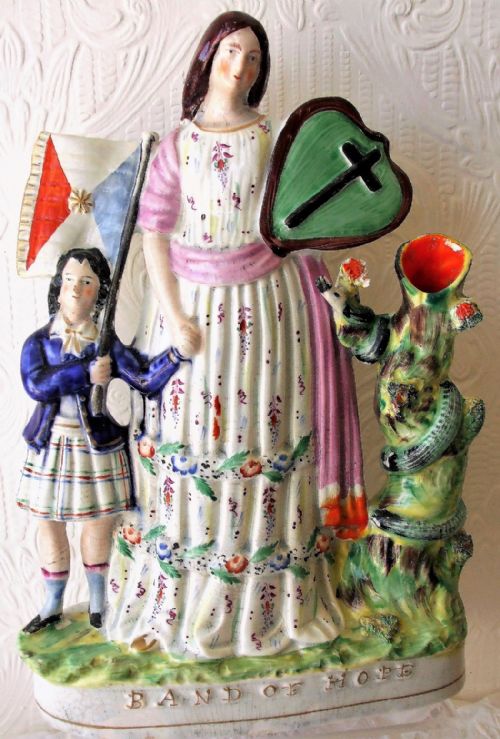
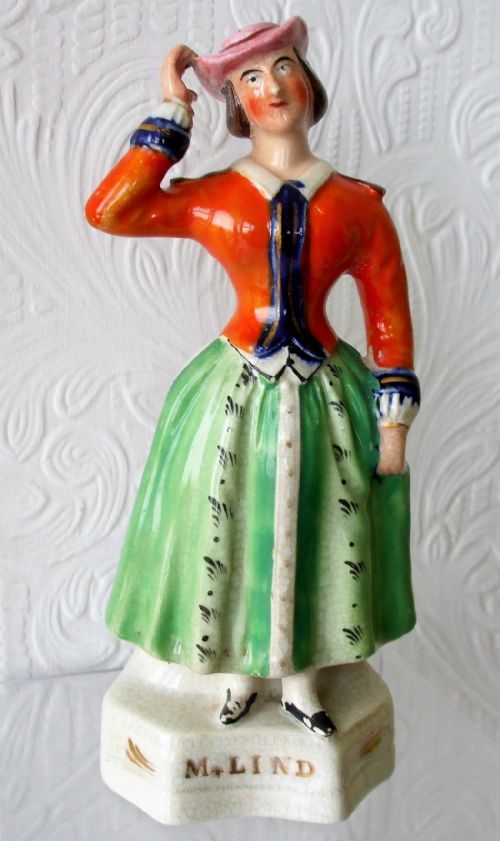
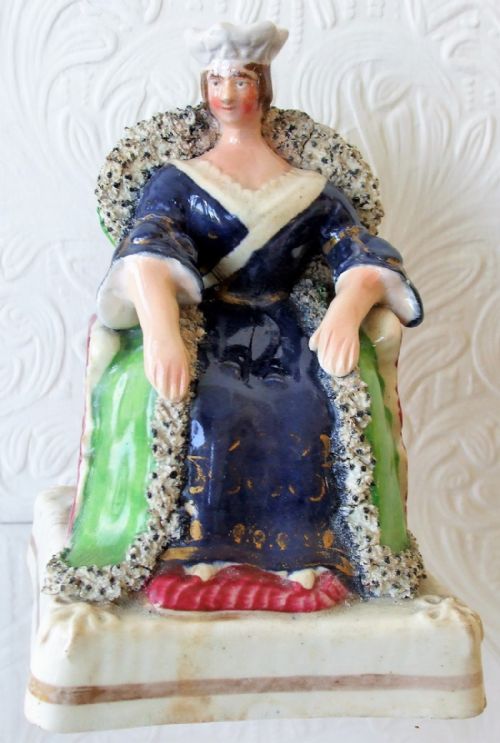
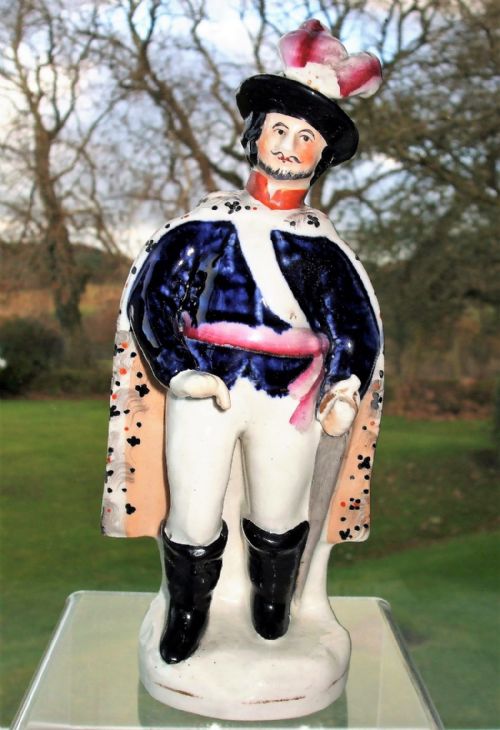
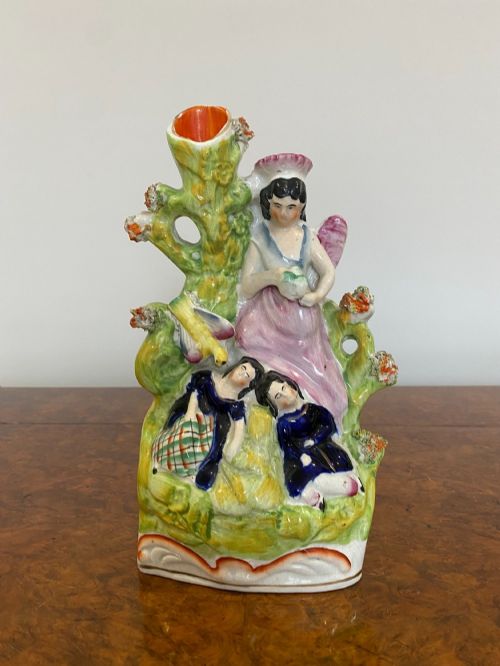
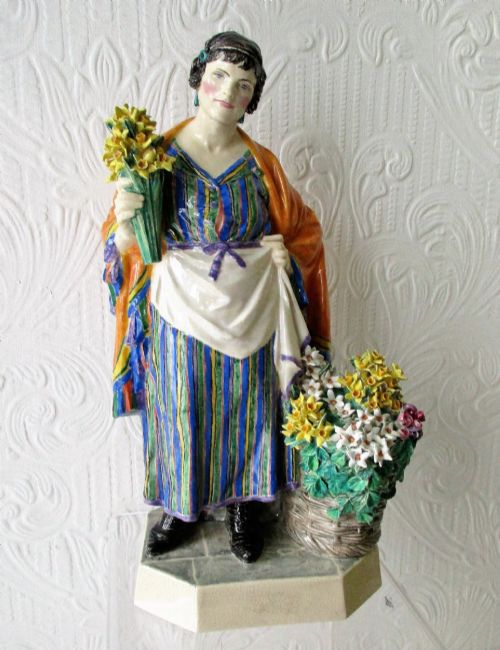
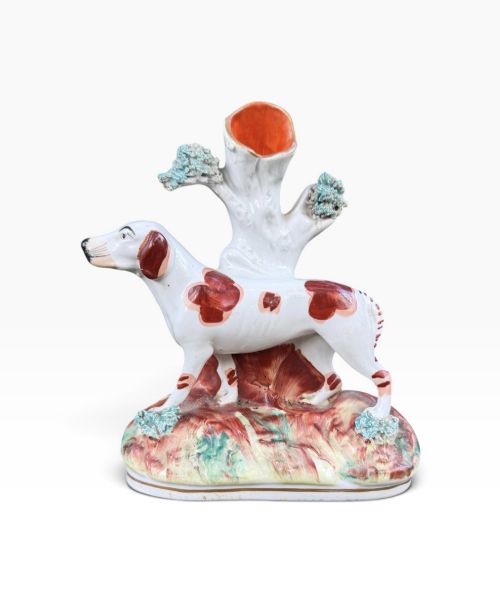
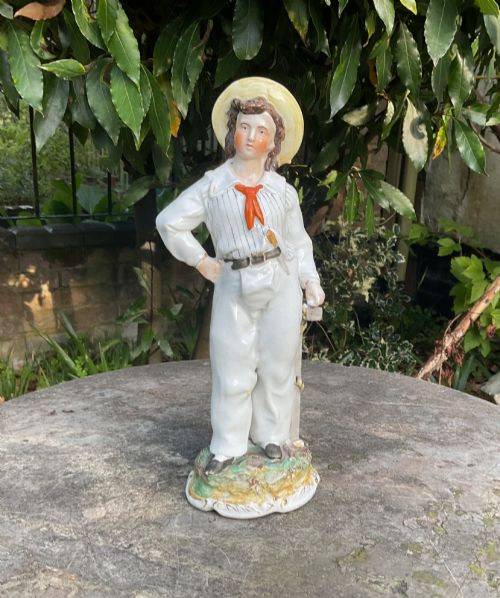
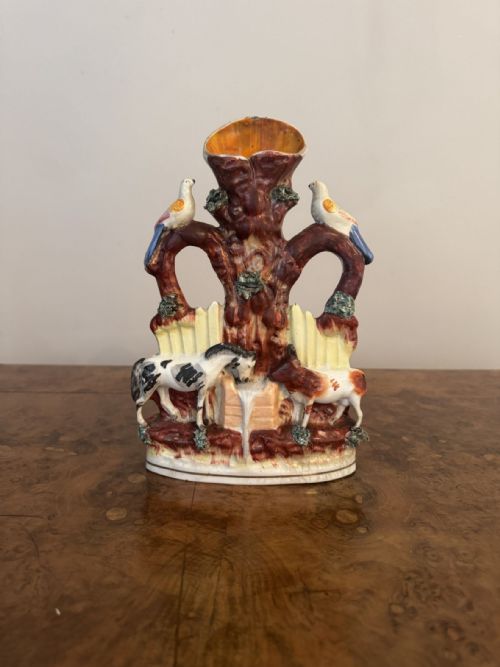
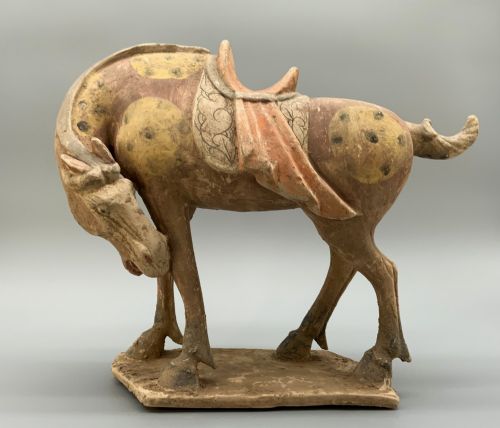
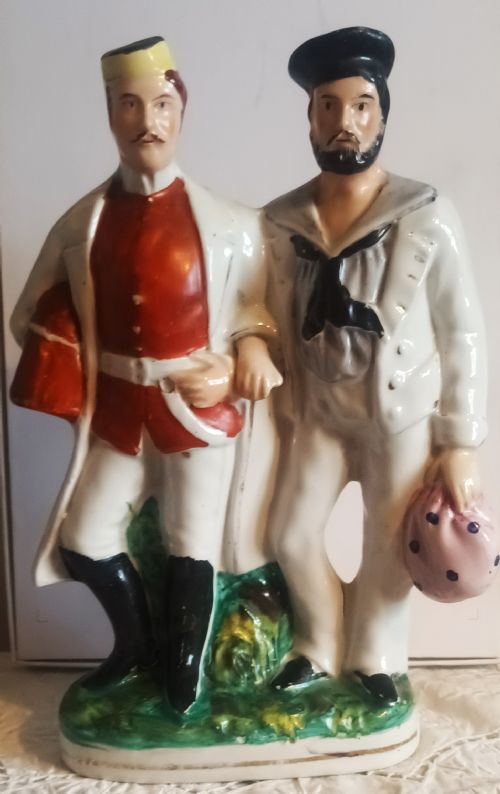
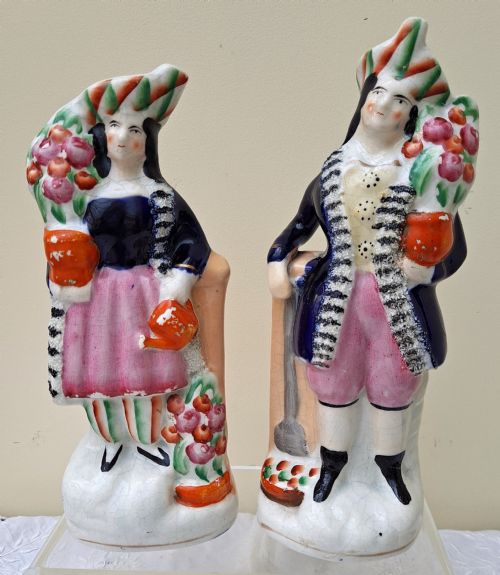
A polychrome earthenware figurine is a moulded ceramic subject finished in colourful glazes or enamels. The pieces encountered here range from nineteenth-century Victorian Staffordshire flatbacks and toby jugs to twentieth-century French earthenware and English studio pottery.
Makers often drew inspiration from historical events, theatrical characters, or everyday rustic scenes. Figures span single subjects like military leaders and literary heroes to pairs of gardeners, country couples, and allegorical figures.
How They Were Made
Potters formed these pieces using earthenware, terracotta, or pearlware, shaped by hand or pressed into ceramic moulds. Once shaped, the clay bodies received lead glazes or enamel colours before firing in kilns.
Studio potters applied polychrome decoration by hand, resulting in varied brushwork and glaze pooling. Mass-produced Staffordshire pieces often combined underglaze tints with bright overglaze enamel highlights.
Polychrome Earthenware Figurine Retail Price Guide 2026
Typical asking prices for polychrome earthenware figurine among the pieces listed under this phrase on Sellingantiques today, from the lower quarter to the upper quarter. They describe what is for sale here now, not the wider market.
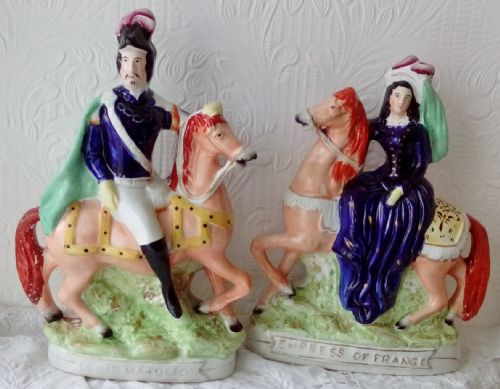
Napoleon shares shelf space here with smugglers, bishops, and a gentleman named Mr Snuff.
What Varies in Quality
Quality rests in the crispness of the moulding and the artistry of the hand-painted polychrome details. Superior pieces show precise facial expressions and clean application of enamel colours without messy bleeding.
The sophistication of the modelling separates standard factory output from individual studio works. Early nineteenth-century examples often demonstrate sharper detail and richer glaze depths compared to later mass production.
Charles Vyse·George Kemper·Bernard Bloch
The Polychrome Earthenware Figurine Glossary
- Earthenware
- Porous pottery fired at lower temperatures than stoneware or porcelain. It requires a glaze to become impermeable to liquids.
- Staffordshire flatback
- A figure moulded with a decorated front and a flat, unglazed or minimally finished back designed for a mantelpiece. These figures stood against walls where the rear remained unseen.
- Toby jug
- A pottery jug modelled as a seated, full-figured person, typically holding a mug or jug of ale. They often depict historical personages or caricatures with tricorn hats forming the spout.
- Polychrome
- Decorated in multiple colours. The term describes ceramics painted with a diverse palette of enamels or glazes.
Polychrome Earthenware Figurine: Frequently Asked Questions
How do I identify a Staffordshire flatback?
Staffordshire flatbacks feature moulded pottery construction with a finished front and a flat, unpainted reverse designed to face a wall.
They date primarily from the nineteenth century and depict historical figures, animals, or literary scenes under colourful glaze.
What is the difference between earthenware and porcelain?
Earthenware is a porous ceramic fired at lower temperatures and finished with an opaque or transparent glaze to hold liquids.
Porcelain is vitrified, non-porous, and fired at much higher heats, resulting in a denser and harder white body.
How should I clean my antique figurine?
Dust these ceramic pieces gently with a soft, dry brush to prevent the accumulation of dirt within the glaze crevices.
Avoid immersing antique earthenware in water, as old glazes and porous clay bodies can absorb moisture and suffer damage.
Where were these figures originally displayed?
Victorian flatbacks and spill vases sat proudly along mantelpieces, sideboard tops, and shelves in domestic parlours.
Their bright polychrome glazes added decorative colour and popular narrative charm to nineteenth-century homes.