


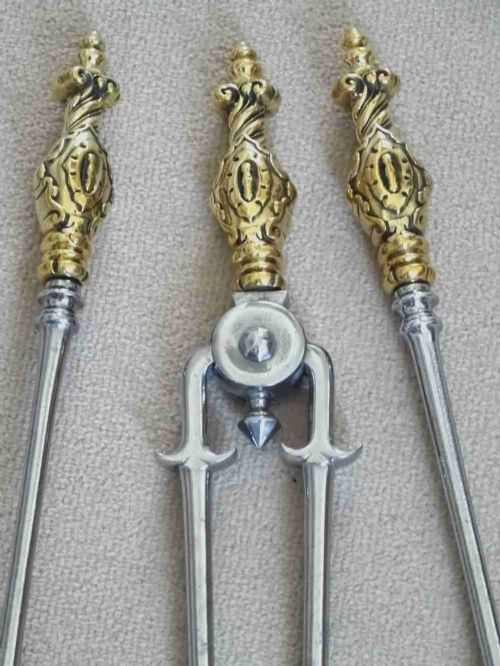


Polished Steel Fire Poker
A polished steel fire poker is a hearth implement designed to stir burning fuel, offering both utility and a bright metallic finish.
Polished Steel Fire Poker
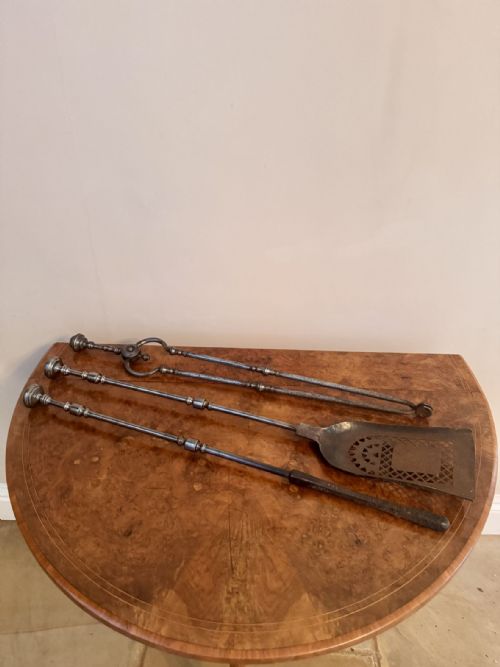
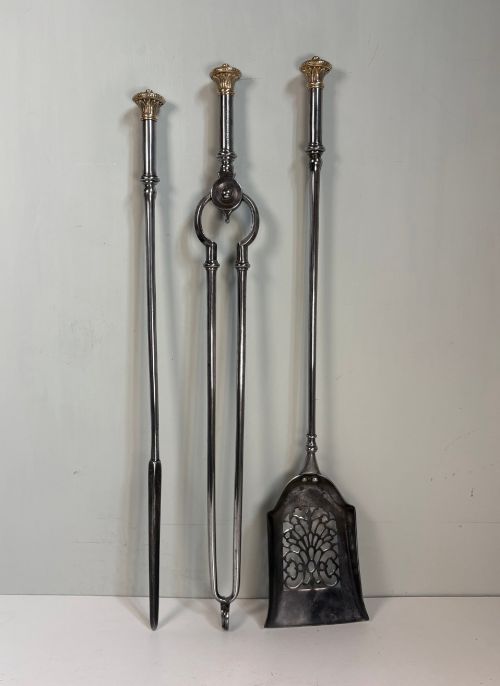
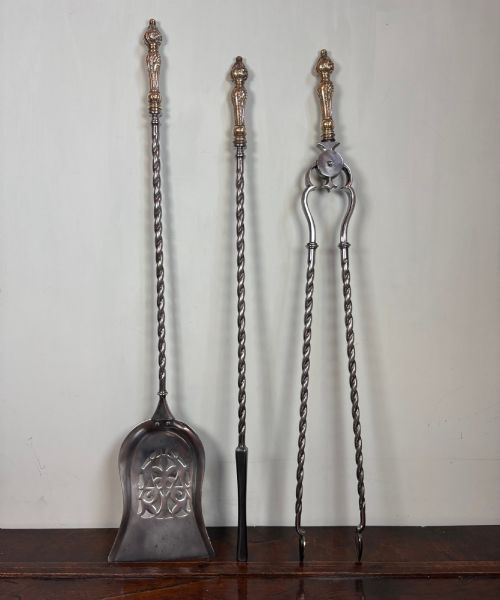
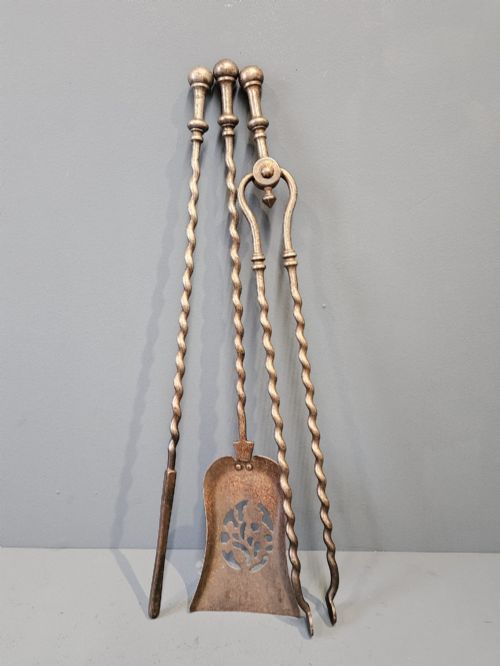
A polished steel fire poker forms part of a hearth arrangement, often encountered within sets of fireplace tools, fire irons, and fireside accessories. These implements serve the functional purpose of tending coal or wood fires while adding a reflective surface to the fireplace setting.
Examples on this page date from the eighteenth century, the nineteenth century, the Georgian era, the Regency period, the George IV era, and the Victorian period, including Arts & Crafts interpretations. They appear alongside materials such as iron and brass.
Buyers will encounter these pokers either individually or grouped as sets of three companion fire tools. The forms reflect the prevailing design standards of their respective centuries, ranging from early Georgian items to later Victorian Revival and c1870 pieces.
How they were made
The primary material is steel, frequently brought to a bright polished finish, sometimes combined with brass for handles or decorative accents. Iron also appears in these hearth tools, providing the structural weight necessary for daily use at the fireplace.
Blacksmiths and metalworkers shaped the steel through forging and turning, creating slender shafts and shaped grips that could withstand high temperatures. The polishing process brought the metal to a smooth, reflective state, distinguishing these refined pieces from standard utilitarian ironware.
Listings feature items spanning the Georgian, Regency, and Victorian periods, constructed from steel, brass, and iron.
What varies in quality
Quality in a polished steel fire poker rests on the precision of the forging and the finesse of the handle turning. Finer examples maintain an even, reflective surface across the length of the steel shaft without pitting or distortion from heavy oxidation.
The integration of brass components, where present, indicates the level of craftsmanship, as tighter assembly and heavier gauge metal distinguish superior sets from standard production.
The Polished Steel Fire Poker Glossary
- Fire irons
- Implements used for tending a domestic fire, typically including a poker, tongs, and a shovel.
- Companion set
- A matched group of fireplace tools, usually displayed together on a stand or fender.
- Georgian
- The period of British history spanning the reigns of the first four Georges, known for classical proportions in metalwork.
- Regency
- The stylistic era defined by the British regency and the early reign of George IV, marked by refined classical detail.
- Arts and Crafts
- A design movement valuing handcraftsmanship and simple construction over mass production.
Polished Steel Fire Poker: Frequently Asked Questions
What is a polished steel fire poker used for?
A polished steel fire poker is used for stirring and adjusting coal or wood fires within an open hearth. The pointed metal end allows the user to break up fuel and improve airflow.
Beyond pure utility, these pokers were designed to be displayed visibly beside the fireplace as part of a coordinated set of fire irons.
How do I date an old fire poker?
Dating an antique fire poker involves examining the manufacturing techniques, tool marks, and overall design style. Pieces from the Georgian period often display hand-forged details, whilst later Victorian items may show different revival influences.
Associated materials like brass mounts and the specific finish of the steel also help narrow down the period of manufacture.
Are these pokers sold individually or in sets?
Listings for these items frequently include both individual pieces and complete sets of three fire irons or triple companion tools. Many surviving examples are part of matching groups that include shovels and tongs.
Collectors often look for complete sets to maintain uniformity across the hearth accessories.
How should I clean polished steel?
Polished steel requires careful maintenance to preserve the reflective surface and prevent rust in damp environments. Regular dusting and the application of suitable protective oils help maintain the metal.
Harsh abrasives should be avoided to protect the historic finish achieved by the original makers.