


Vintage Metal Companion Set
These vintage metal companion set pieces bring honest hearth-side utility and period character to the fireplace.
Vintage Metal Companion Set
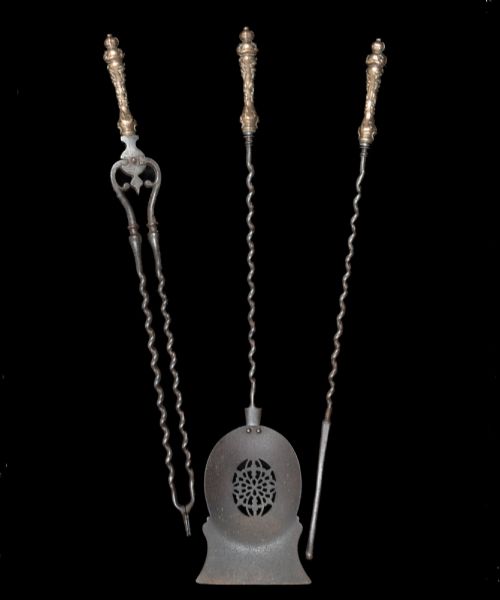
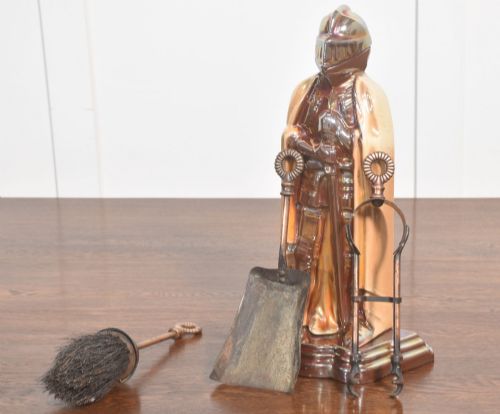
A vintage metal companion set brings together the essential tools needed to tend a coal or wood fire, forming a practical hearth arrangement. Buyers searching for a vintage metal companion set encounter items ranging from simple utilitarian pokers and tongs to decorative figural pieces and complete fireside groupings.
The selections recorded here span the nineteenth century through the early twentieth century, taking in Victorian, Edwardian, and rustic country styles. Pieces appear in various configurations, including standard fire irons, fire dogs, fenders, and larger country house arrangements.
The most common forms are groupings of steel or brass fire irons alongside dedicated stands or companion sets. Many reflect specific stylistic revivals, from Gothic details to country house practicality.
How they were made
Makers utilised durable metals suited to the intense heat and heavy work of the hearth, predominantly employing brass, wrought iron, cast iron, and steel. Polished and burnished steel finishes appear frequently among the nineteenth-century examples, offering a bright reflective surface alongside darker iron constructions.
Techniques combined blacksmithing for wrought iron tools with foundry work for cast components and polished finishes for steel fire irons. Combinations of brass and copper finishes also add decorative contrast to functional iron and steel bodies.
One particularly spirited Edwardian offering takes the form of an unusual golfer companion set ready for the nineteenth hole.
What varies in quality
Quality rests in the weight of the metal and the integrity of the forged or cast joints rather than mere surface decoration. Heavier gauges of steel and solid brass handle daily use without bending, whereas thinner components show fatigue at stress points.
Finishing work distinguishes standard utility sets from finer examples, particularly in the smoothness of polished steel and the crispness of cast details on figural or Gothic Revival pieces. Complete sets showing unified design across tools and holders demonstrate greater original care.
The Vintage Metal Companion Set Glossary
- Fire irons
- The collection of poker, tongs, shovel, and sometimes a brush used for managing a solid fuel fire. These are typically held together in a matching stand or laid across a fender.
- Companion set
- A coordinated assembly of fireplace tools and their dedicated holder or stand. This grouping keeps the hearth tidy and ensures every necessary implement remains within reach.
- Fire dogs
- Andirons or horizontal metal bars raised on legs, placed in a hearth to support logs for burning. They often appear alongside matching fire tools and fenders in period rooms.
- Burnished steel
- Steel that has been mechanically polished to a high, reflective lustre. This finish was labour-intensive to maintain and indicates a higher status hearth accessory.
- Wrought iron
- Iron that has been heated and shaped by hand with a hammer and anvil. This material shows slight irregularities from the forging process that mark out traditional craftsmanship.
Vintage Metal Companion Set: Frequently Asked Questions
What tools come in a set?
Standard sets typically include a poker for adjusting fuel, tongs for handling logs or coal, and a shovel for clearing ash. Brushes and specialised scrapers also appear in larger groupings.
These implements usually share a common decorative theme, material, or period style to create a cohesive look by the fireplace.
How do I clean polished steel?
Polished steel requires careful maintenance to remove surface moisture and prevent oxidation. Light applications of oil or specialised metal polish help maintain the bright finish.
Avoid abrasive pads that can scratch the burnished surface and ruin the historical appearance of the metal.
Are these sets safe to use?
Most vintage metal companion sets remain fully functional for modern open fires or wood-burning stoves. Solid iron and steel construction handles heat effectively.
Checking the structural integrity of handles and shafts ensures the tools can safely bear the weight of heavy logs and coal.
How do I date a companion set?
Dating relies on stylistic clues such as Gothic Revival motifs, Victorian ornamentation, or Edwardian novelty designs. Material choices, like burnished steel versus later cast metals, also point to specific decades.
Comparing the manufacturing techniques against known period examples helps narrow down the decade of production.