
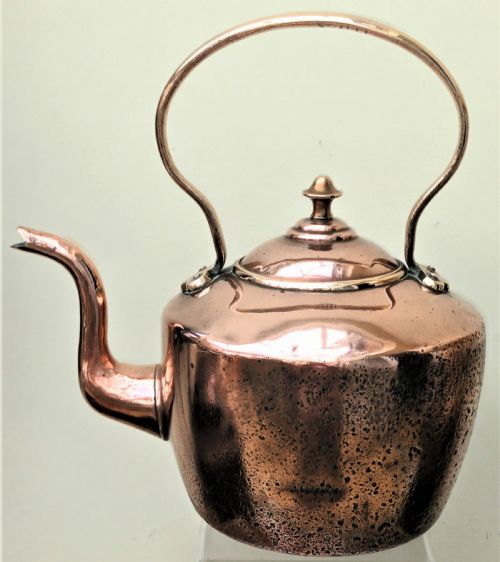
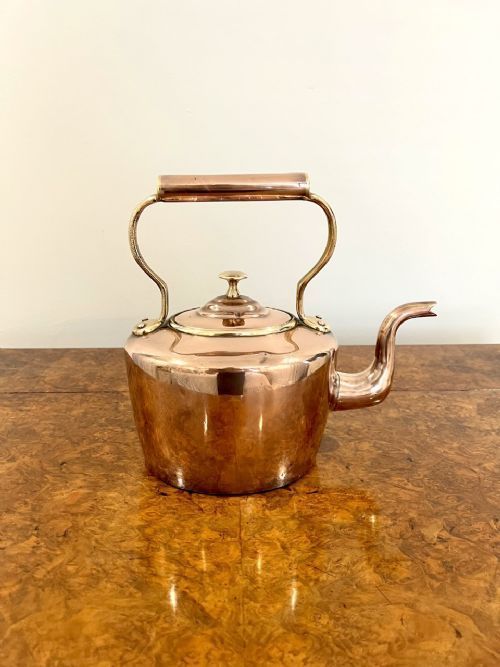


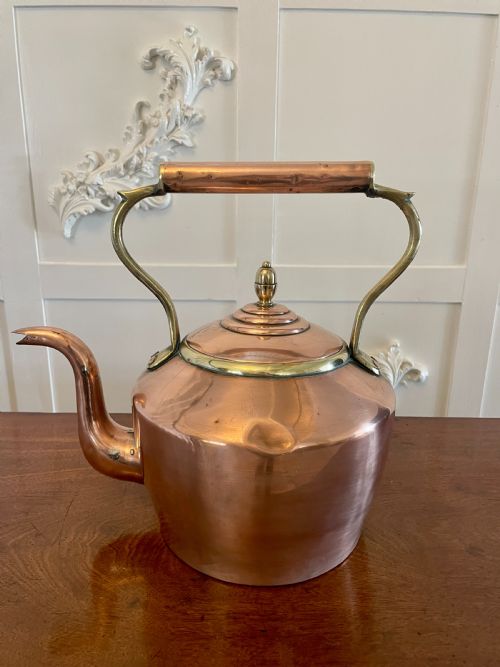
Polished Copper Teapot
A polished copper teapot brings warm metallic lustre and useful history to a kitchen, offering solid metal vessels shaped in past centuries.
Polished Copper Teapot
When you search for a polished copper teapot, you encounter heavy kitchen vessels designed for heating water across generations. The pieces available here span the George III period, the Victorian era, and the wider nineteenth century.
Most examples take the form of traditional tea kettles and kettles fashioned in copper, occasionally accompanied by brass fittings and wooden elements. These items reflect the domestic metalwork of earlier British homes and hearths.
You find both small and large variants dating from eighteen hundred onwards, maintaining the characteristic shine of polished metal surfaces. Each object demonstrates the practical utility required by households before modern electric appliances.
How they were made
The construction relies on beaten and formed copper sheets, shaped to handle boiling water over an open fire or stove. Metalworkers utilised durable seams and riveted joints to ensure the vessel remained watertight under intense heat.
Brass components frequently appear on handles and mounts, providing structural contrast and robust fastening points. Selected pieces incorporate wood elements to insulate the user's hand from hot metal during pouring.
Many of these sturdy kettles outlived the hearths they once sat upon, carrying decades of soot history beneath their bright polished coats.
What varies in quality
Distinction across these kettles lies in the weight of the metal and the crispness of the forming work. Heavier gauge copper retains its structural integrity better over centuries of use and cleaning.
The refinement of the handle attachment and the harmony between the copper body and brass or wood fittings determine the overall balance of the piece. Superior examples display careful hand-shaping that preserves smooth curves across the entire body.
The Polished Copper Teapot Glossary
- Copper
- A reddish-brown metallic element prized for its thermal conductivity and malleability. It forms the primary body of these kettles.
- Brass
- An alloy of copper and zinc utilised for handles, spouts, and decorative mountings. It offers a brighter yellow contrast to the darker red metal.
- George III
- The period spanning the reign of King George the Third from seventeen sixty to eighteen twenty. Pieces from this era often exhibit clean, classic proportions.
- Victorian
- The period covering the reign of Queen Victoria during the nineteenth century. Domestic metalwork from this time often shows heavier industrial output and varied decorative styles.
Polished Copper Teapot: Frequently Asked Questions
What is a polished copper teapot?
A polished copper teapot or kettle is a functional metal vessel designed for boiling water in historic British kitchens. These items combine durable metal construction with traditional domestic utility.
They reflect the metalworking techniques of the Georgian and Victorian eras, utilising copper bodies paired with brass or wood components.
How were these kettles used?
These vessels sat directly on hearths or stoves to heat water for tea and daily domestic tasks. Their heavy metal construction allowed them to withstand high temperatures repeatedly.
Users lifted them by insulated or metal handles to pour boiling water into ceramic teapots or basins.
How do I clean polished copper?
Maintaining the bright surface requires specialised metal polish formulated for copper and brass. Regular gentle wiping removes tarnish without scratching the historic metal.
Avoid abrasive scouring pads that can wear away the thin outer layer and alter the vintage finish.
How do I tell George III from Victorian pieces?
George III pieces generally date around eighteen hundred and often display restrained, elegant proportions typical of the late eighteenth century. Victorian examples from later in the nineteenth century tend to show heavier construction.
Examining the forming marks and overall silhouette helps distinguish the earlier Georgian craftsmanship from later Victorian output.