




Polished Brass Fire Tools
Polished brass fire tools bring bright metal warmth to a hearth, combining sturdy iron utility with gleaming period display.
Polished Brass Fire Tools
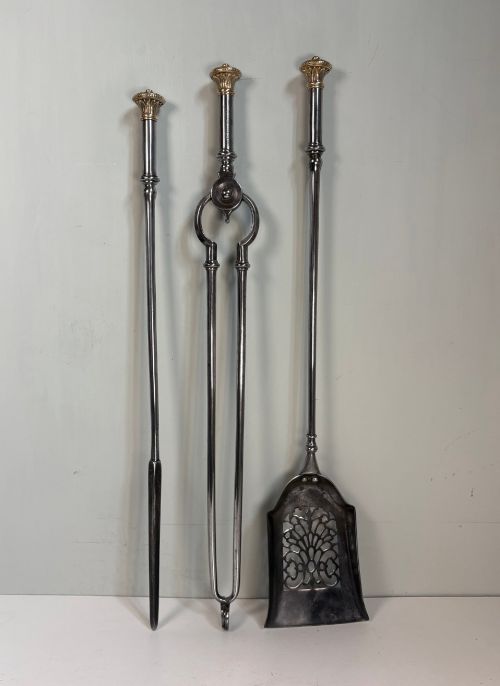
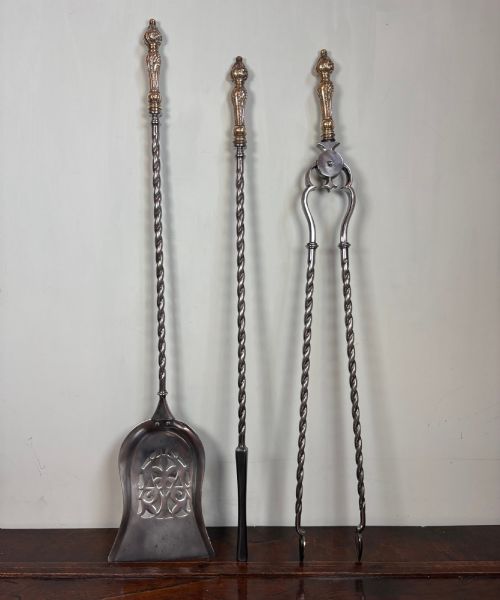
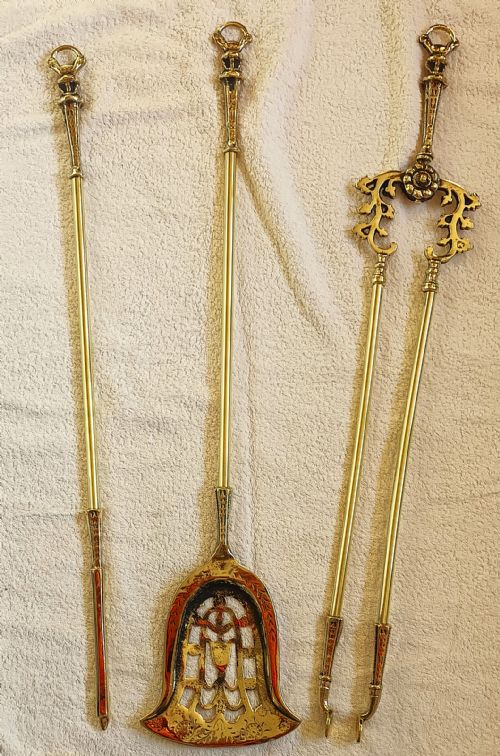
Polished brass fire tools appear in configurations ranging from simple three-piece sets of shovels, pokers, and tongs to full companion suites accompanied by fire dogs or fenders. These fireplace accessories span the Georgian, Regency, and Victorian eras, alongside early twentieth-century examples.
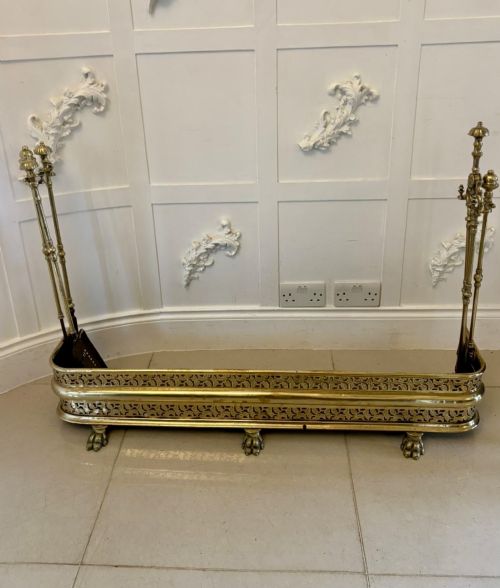
The most common forms on this page are sets of three fireside tools, often paired with matching andirons or fenders in brass, steel, and cast iron. English traditional designs dominate, drawing on Neoclassical and later nineteenth-century tastes.
Buyers encounter everything from utilitarian nineteenth-century iron sets dressed in brass to decorative twentieth-century companion sets featuring specialist handles. Surviving suites frequently retain their original form, though individual pieces within sets occasionally reflect mixed periods of manufacture.
Materials and construction
Makers combined polished brass with steel and iron to balance decorative appeal with the strength required for tending a coal or wood fire. Brass was worked into sheet fenders, cast handles, and decorative mounts, while working shafts relied on durable steel or iron.
Handles display specialised metalworking techniques, including rope twist patterns, starburst motifs, and ring or door knocker designs. Cast brass elements were often paired with forged steel rods to create tools that could withstand heavy daily use.
Polished Brass Fire Tools Retail Price Guide 2026
Typical asking prices for polished brass fire tools among the pieces listed under this phrase on Sellingantiques today, from the lower quarter to the upper quarter. They describe what is for sale here now, not the wider market.
Some nineteenth-century pokers feature handles shaped like heavy door knockers, ready for unexpected visitors.
Quality and manufacture
Quality rests in the weight of the metal, the crispness of cast details like starbursts or claw and ball feet, and the integrity of the joins between handles and shafts. Finer examples maintain matched sets with uniform patination and substantial brass thickness.
Lower quality pieces often show hurried casting, thin brass plating over base metals, or replacement parts that disrupt the consistency of a companion set. Superior suites exhibit deliberate balance in the hand and careful detailing along every tool.
James Cartland & Sons
The Polished Brass Fire Tools Glossary
- Companion set
- A matched group of fireplace tools, usually comprising a poker, shovel, and tongs, often displayed together on a stand or with matching fire dogs.
- Fire irons
- The working implements used to manage a hearth fire, including pokers, shovels, and tongs.
- Andirons
- Also known as fire dogs, these horizontal metal supports hold logs within an open fireplace and frequently match the accompanying fire tools.
- Fender
- A low metal guard placed on the hearth in front of a fireplace to contain stray embers and protect the floor.
- Claw and ball
- A decorative foot motif representing a bird's talon clutching a ball, frequently seen on fine period furniture and fireside accessories.
Polished Brass Fire Tools: Frequently Asked Questions
What tools come in a set?
Standard companion sets typically include a poker for adjusting logs, a shovel for clearing ash, and tongs for handling fuel. Many configurations also add fire dogs or fenders to complete the hearth arrangement.
Historically, these tools were designed to sit beside the fireplace as both functional implements and decorative room furnishings during the winter months.
How do I clean polished brass?
Polished brass responds best to gentle cleaning with a soft cloth and dedicated metal polish to maintain its brightness without wearing down the surface. Avoid harsh abrasives that can scratch the metal or remove historical patination.
Regular dusting keeps soot and ash from accumulating in the detailed crevices of handles and mountings.
Are these tools safe to use?
Period fire tools are constructed from sturdy iron, steel, and brass designed specifically for tending real fires. Their robust shafts and heat-resistant materials make them fully practical for daily hearth use.
Care should be taken with antique handles, particularly those with intricate cast details or older repairs, to ensure a secure grip during use.
How do I date a set?
Dating relies on stylistic clues such as Neoclassical motifs from the Georgian era, heavy Victorian casting styles, or early twentieth-century manufacturing marks. The choice of materials, such as early steel shafts paired with cast brass, also points to specific decades.
Comparing the wear patterns and handle designs helps place a set within the eighteenth, nineteenth, or early twentieth centuries.