


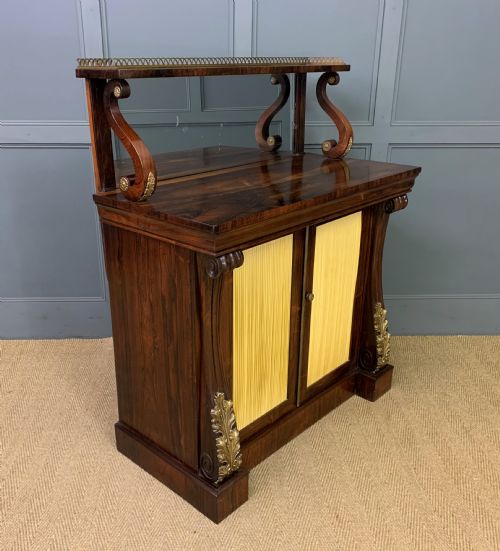
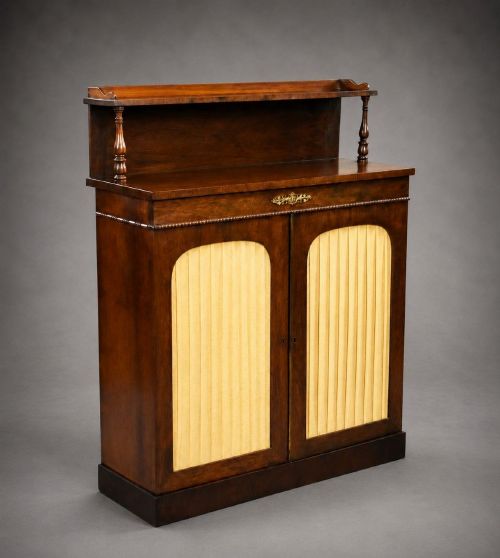


Pleated Fabric Side Cabinet
A pleated fabric side cabinet brings tactile texture to a room, pairing timber frames with soft pleated chiffon panels.
Pleated Fabric Side Cabinet
A pleated fabric side cabinet generally appears in forms such as chiffoniers and credenzas dating from the Georgian, Regency, and Victorian periods. These storage items combine enclosed lower cupboards with upper shelving or low profiles, originating from the nineteenth century.
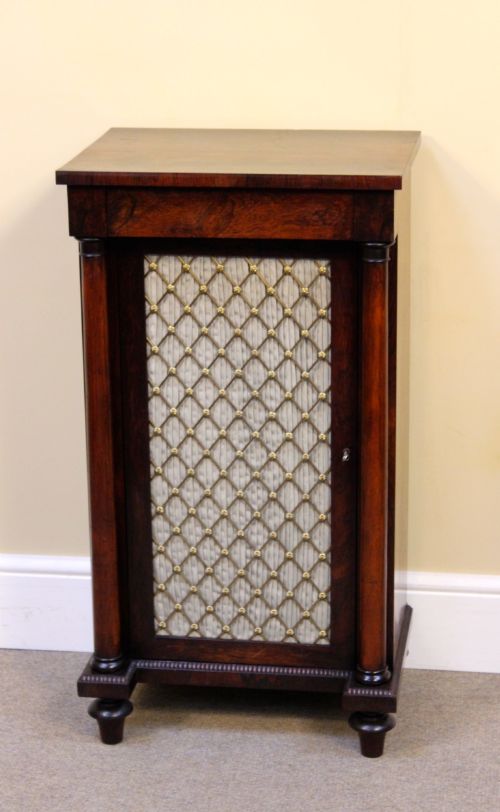
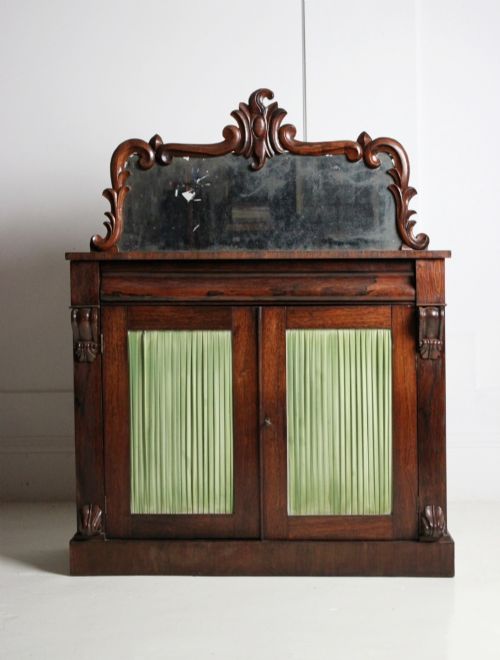
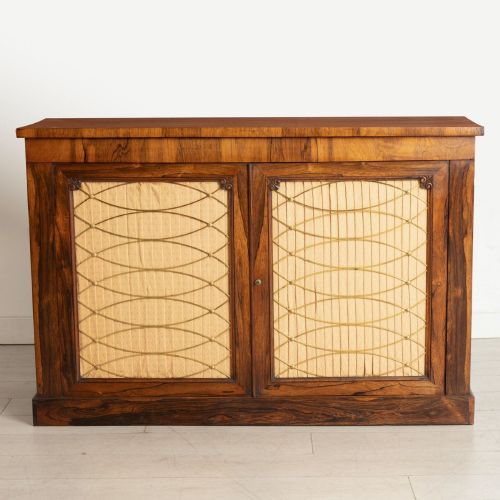
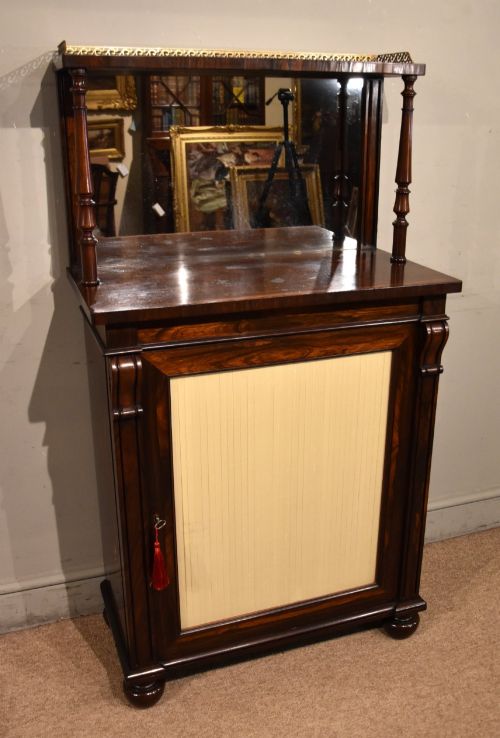
The most common version met on this page is the Regency or Victorian rosewood chiffonier, often featuring a low silhouette and glazed or fabric-backed doors. Mahogany and simulated rosewood also surface frequently among the listings, showing the varied ambitions of nineteenth-century cabinet makers.
Makers designed these side cabinets to serve dual purposes in dining rooms and parlours, offering surface display space alongside discreet storage. The inclusion of fabric panels, specifically pleated chiffon, softens the heavy timber construction characteristic of the era.
How they were made
Craftsmen built these cabinets using solid and veneered timbers including rosewood, mahogany, goncalo alves, and simulated rosewood. Rich grain patterns were prized, particularly figured rosewood, which required skilled sawing to reveal the natural figuring across large door panels and carcases.
Metalwork played a structural and decorative role, with brass mounts, grilles, and hinges fitted to secure doors and accent timber edges. Mirror glass also appears within the construction, reflecting light behind shelving or above the cabinet body.
Soft materials completed the construction through the insertion of pleated fabric panels, usually silk or chiffon, tucked behind wooden tracery or brass grilles. This technique softened the overall aesthetic while keeping cabinet contents concealed from view.
Pleated Fabric Side Cabinet Retail Price Guide 2026
Typical asking prices for pleated fabric side cabinet among the pieces listed under this phrase on Sellingantiques today, from the lower quarter to the upper quarter. They describe what is for sale here now, not the wider market.
Listings for this phrase feature pieces primarily from the Regency, Victorian, and Georgian periods, spanning the nineteenth century.
What varies in quality
The choice of timber forms a primary distinction across pieces, moving from straight-grained mahogany to highly figured rosewood and exotic goncalo alves. Superior examples display carefully matched veneers that wrap harmoniously around the carcase and door fronts.
Detailing in the metalwork and the execution of the fabric panels separate standard production from exceptional work. Finer items incorporate cast brass mounts, precise pleating, and sophisticated structural forms like breakfronts and serpentine shapes.
Gillows
The Pleated Fabric Side Cabinet Glossary
- Chiffonier
- A low cabinet featuring enclosed cupboards below, sometimes surmounted by a shelf or gallery supported on pillars. This form served as a sideboard or general storage unit in nineteenth-century interiors.
- Goncalo alves
- A dense exotic timber prized for its distinctive contrasting brown and blonde figuring. Cabinet makers utilised this wood for high-status Regency furniture.
- Simulated rosewood
- A decorative paint technique applied to a cheaper foundational timber to imitate the appearance of genuine rosewood. Artisans grained the surface by hand to mimic natural growth rings.
- Serpentine
- A curved shape featuring a convex centre flanked by concave curves, or vice versa. This contour required advanced woodworking skill to execute cleanly on solid timber or veneered carcases.
Pleated Fabric Side Cabinet: Frequently Asked Questions
What is a pleated fabric side cabinet used for?
These cabinets served primarily as sideboards and storage units in nineteenth-century dining rooms and parlours. They provided surface space for serving or display while keeping tableware and linens stored behind closed doors.
The inclusion of fabric panels allowed air circulation while concealing the contents from view. Today, they function as decorative storage credenzas or media consoles in modern living spaces.
How do I tell a Regency cabinet from a Victorian one?
Regency pieces often display classical proportions influenced by archaeological discoveries, utilising brass inlay, rosewood veneers, and restrained architectural lines. The era spans roughly the early nineteenth century up to the reign of George IV.
Victorian cabinets tend toward heavier proportions and more exuberant ornamentation, sometimes incorporating serpentine shapes or more elaborate mirror glass arrangements. Comparing the timber selection and overall silhouette helps determine the manufacturing period.
Why do some cabinets feature fabric panels?
Fabric panels, often made from silk or chiffon, were fitted behind wooden tracery or brass grilles to soften the visual weight of the timber carcase. This technique was particularly popular on chiffoniers during the Regency period.
The pleated fabric also served a practical purpose by concealing stored items while remaining lighter and less rigid than solid wooden door panels.
How should I care for antique rosewood furniture?
Keep antique rosewood furniture away from direct sunlight and heat sources to prevent the wood and underlying veneers from drying out or splitting. Maintaining a stable room humidity preserves both the timber and any internal joinery.
Dust the surface gently with a dry, soft cloth rather than using silicone-based polishes. Periodically feeding the timber with appropriate wax helps maintain the natural lustre of the polished grain.