
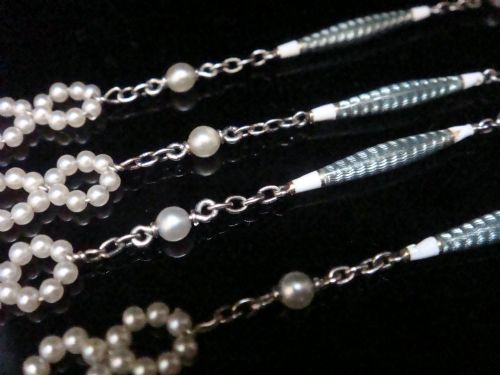


Platinum Pearl Necklace
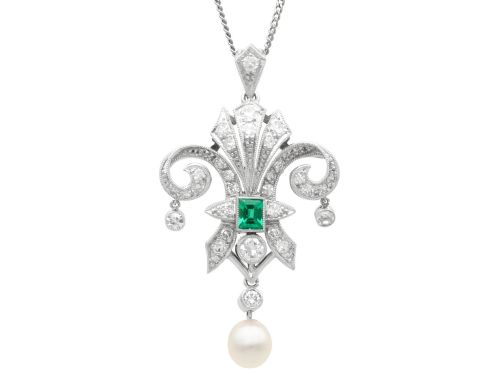
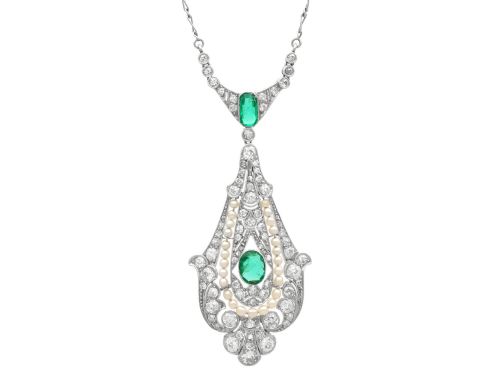
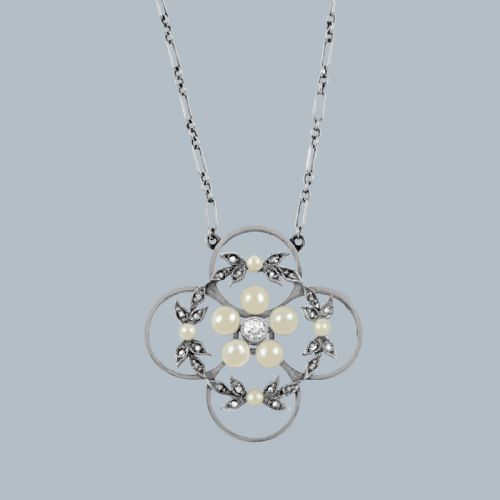
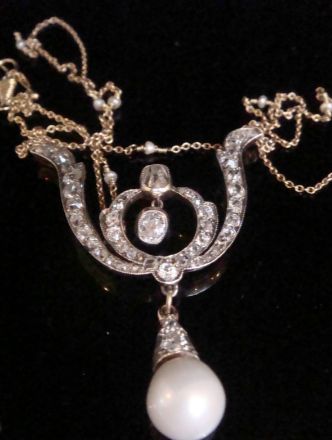
A platinum pearl necklace brings together crisp Edwardian and Art Deco metalwork with the quiet lustre of natural saltwater or seed pearls.
Platinum Pearl Necklace
When you search for a platinum pearl necklace, you encounter delicate Edwardian pendants, geometric Art Deco arrangements, and fine chains dating from the late nineteenth century through to the mid-twentieth century. The Edwardian pieces often incorporate intricate millegrain work alongside diamonds, while later examples show the cleaner lines of the 1920s and 1930s.
You are most likely to meet pieces that combine platinum settings with yellow gold backs or chains, a common construction method of the early twentieth century that gave strength to the front without abandoning traditional goldwork. Pendants featuring peridots, opals, emeralds, rubies, or enamel alongside the pearls appear frequently across the period range.
The selection ranges from simple single strand seed pearl chains to elaborate lavaliere pendants studded with diamonds. Each piece reflects the shifting tastes of its decade, moving from flowing floral motifs towards geometric precision.
Materials and construction
Makers utilised platinum for its strength and bright white surface, which allowed for microscopic prongs and delicate piercing without risking the security of the stones. This metal was frequently paired with 15ct gold, 18ct yellow gold, or 9ct gold in the reverse sections or chain links.
Pearls used in these pieces include natural saltwater specimens and seed pearls, often complemented by old cut diamonds, enamel work, and coloured gemstones such as emeralds, rubies, peridots, and opals. The clasps and mounts display period-specific techniques like barrel closures and hand-beaded millegrain borders.
Listings span the Victorian, Edwardian, Art Deco, and Mid-Century periods, utilising platinum alongside 15ct gold, 18ct gold, and 9ct gold.
Assessing the work
Quality in these necklaces rests upon the origin and uniformity of the pearls, particularly where natural saltwater specimens are present. The regularity of the seed pearls or the lustre of the larger pearls dictates much of the inherent value.
The refinement of the platinum work separates standard production from finer pieces. Look for crisp piercing, even millegrain edges, and secure integration between the platinum front and the gold backing or chain.
The Platinum Pearl Necklace Glossary
- Millegrain
- A decorative technique featuring a row of tiny raised metal beads along the edge of a platinum setting. This finish softens the transition between metal and stone.
- Lavaliere
- A pendant necklace featuring a central drop suspended from a chain, popular during the Edwardian and Art Nouveau periods. These designs often incorporate symmetrical gemstone clusters.
- Saltwater pearl
- Pearls formed in marine molluscs, highly prized for their deep orient and durability. They frequently appear in certified form on pieces from the early twentieth century.
- Seed pearl
- Very small natural pearls, often pierced and strung in multiple strands or clustered into floral motifs. They define many Edwardian and Victorian pendant designs.
- Old cut diamond
- Diamonds faceted by hand before modern standardisation, characterised by smaller tables and open culets. They provide a softer, candlelit sparkle in platinum settings.
Platinum Pearl Necklace: Frequently Asked Questions
How do I care for antique pearls?
Pearls are organic gems that require gentle handling, away from harsh chemicals, perfumes, and ultrasonic cleaning machines. Wipe them softly with a damp cloth after wearing to maintain their natural lustre.
Store them separately from harder gemstones and metals to prevent scratching. Periodic restringing on silk thread ensures the safety of the piece.
Are these pearls natural?
Many examples from the Edwardian and Art Deco periods feature natural saltwater pearls, while others incorporate seed pearls or cultured varieties. Certification details often accompany the finest saltwater specimens.
Examining the drill holes and surface texture under magnification helps distinguish natural formation from cultured growth. The accompanying descriptions note specific certifications where available.
Can I wear these necklaces daily?
While platinum provides a remarkably durable setting for daily wear, the delicate nature of antique seed pearl chains and fine Edwardian pendants calls for a degree of care. Reserve them for special occasions to protect the delicate stringing and antique clasps.
Checking the security of the barrel clasps and gemstone settings regularly will prevent accidental loss. Treat them as heirloom pieces rather than everyday jewellery.
How do I date these pieces?
Dating relies on stylistic clues, such as the flowing organic motifs of Edwardian and Art Nouveau design versus the strict geometry of Art Deco pieces. The combination of metals, such as platinum fronts on yellow gold backs, points firmly to the early twentieth century.
Hallmarks, where present, offer further precision, though many antique chains and pendants carry minimal stamps. Comparing the construction methods with documented pieces from the same decade confirms the era.