



Platinum Gold Pendant
A platinum gold pendant brings together durable precious metals and fine stones in a wearable antique piece.
Platinum Gold Pendant
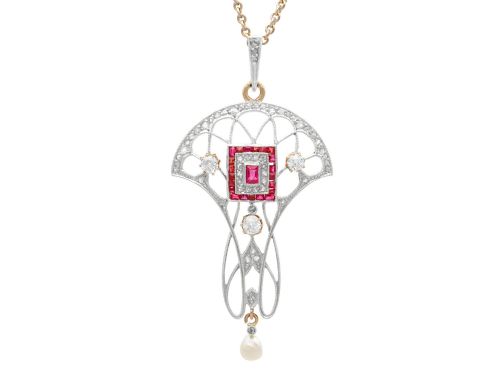
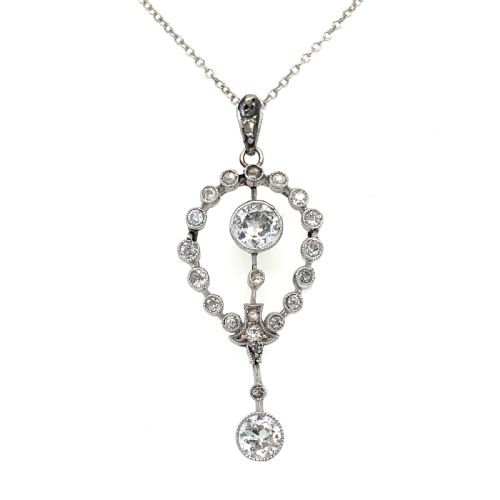
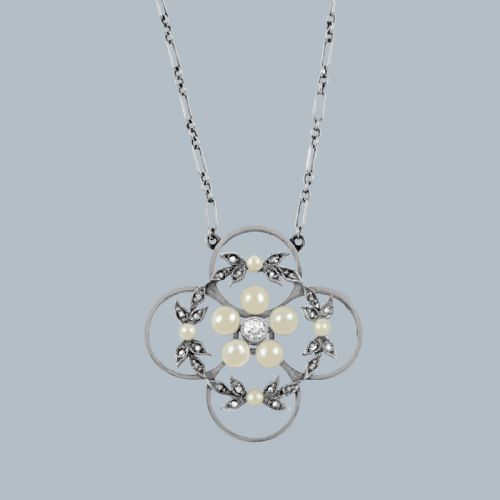
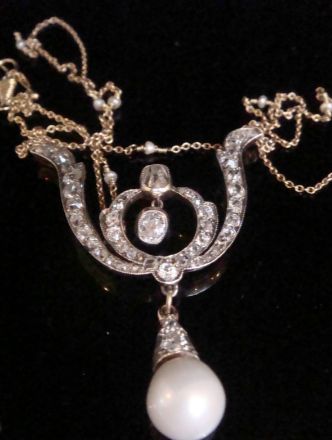
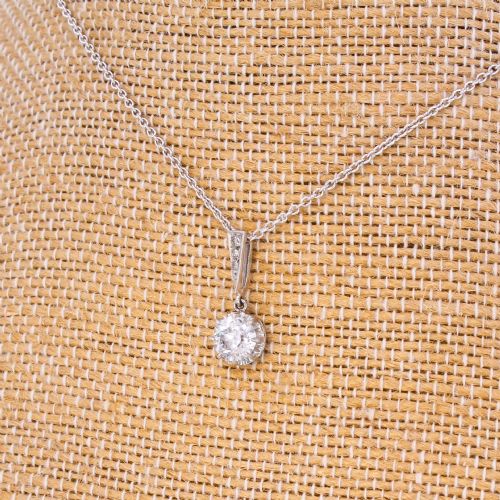
When you search for platinum gold pendant, you encounter fine jewellery from the Victorian, Edwardian, and Art Deco periods, extending into the mid-century era. These pieces frequently manifest as necklaces, pendants, pendant necklaces, and pendant brooches.
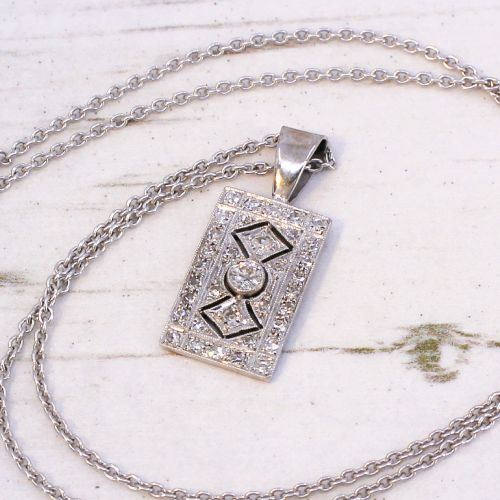
The Edwardian pieces on this page often combine platinum settings with yellow gold or white gold, incorporating diamonds, pearls, rubies, or emeralds. Art Deco examples typically showcase geometric platinum work mounted on gold, set with old cut diamonds or opals.
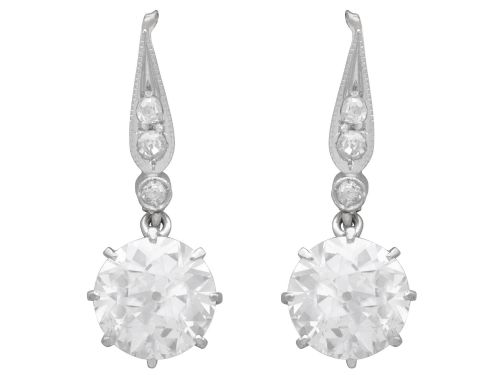
Victorian variations present gold and platinum combinations framing rubies, amethysts, and diamonds in distinct crescent or pendant forms. The selection also includes related items such as drop earrings and line brooch necklaces utilising the same precious materials.
Materials and construction
The construction relies on combining platinum with various grades of gold, including 15ct yellow gold, 18ct yellow gold, 18ct white gold, and 9ct gold. Platinum provides a strong, bright white metal setting for intricate stone arrangements while gold forms the supportive structure or chain.
Goldsmiths set diamonds, natural pearls, rubies, emeralds, aquamarines, amethysts, peridots, and opals into these dual-metal frames. Techniques involve old cut diamonds, rose cut diamonds, and old European cuts secured within detailed Edwardian and Art Deco designs.
Some pendants double as brooches, allowing an Edwardian lady to pin her sparkle to a lapel in the morning and hang it from a chain by night.
Quality factors in antique pendants
The standard of a piece depends on the precision of the metalwork where platinum meets gold and the proportional harmony of the design. Master jewellers achieved seamless transitions between the white platinum top layers and the underlying gold structures.
Stone selection and cutting define the upper tier of these pieces, seen in the clarity and carat weight of diamonds paired with natural pearls, emeralds, or rubies. Original integrity and the crispness of period-specific motifs elevate certain pendants above standard production.
The Platinum Gold Pendant Glossary
- Platinum
- A dense, ductile precious metal known for its strength and bright white lustre. It allows for delicate wirework and secure claw settings for gemstones.
- Old Cut Diamond
- A diamond cut by hand before modern machinery, featuring a smaller table, higher crown, and open culet. These stones produce a distinct warm sparkle under candlelight.
- Edwardian
- A stylistic period spanning the reign of King Edward VII, characterised by lacy platinum-on-gold settings, floral motifs, and diamond-heavy designs.
- Art Deco
- A design movement from the 1920s and 1930s focused on geometric symmetry, clean lines, and stark contrasts between platinum and yellow or white gold.
- Natural Pearl
- A pearl formed naturally within an oyster without human intervention, often prized in antique pendants and necklaces for its organic lustre.
Platinum Gold Pendant: Frequently Asked Questions
How do I care for a platinum and gold pendant?
Clean your pendant gently using warm soapy water and a soft brush to remove everyday oils from the stones and metal.
Store the piece separately in a fabric-lined box to prevent the platinum and gold from scratching against other jewellery.
Can I wear an antique pendant every day?
Platinum and gold provide a durable mounting for gemstones, making these pendants suitable for regular wear if treated with care.
Take the piece off before swimming, exercising, or doing heavy manual work to protect delicate settings and natural pearls.
How do I identify an Edwardian pendant?
Edwardian pendants typically feature lacy, garland-style platinum settings combined with yellow gold and accented by diamonds and pearls.
The work often includes millegrain detailing, which is a fine border of tiny raised metal beads along the edges of the setting.
What is the difference between old cut and modern diamonds?
Old cut diamonds were shaped by hand to catch the light of gas lamps and candles, resulting in wider facets and a softer glow.
Modern brilliant cut diamonds use strict mathematical symmetry designed to maximise electrical lighting sparkle rather than antique charm.