


Antique Ruby Drop Pendant
An antique ruby drop pendant brings together deep red stones and precious metals across Edwardian, Victorian, and mid-century designs.
Antique Ruby Drop Pendant
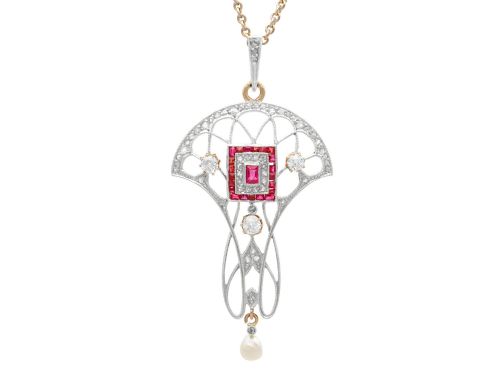
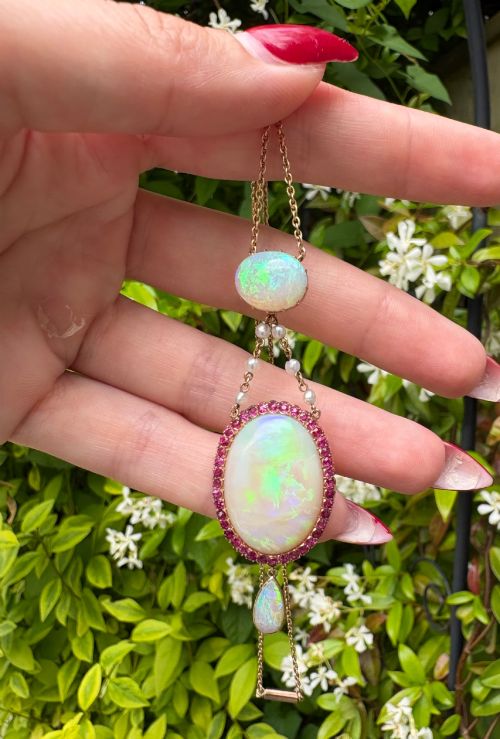
When you search for an antique ruby drop pendant, you encounter varied designs spanning the Victorian, Edwardian, and mid-century periods. These pieces range from delicate gold and pearl necklaces to platinum and diamond mountings holding rich red stones.
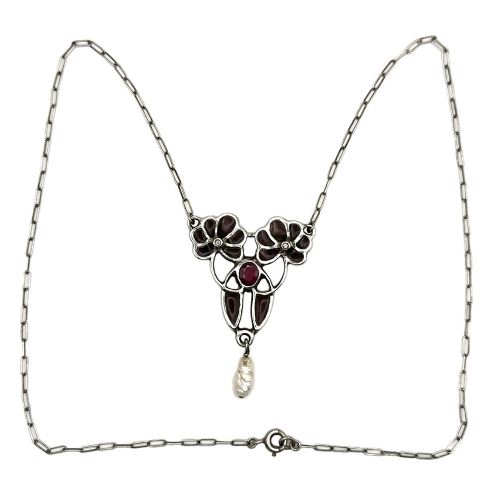
The selection on this page shows pendants combined with necklaces and drop earrings, alongside silver and gold settings. Pieces draw upon stylistic influences like Art Nouveau and French Chateau aesthetics while keeping the ruby drop as the central focus.
Materials and construction
Craftsmen built these items using yellow gold of various carats, silver, and platinum alongside precious stones. Rubies appear paired with diamonds, natural pearls, seed pearls, and citrine.
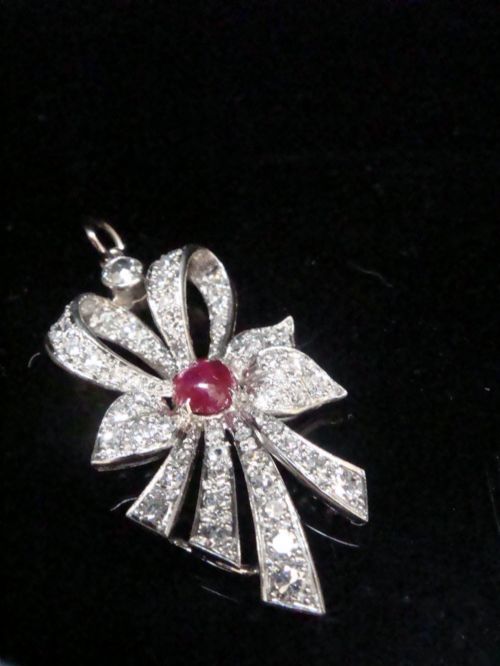
Techniques range from traditional precious metal mounting to plique-a-jour enamel work. Gemstones are secured in detailed settings that incorporate bows, intricate wirework, and delicate drop configurations.
Materials appearing across these listings include ruby, diamond, silver, pearl, platinum, crystal, and yellow gold across multiple carats.
Evaluating the craftsmanship
Quality rests upon the proportion and saturation of the ruby combined with the supporting diamond work and precious metal settings. Finer examples display balanced proportions between the central red stone and surrounding gems.
The intricacy of the metalwork, whether platinum bow details or plique-a-jour enamel, separates standard production from exceptional pieces. Heavier gold standards and platinum integration indicate higher tier workshop output.
The Antique Ruby Drop Pendant Glossary
- Ruby
- A pink to blood-red coloured gemstone belonging to the corundum mineral species. It forms the primary focal point of these pendants.
- Platinum
- A dense, malleable, and ductile precious metal with a silvery-white appearance. It was frequently utilised in Edwardian mounts for strength and fine detail.
- Plique-a-jour
- A vitreous enamelling technique where the enamel is applied in cells without a backing, resembling miniature stained glass. This method catches the light directly behind translucent colours.
- Seed pearl
- A very small natural or cultured pearl, often half-drilled and threaded onto silk or wire. They are characteristic of Victorian and Edwardian cluster work.
- Edwardian
- A stylistic period spanning the reign of King Edward VII, noted for light, airy platinum and diamond jewellery. Designs often incorporated garlands, ribbons, and bows.
Antique Ruby Drop Pendant: Frequently Asked Questions
What periods do these pendants cover?
The listings span from the late nineteenth century through the Victorian and Edwardian eras into mid-century modern designs.
Pieces reflect the stylistic preferences of their specific decade, ranging from ornate nineteenth-century goldwork to platinum-set Edwardian bows.
How do I identify an Edwardian pendant?
Edwardian pieces typically utilise platinum combined with yellow gold and feature bright white diamonds alongside red stones.
Motifs from this era often include bows, garlands, and light, intricate metalwork designed to maximise sparkle.
What metals are commonly used?
Makers utilised silver, platinum, and various grades of yellow gold including nine carat, ten carat, fifteen carat, and eighteen carat standards.
Selection of metal depended on the period, with silver and gold appearing in earlier items and platinum becoming prominent by the early twentieth century.
Are pearls commonly found with rubies?
Natural pearls and seed pearls frequently accompany rubies and diamonds in Victorian and Edwardian necklaces.
This combination provides a textural contrast between the smooth lustre of pearls and the faceted depth of red corundum.