




Platinum Diamond Three Stone Ring
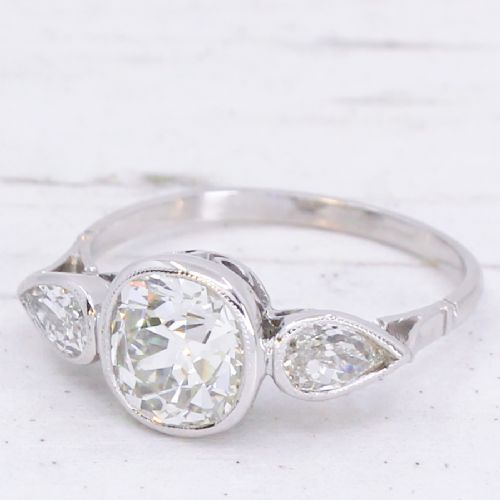
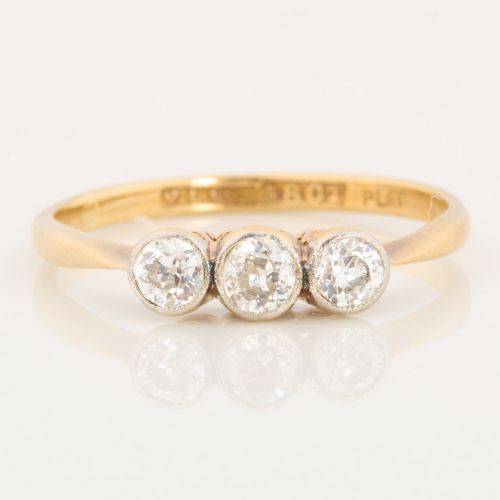
When a buyer seeks a platinum diamond three stone ring, they secure a historic trilogy piece spanning Edwardian, Art Deco and mid-century eras.
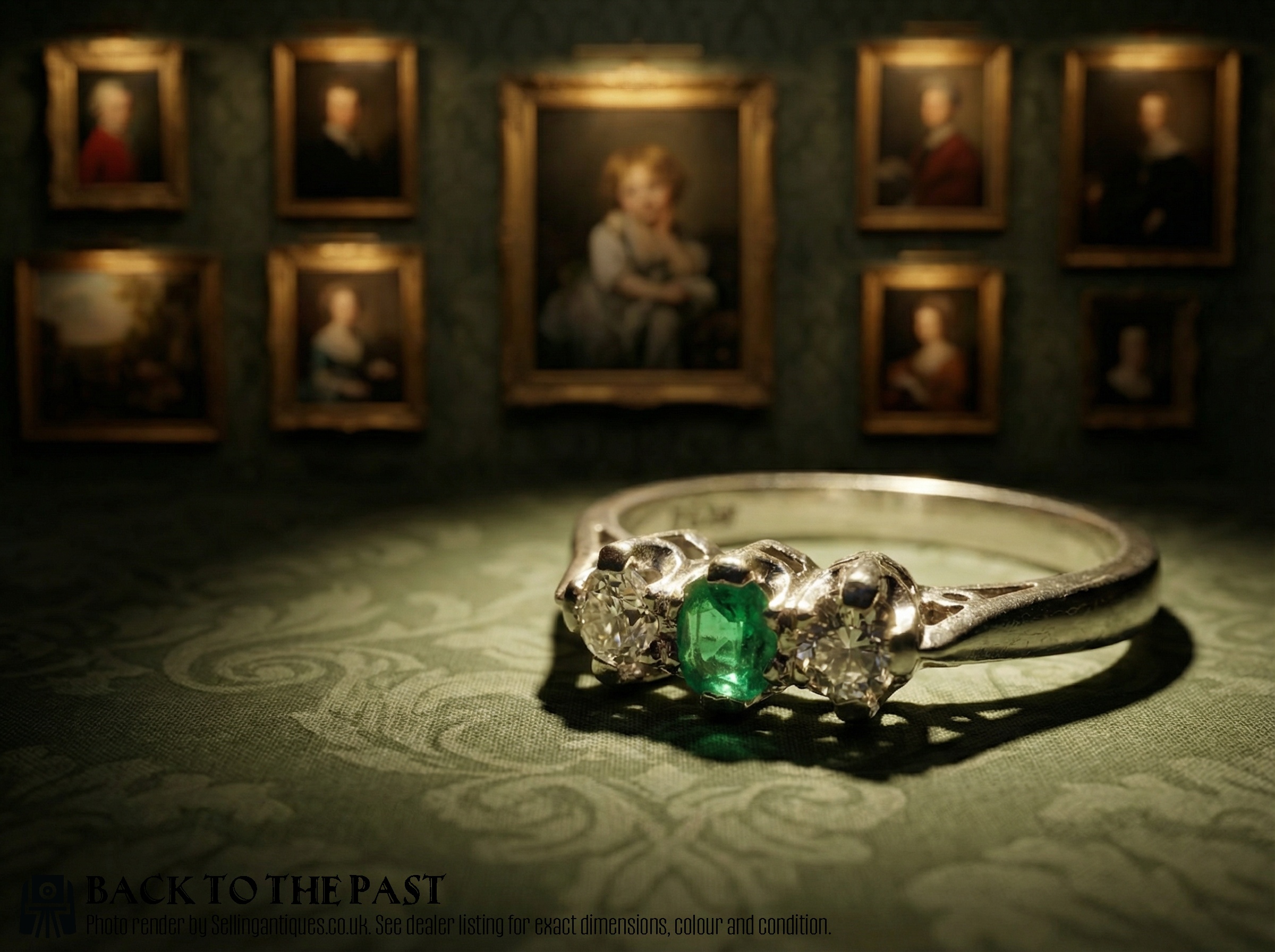
Platinum Diamond Three Stone Ring
A platinum diamond three stone ring brings together three distinct gems on a precious band, often symbolising the past, present and future. These pieces appear frequently as engagement rings or significant anniversary gifts.
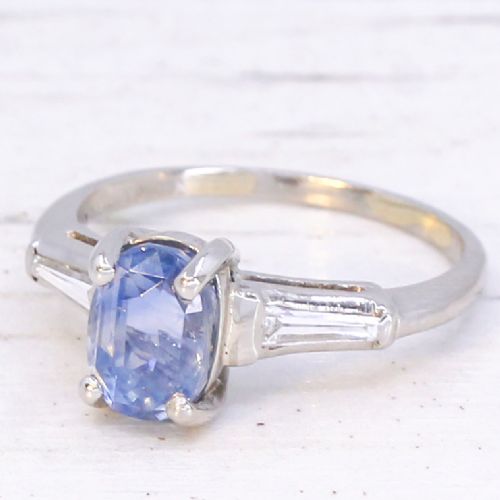
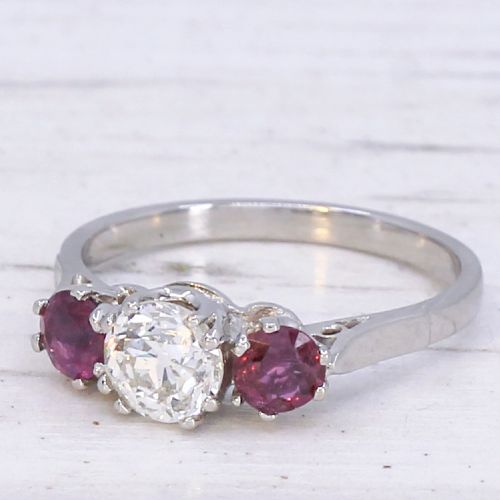
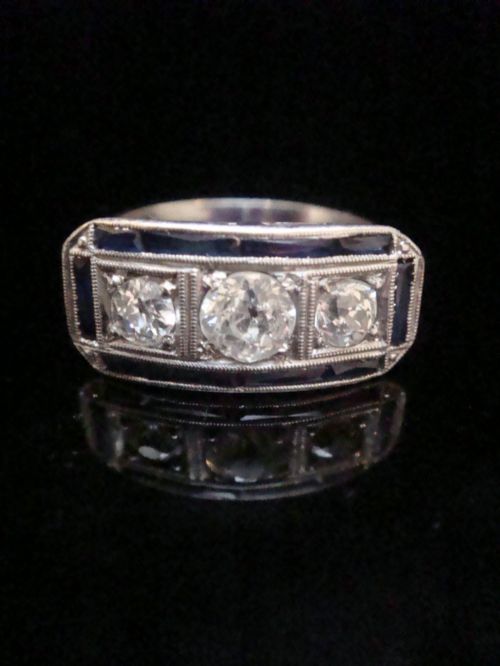
The selection on this page centres heavily on the Art Deco and Edwardian periods, alongside mid-century interpretations. Buyers frequently encounter combinations of old cut diamonds alongside sapphires, rubies or emeralds set within durable platinum.
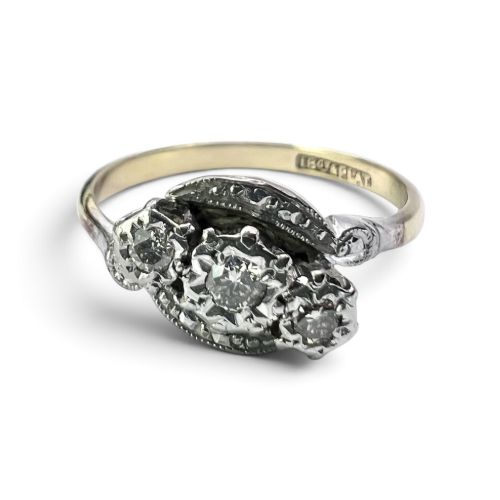
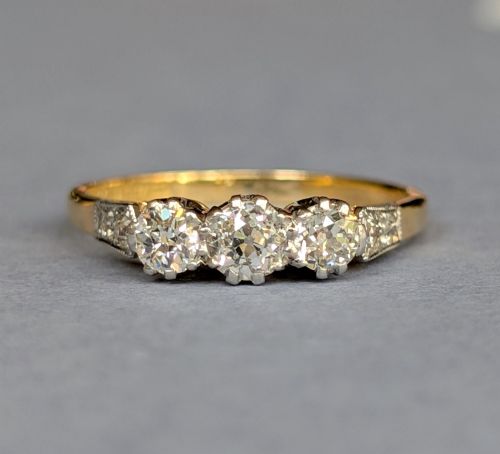
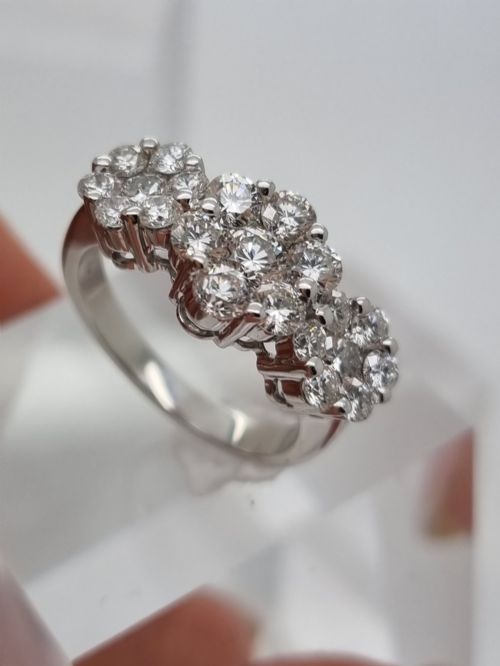
Forms range from straight trilogy layouts to twist settings and cluster accents. Many examples pair platinum heads with yellow gold shanks, bridging late nineteenth-century warmth with twentieth-century geometry.
Materials and construction
Makers utilised platinum predominantly for setting stones because its strength allowed for delicate claws and intricate millegrain work without bulk. Gold, particularly eighteen carat yellow or white, frequently forms the supporting band or shank.
Gemstones display historical cutting styles such as old cushion, old European and old pear cuts alongside baguette and step cuts. These stones are secured by hand-fashioned metalwork characteristic of early twentieth-century jewellery workshops.
Some past rings feature hidden diamond-set shoulders designed to catch the light from every possible angle.
Assessing quality and character
Quality rests in the matching, proportion and brilliance of the principal stones, particularly when unheated sapphires or old cut diamonds are involved. Finer examples display harmonious stone sizing and precise gemstone symmetry.
The intricacy of the metalwork defines the standard of craftsmanship, distinguishing standard production from high jewellery. Hand-carved shoulders, crisp gallery wirework and secure, low-profile settings elevate a piece.
BRAVINGTONS·BIRKS
The Platinum Diamond Three Stone Ring Glossary
- Trilogy ring
- A ring featuring three primary gemstones set in a row across the finger. This layout is historically associated with sentimental meaning.
- Old cut diamond
- A diamond cut by hand before modern symmetrical standards were established, featuring a smaller table and high crown that produces a distinctive candlelit glow.
- Millegrain
- A decorative technique involving a row of tiny raised metal beads along the edges of a setting. It was especially popular during the Edwardian and Art Deco eras.
- Platinum
- A dense, durable white metal utilised in fine jewellery for its strength and hypoallergenic properties. It securely holds precious stones with minimal visible metal.
Platinum Diamond Three Stone Ring: Frequently Asked Questions
What does a three stone ring mean?
A three stone ring traditionally represents a couple's past, present and future together. This sentimental symbolism made the configuration a popular choice for engagement and anniversary jewellery.
Over the decades, jewellers adapted the design using various diamond cuts and coloured centre stones while retaining the core three-stone layout.
How do I date an antique ring?
Dating relies on stylistic clues, cutting techniques and metal hallmarks stamped inside the band. Edwardian pieces often show delicate filigree and platinum work, while Art Deco items favour sharp geometric lines.
Old cut diamonds and specific maker marks provide further evidence to narrow the production period to a specific decade.
Can I wear my ring every day?
Platinum and gold offer the durability needed for daily wear when paired with hard gemstones like diamonds. However, antique pieces benefit from careful handling during physical activities.
Regular checks by a jeweller ensure that Edwardian or Art Deco settings and claws remain secure over time.
Are coloured gemstones common in trilogy rings?
Coloured gemstones frequently appear alongside diamonds in historical trilogy configurations. Sapphires, rubies and emeralds serve as striking alternatives or complements to a central diamond.
Unheated sapphires and emeralds from specific origins add distinct character and historical interest to mid-century and Art Deco examples.