




Edwardian Trilogy Engagement Ring
An edwardian trilogy engagement ring brings together three stones symbolising past, present, and future in a delicate period setting.
Edwardian Trilogy Engagement Ring
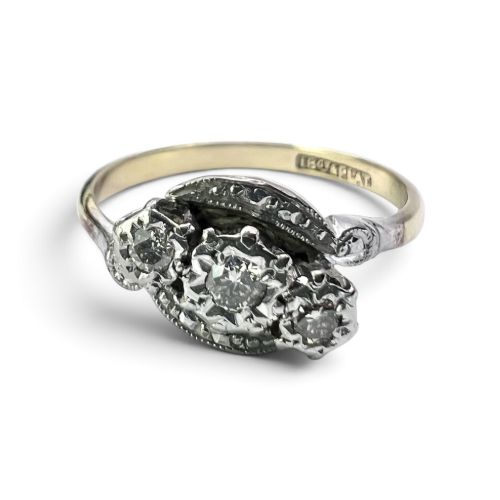
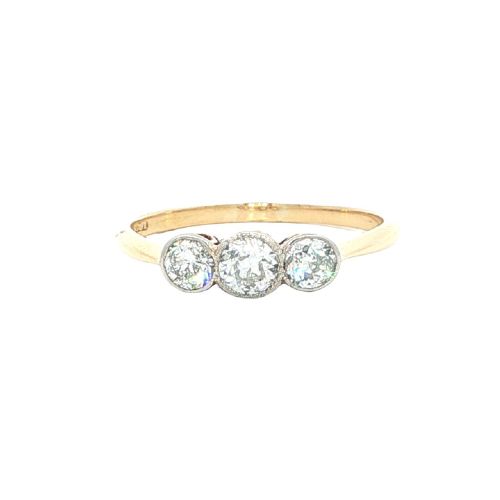
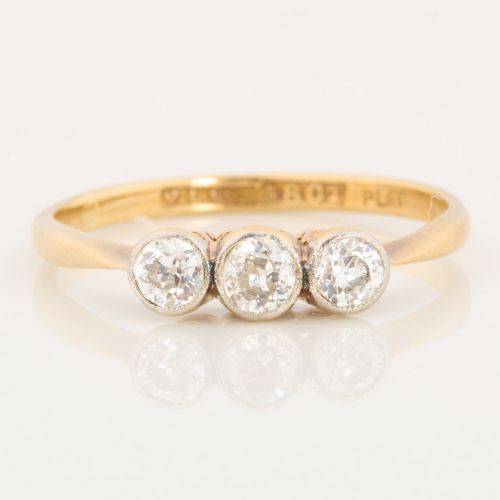
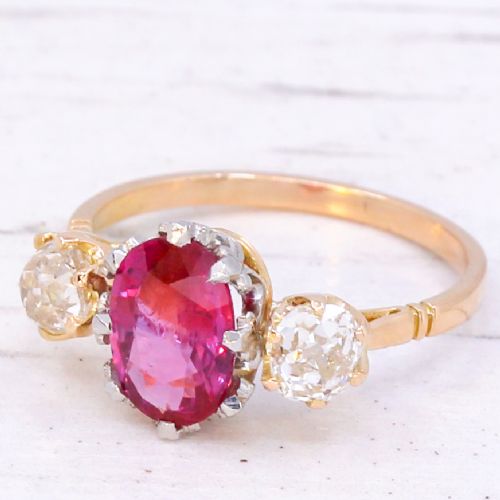
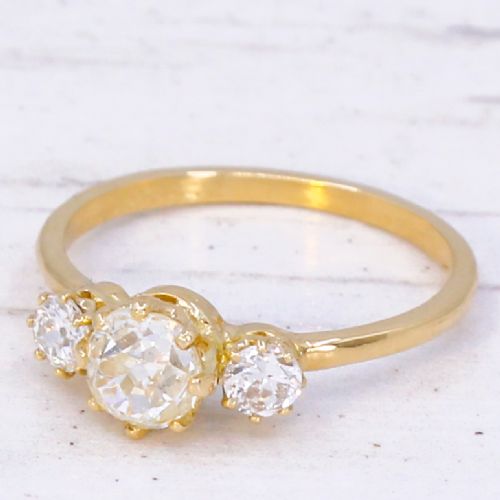
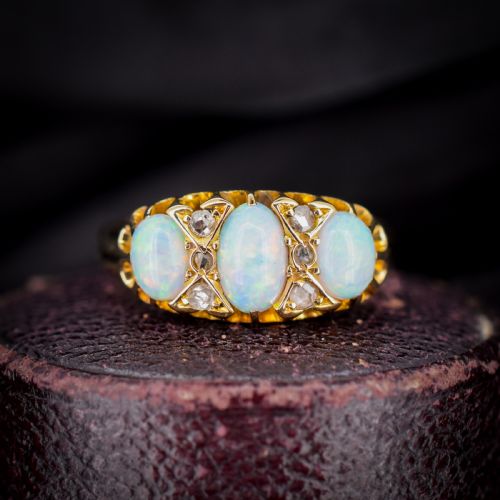
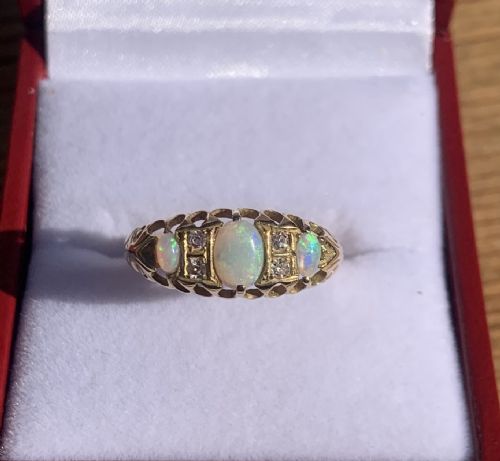
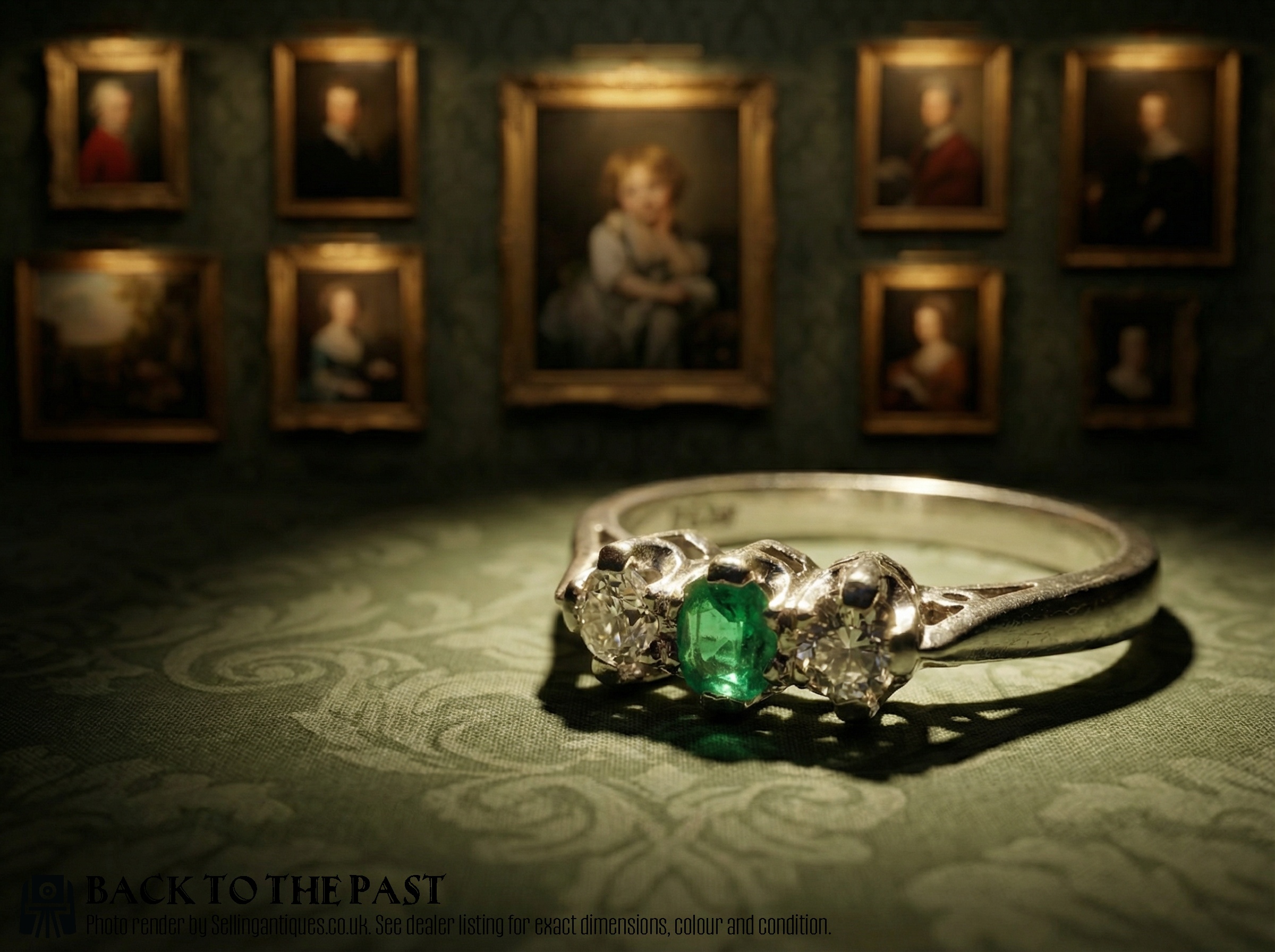
The edwardian trilogy engagement ring centres on three stones mounted in a row, most frequently taking the form of a diamond centre stone flanked by two smaller gems or matching brilliants. These pieces appear primarily from the Edwardian period and the surrounding decades, spanning late Victorian work through to Art Deco designs.
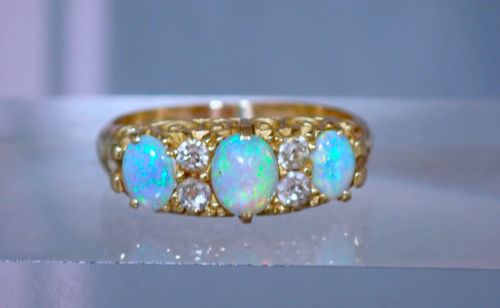
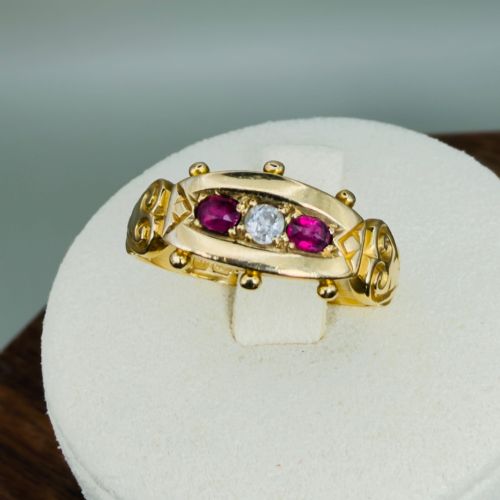
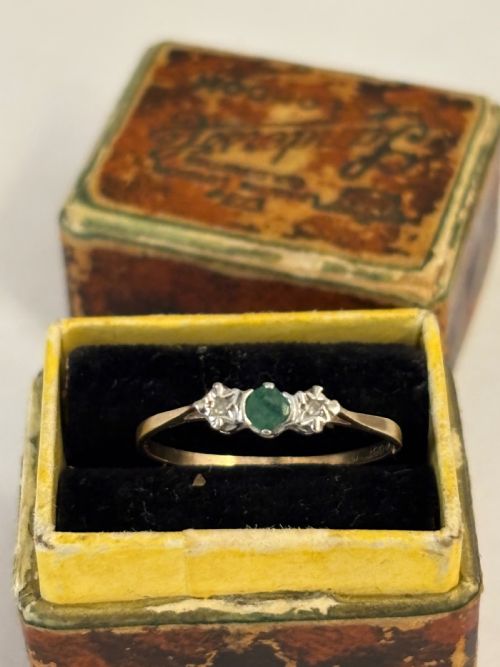
Most examples seen here pair old cut diamonds with 18ct yellow gold or platinum settings, occasionally incorporating rubies, sapphires, opals, or emeralds. The three stones represent a distinct design lineage that prioritises linear symmetry and refined proportions over heavy ornamentation.
Materials and construction
Makers set stones using 18ct yellow gold for the shank while frequently employing platinum for the top claws and settings to maximise the whiteness and brilliance of old cut diamonds. This dual-metal construction allowed artisans to combine the warmth of gold with the structural strength of platinum.
Gems were hand-cut into old European or old mine cuts, resulting in characteristic soft facets and high crowns that catch candlelight differently than modern brilliant cuts. Settings often feature delicate millgraining along the edges, adding a fine beaded texture to the metalwork.
Listings demonstrate a strong presence of 18ct gold paired with platinum settings across Edwardian and Art Deco examples.
Gradations of quality
Quality rests in the matching and proportion of the three stones, where uniformity in colour, cut, and carat weight creates a cohesive visual rhythm across the finger. Better examples display stones selected specifically to complement one another rather than assembled as an afterthought.
The refinement of the metalwork distinguishes superior pieces, visible in the delicacy of the claw settings and the crispness of any hand-cut millgrain borders. Skilled bench work ensures the gallery sits low to the hand while maintaining secure housing for each gem.
The Edwardian Trilogy Engagement Ring Glossary
- Trilogy ring
- A ring featuring three principal stones set in a horizontal line across the finger. This layout carries traditional symbolism representing the past, present, and future of a relationship.
- Old cut
- A diamond cut by hand before the standardisation of the modern brilliant cut in the early twentieth century. These stones typically possess smaller tables, higher crowns, and open culets.
- Millgrain
- A decorative technique involving tiny raised metal beads edging the platinum or gold settings. It provides a soft textural frame to the stones.
- Claw setting
- A method of holding a gemstone in place using thin metal prongs that extend from the gallery. This allows maximum light to enter the pavilion of the stone.
- Twist ring
- A variation where the gold band wraps around the stones in a dynamic curve rather than running straight across. This style adds movement and fluidity to the three-stone silhouette.
Edwardian Trilogy Engagement Ring: Frequently Asked Questions
How do I wear a trilogy ring daily?
These rings pair easily with straight wedding bands due to the linear arrangement of the three stones. Their low profile sits comfortably against the hand during everyday tasks.
Take care to remove the ring during heavy manual work to protect the antique gold shanks and delicate claw settings from undue wear.
What do the three stones mean?
The three stones traditionally represent the past, the present, and the future of a couple's shared life together. This romantic symbolism made the design a popular choice for engagement jewellery.
While diamonds remain the standard choice for all three positions, many period examples substitute coloured gems like sapphires, rubies, or opals for the outer stones.
How can I tell an Edwardian ring from a Victorian one?
Edwardian pieces often utilise platinum settings combined with yellow gold, favouring light, lace-like structures and delicate millgraining. Victorian examples tend to use heavier gold mounts with warmer colour tones and simpler bezel or star settings.
Overlaps occur around the turn of the century, making hallmarks and specific stone arrangements key indicators of exact production periods.