


Plaster Wall Relief
Plaster wall relief pieces bring classical myth and religious devotion into domestic rooms through modelled white and tinted surfaces.
Plaster Wall Relief
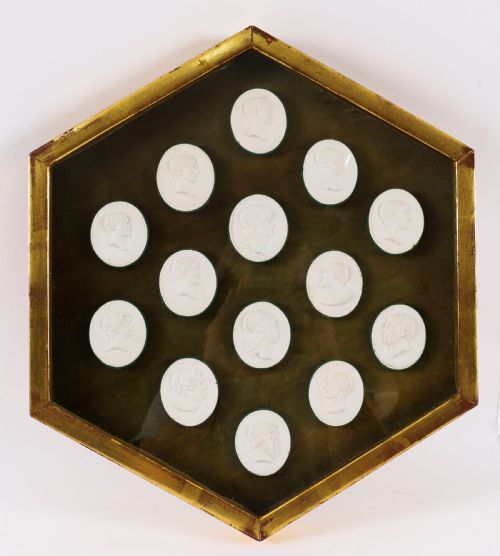
A plaster wall relief captures modelled figures and scenes in solid form for interior display, drawing on centuries of classical and religious iconography. These works range from framed Grand Tour intaglios and medallion collections to large architectural friezes and painted armorial panels. Buyers encounter pieces spanning the eighteenth, nineteenth, and early twentieth centuries, created within British, French, and German artistic traditions.
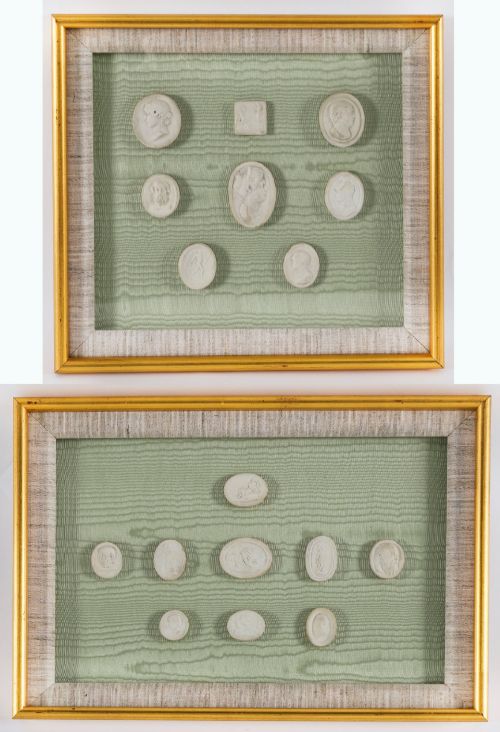
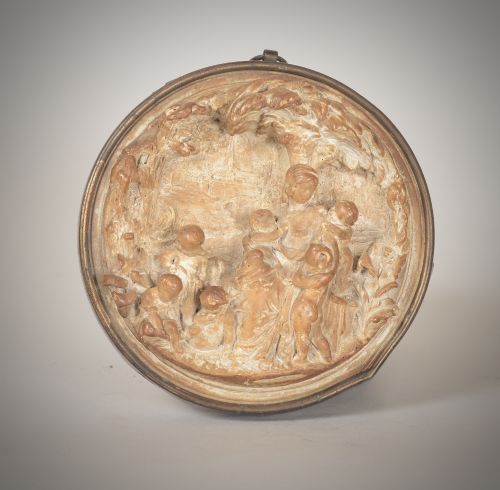
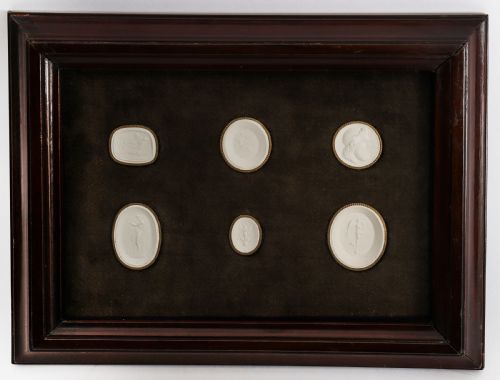
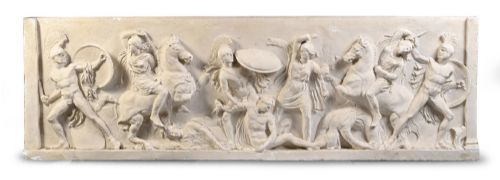
Framed compositions dominate the selection, particularly sets of classical intaglios and cast medallions arranged behind glass. Architectural fragments and wall plaques also appear, depicting subjects from Hellenistic horse riders to Renaissance religious scenes after makers such as Donatello. The typical piece hangs directly on the wall as art or sits within a protective wooden box frame.
Materials and Construction
Makers shaped these reliefs using plaster, gesso, and occasionally marble dust, pouring or pressing the material into moulds to capture fine detail. Wood provides the structural backing for many pieces, whilst glass protects delicate framed intaglios and cast medallions from dust and damage.
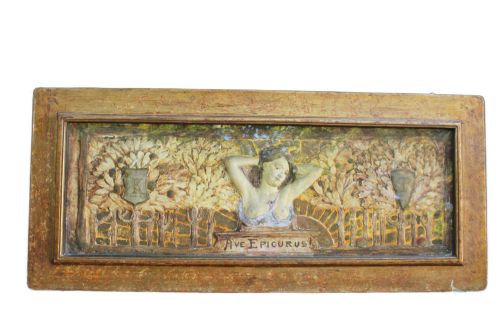
Surface finish varies through the application of paint, polychrome pigments, and giltwood or gilt wood highlights. Gilt frames and painted wooden panels complement the white plaster figures, creating contrast in tone and texture.
Cherubs appear frequently across these walls, caught mid-play or lingering near the veil of Veronica with serene indifference.
Assessing Quality and Execution
The quality of the framing and mounting significantly influences the overall character of a piece. Original wooden frames, clean glass protection, and well-preserved polychrome or gilded surfaces indicate careful historical maintenance.
Giovanni Liberotti
The Plaster Wall Relief Glossary
- Intaglio
- A design incised or carved into a material so that the impression lies below the surface. Grand Tour intaglios reproduce classical gems and coins in plaster.
- Gesso
- A plaster-like mixture used as a base for painting or moulding fine details. It provides a smooth white surface for gilding and polychrome decoration.
- Frieze
- A long, narrow band of sculpture decorating a wall or architectural feature. Eighteenth-century plaster friezes often depict winged figures and classical processions.
- Polychrome
- Decorated in a variety of colours. Polychrome plaster reliefs feature painted details that enhance the realism of figures and garments.
- Armorial panel
- A flat surface displaying a coat of arms or heraldic insignia. Plaster armorial panels record family lineages and institutional identities.
Plaster Wall Relief: Frequently Asked Questions
What is a plaster wall relief?
A plaster wall relief is a three-dimensional sculptural artwork cast or carved from plaster and mounted for display on interior walls.
These pieces range from small framed classical intaglios to large architectural friezes and devotional plaques originating from the eighteenth and nineteenth centuries.
How were Grand Tour intaglios used?
Grand Tour intaglios were collected by travellers in Europe as portable records of classical sculpture and ancient gems.
Collectors arranged these plaster casts in framed sets and cabinet boxes to demonstrate classical learning and refined taste upon returning home.
How do I hang a heavy plaster relief?
Heavy plaster reliefs require secure wall anchors and sturdy picture wire attached directly to the wooden frame or backing.
Because plaster is dense and fragile, weight distribution across a solid wall stud prevents structural damage to the piece.
How do I date a plaster relief?
Dating relies on stylistic markers, framing materials, and accompanying inscriptions that connect the piece to specific periods like the Victorian or Edwardian eras.
Examining the backing wood, glass type, and mounting style helps distinguish eighteenth-century casts from later nineteenth-century reproductions.