



Pitch Pine Writing Table
A pitch pine writing table offers a robust work surface with distinct resinous grain, prized by collectors for its honest Victorian character.

Pitch Pine Writing Table
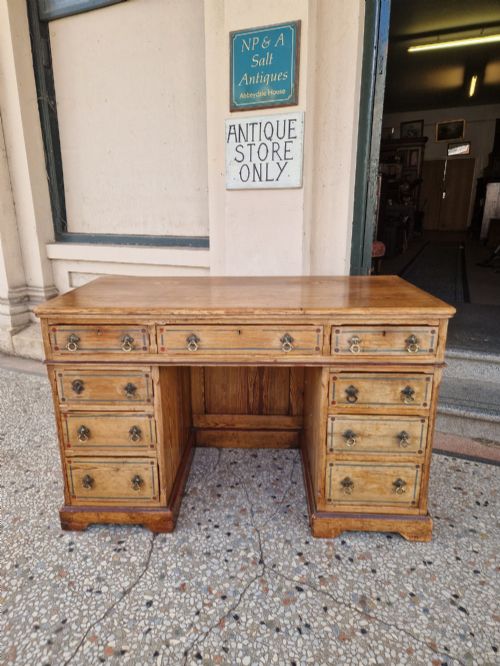
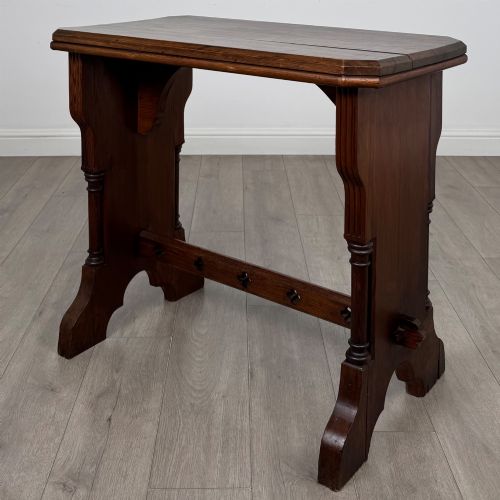
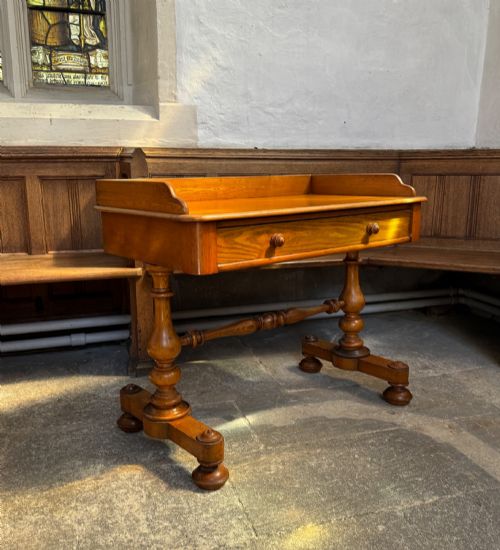
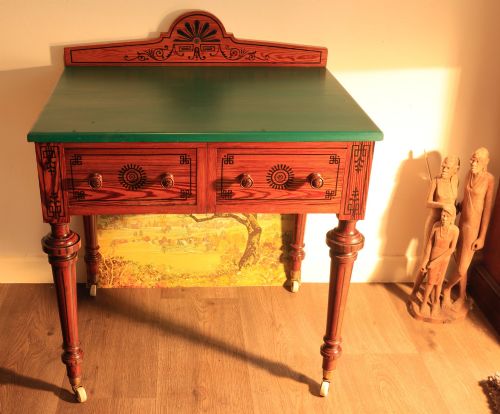
When searching for a pitch pine writing table, buyers encounter sturdy pieces predominantly dating from the Victorian era and the early twentieth century. These tables range from utilitarian side tables and washstands adapted for writing to substantial kneehole pedestal desks and twin-drawer writing tables.
The objects listed on this page span several distinct aesthetic expressions, including Victorian Gothic, Arts and Crafts, and Aesthetic Movement designs. Some examples retain traces of ecclesiastical or chapel origins, while others serve domestic roles as hall tables or dressing surfaces.
Most pieces date between eighteen-fifty and nineteen-ten, utilising the dense softwood characteristic of the period. Buyers most frequently meet rectangular forms featuring functional drawers and occasionally baize-lined writing surfaces.
What varies in quality
The distinction between standard utility pieces and finer examples rests upon the selection of timber and the sophistication of the joinery. Tables featuring heavily figured, resin-rich pitch pine and well-executed stylistic details such as Gothic revival mouldings command greater attention.
Structural heft and original hardware contribute significantly to the overall merit of an individual piece. Desks retaining original brass fittings, intact baize linings, and balanced proportions demonstrate superior craftsmanship compared to heavily altered utilitarian examples.
Pitch Pine Writing Table Retail Price Guide 2026
Typical asking prices for pitch pine writing table among the pieces listed under this phrase on Sellingantiques today, from the lower quarter to the upper quarter. They describe what is for sale here now, not the wider market.
Several tables retain traces of chapel life, meaning your desk might have spent its youth holding hymn books.
Maple & Co
The Pitch Pine Writing Table Glossary
- Pitch pine
- A dense, durable softwood noted for its high resin content and prominent, decorative grain patterns. It was widely used in Victorian furniture making for its strength.
- Pedestal desk
- A heavy freestanding desk supported by two banks of drawers or cupboards beneath the work surface. This form provides substantial storage capacity.
- Kneehole
- The central recessed space beneath a desk top designed to accommodate the user's legs while seated. It often separates twin pedestals of drawers.
- Baize
- A coarse woollen fabric, traditionally green, used to line the writing surfaces of desks. It provides a soft texture for writing upon.
Pitch Pine Writing Table: Frequently Asked Questions
What is pitch pine?
Pitch pine is a durable North American and European softwood known for its density and striking resinous grain patterns. Victorian cabinetmakers favoured it for pieces requiring both strength and decorative presence.
Because of its high resin content, the wood resists wear effectively and develops a deep honey-coloured patina over decades of use.
How do I date a pitch pine desk?
Dating relies on stylistic clues such as Gothic revival arches, Arts and Crafts simplicity, or Aesthetic Movement proportions. Construction methods like drawer dovetails and the presence of original brass or iron hardware also help narrow the period.
Most pieces originate from the Victorian era up to the early twentieth century, reflecting the popularity of the timber during those decades.
Were these tables used in churches?
Many pitch pine tables originated in ecclesiastical settings, vestries, and chapels before entering the domestic market. Their robust construction made them suitable for institutional or vestry use.
Ecclesiastical examples often display simple Gothic architectural influences or heavier framing compared to domestic counterparts.
How should I care for pitch pine?
Maintenance involves dusting with a soft cloth and occasionally applying traditional beeswax to nourish the wood. Avoiding direct sunlight and excessive heat protects the finish and prevents the timber from drying out.
Proper care preserves the distinctive grain and warm tone characteristic of nineteenth-century pine furniture.