
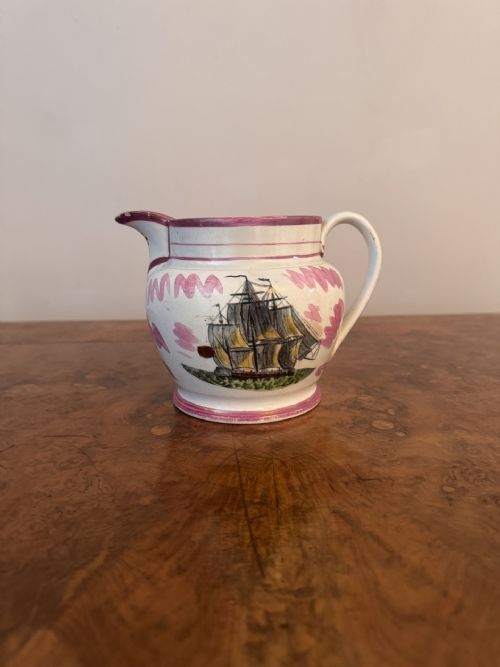
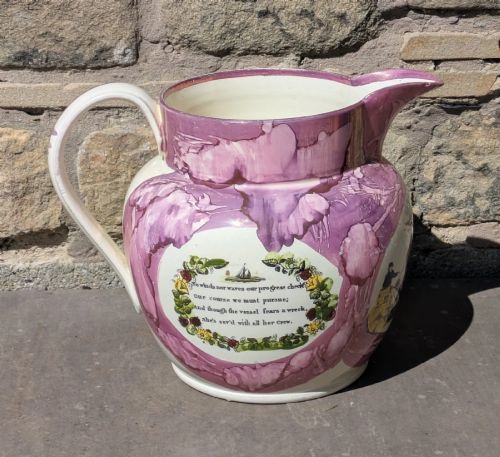


Pink Splash Lustre Jug
These pink splash lustre jugs bring fierce nineteenth-century maritime spirit and transfer-printed verse straight to a room, exactly what a serious collector seeks.
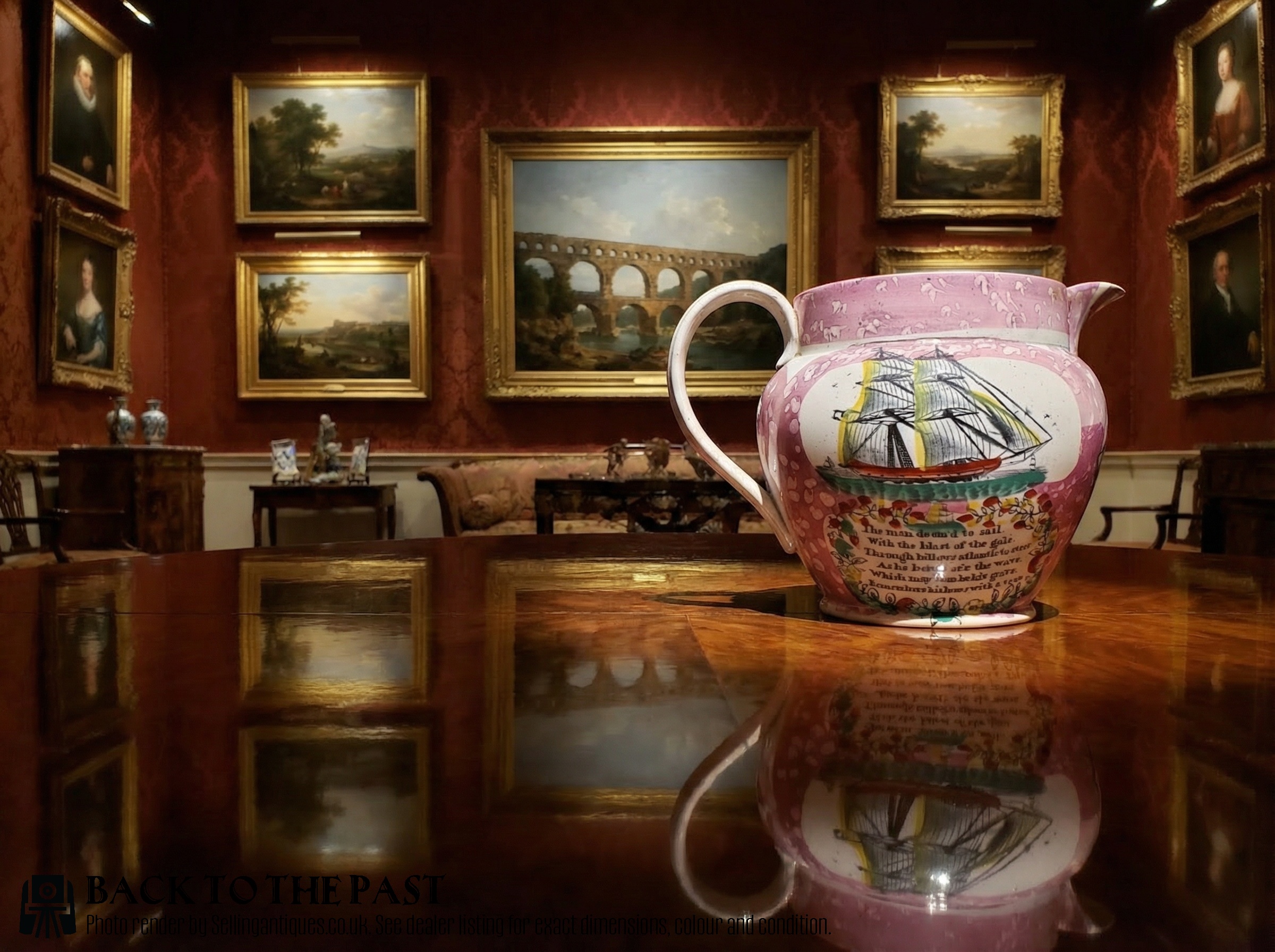
Pink Splash Lustre Jug
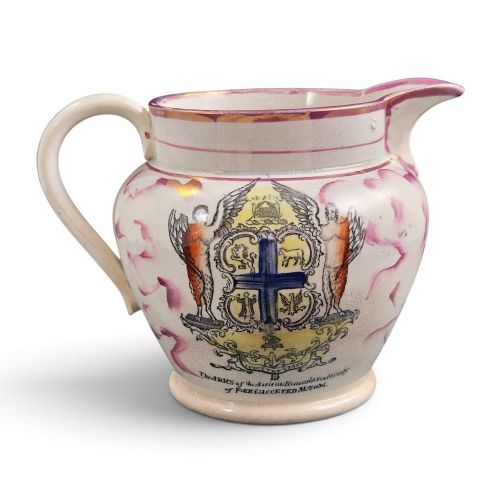
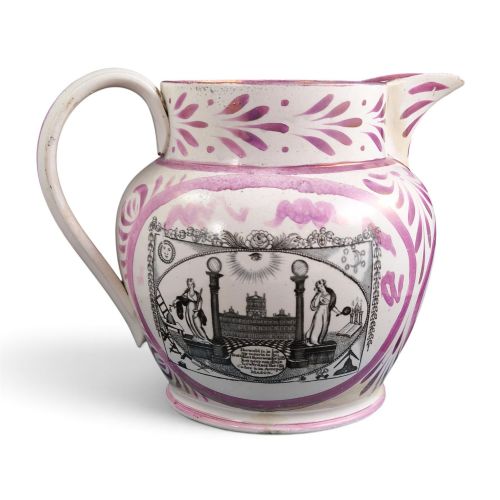
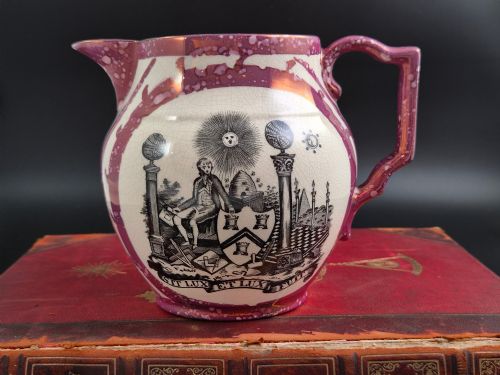
When searching for a pink splash lustre jug, a buyer encounters earthenware vessels adorned with characteristic mottled metallic pink glazes, often featuring transfer-printed maritime scenes, masonic symbols or heartfelt poetry.
The pieces on this page span the Georgian and Victorian periods, showcasing the rich pottery traditions tied to nineteenth-century Sunderland and surrounding English kilns.
Most examples adopt robust jug and pitcher forms, varying from large display vessels to intimate pieces carrying named inscriptions, clipper ships or verses like Dear Jack.
How they were made
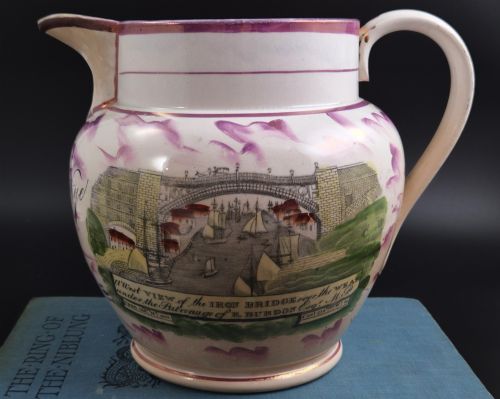
Potters shaped these vessels from earthenware and pearlware before applying intricate transfer prints depicting tall ships, iron bridges, and masonic emblems.
The distinctive pink splash effect relies on metallic oxide and glaze techniques that spatter or marble across the surface during firing, creating the characteristic mottled finish.
Makers finished many of these pieces with hand-painted enamel highlights over the prints, adding vivid colour to the maritime themes and poetic panels.
Sailors seemingly required endless verses about stout ships and dear jacks to survive the nineteenth century, judging by the poetry fired onto these jugs.
What varies in quality
Excellence in a pink splash lustre jug rests on the crispness of the transfer printing and the depth of the mottled pink glaze across the earthenware body.
The strength and clarity of hand-applied enamel details further divide everyday pottery from top-tier examples of nineteenth-century folk art.
Sunderland Garrison Pottery
The Pink Splash Lustre Jug Glossary
- Pink splash lustre
- A metallic glaze technique that creates a mottled, speckled pink appearance across the ceramic surface. This effect is a defining characteristic of nineteenth-century Sunderland pottery.
- Transfer printing
- A method of applying detailed designs to ceramics using an engraved copper plate and tissue paper. It allowed potteries to produce complex maritime scenes and poems efficiently.
- Pearlware
- A refined type of earthenware developed in the late eighteenth century featuring a subtle blueish glaze in the recesses. It forms the smooth body of early nineteenth-century jugs.
- Masonic jug
- A ceramic vessel decorated with symbols and emblems of Freemasonry. These were often commissioned for lodges or individual members during the Georgian and Victorian eras.
- Enamel
- Vitreous coloured paints applied over the fired glaze and fixed with a low-temperature firing. Potters used enamels to brighten transfer-printed ships and floral borders.
Pink Splash Lustre Jug: Frequently Asked Questions
What are pink splash lustre jugs?
These are nineteenth-century earthenware and pearlware vessels featuring a mottled metallic pink glaze. They typically originate from English potteries associated with maritime trade.
Potters often decorated them with transfer-printed images of clipper ships, iron bridges, masonic emblems, and sentimental verses.
How were these jugs used?
While capable of holding liquids, many served decorative or commemorative purposes in homes and masonic lodges. Their substantial sizes made them ideal display pieces.
Inscribed names, dates, and poetic panels suggest they frequently marked significant personal milestones, farewells, or returns from sea.
How do I date a lustre jug?
Dating relies on stylistic shifts in the pearlware or earthenware bodies, alongside the nature of the transfer prints and recorded makers. Georgian examples often display lighter pearlware bodies.
Victorian pieces tend toward heavier earthenware forms with bolder enamel colours and specific mid-nineteenth-century architectural subjects like the Wear iron bridge.
How should I display them?
Place these jugs where steady ambient light highlights the metallic pink lustre glaze and the details of the transfer prints. Keep them away from direct sunlight to protect any hand-painted enamel highlights.
Secure stable shelving is essential, given the substantial weight of nineteenth-century earthenware vessels.