


Sunderland Splash Lustreware Pitcher
These Sunderland splash lustreware pitcher pieces bring together bold metallic glazes and detailed transfer prints to capture 19th-century maritime life.
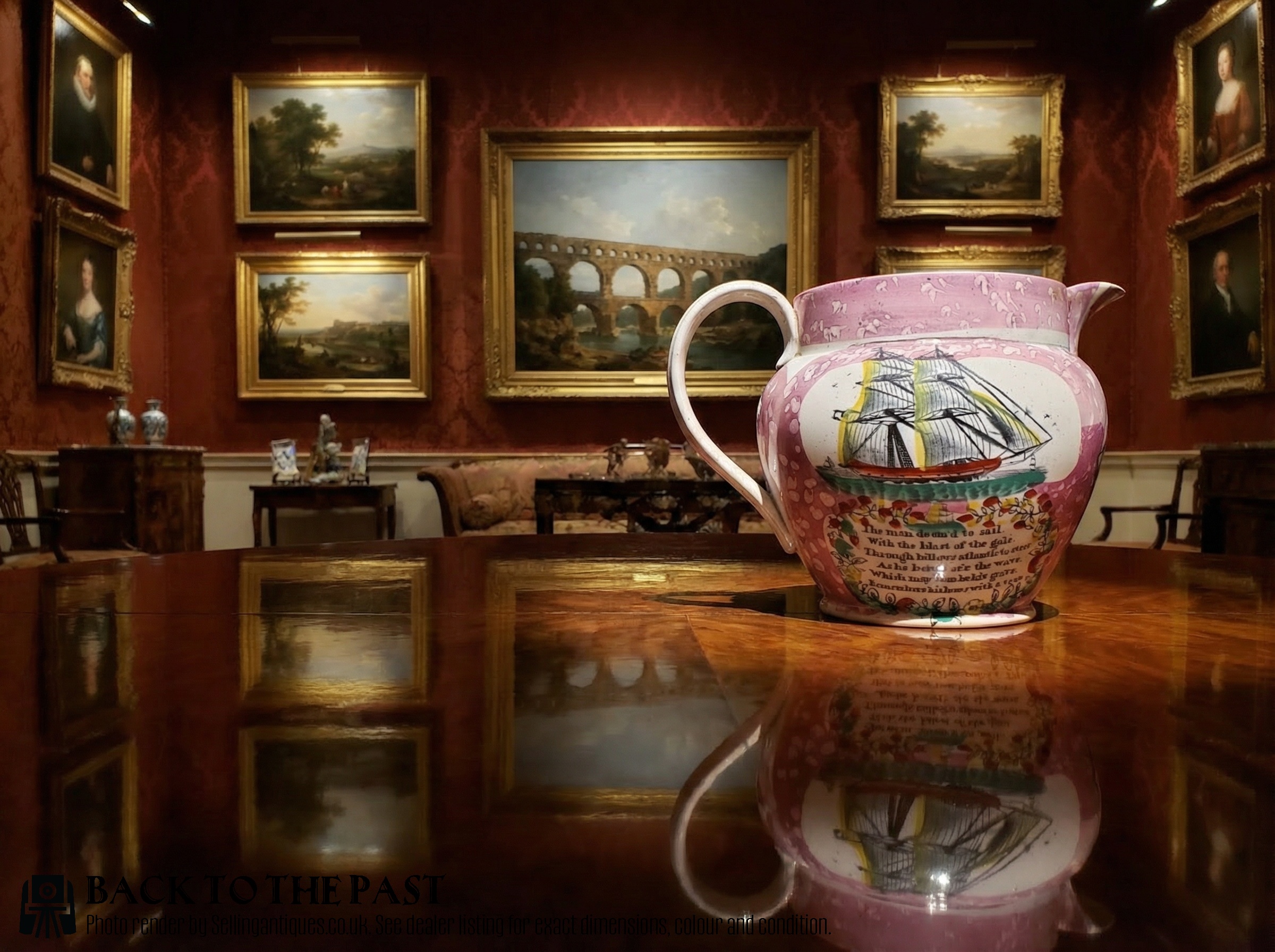
Sunderland Splash Lustreware Pitcher
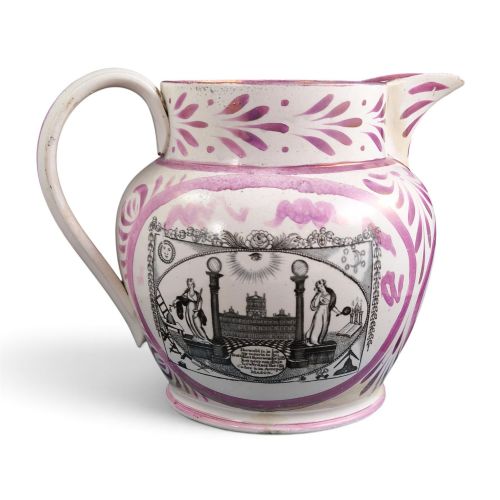
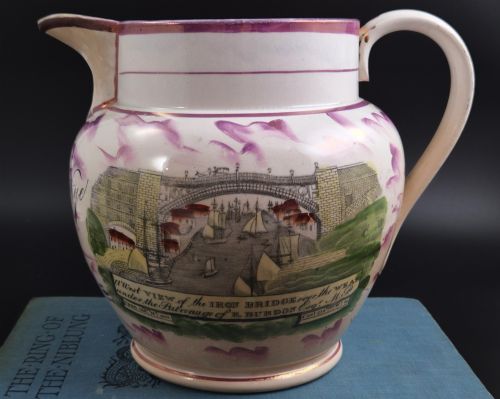
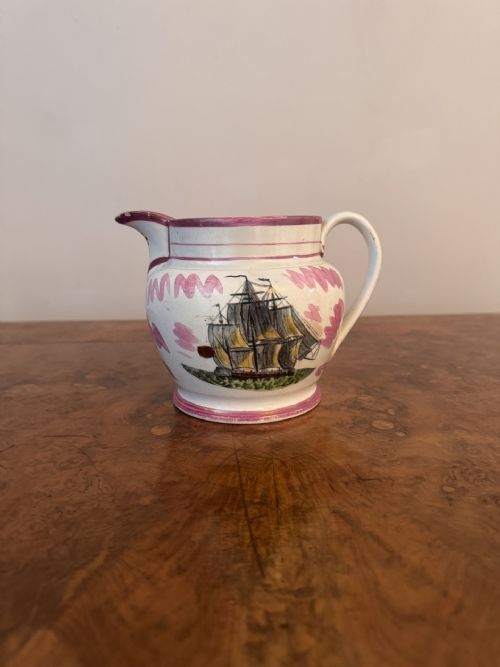
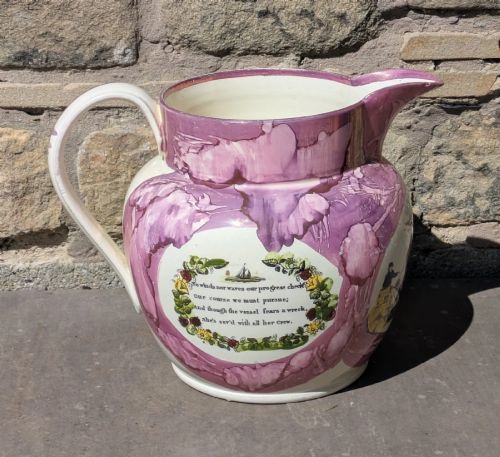
A sunderland splash lustreware pitcher is a earthenware or pearlware vessel decorated with characteristic metallic glazes that create a mottled, splash effect across the surface. These jugs frequently incorporate transfer-printed panels depicting ships, the Iron Bridge over the Wear, masonic symbols, or poetic verses alongside hand-painted enamel colours.
Most examples encountered on this page belong to the Georgian and Victorian periods, ranging from around eighteen hundred to eighteen sixty. Formats vary from tall ships jugs to large coloured jugs carrying maritime themes and boxing scenes.
Buyers seek these pitchers for their distinct visual presence, which combines industrial pottery techniques with folk art narratives. The combination of pink splash lustre and copper tones creates a reflective surface unlike standard glazed earthenware.
How they were made
Potters shaped these pitchers in earthenware or pearlware bodies before applying metallic oxide glazes to achieve the signature lustre finish. During firing, the metallic glaze separated into distinctive splashes and pools across the white or cream ceramic base.
Makers integrated transfer printing for complex imagery such as tall ships and the Wear bridge, then added enamel details by hand. This layered technique produced robust vessels designed for everyday durability alongside decorative appeal.
Sailors and lodge members of the nineteenth century ensured their pitchers were large enough to share a hearty toast.
What varies in quality
Quality in a sunderland splash lustreware pitcher rests on the crispness of the transfer prints and the vibrancy of the hand-applied enamel colours. Stronger pieces display a dense, even splash effect across the body without muddying the underlying printed panels.
The precision of the named inscriptions, dates, and detailed maritime scenes separates standard utility vessels from more ambitious commemorative pieces. Preservation of the metallic sheen and the brightness of the enamel highlights determine the overall visual impact.
The Sunderland Splash Lustreware Pitcher Glossary
- Lustre glaze
- A metallic glaze containing gold, silver, or copper oxides that fires to produce a shiny, reflective surface.
- Splash lustre
- A specific application method where the metallic glaze separates into mottled drops and patches.
- Pearlware
- A refined earthenware body with a faint bluish tinge in the glaze, developed in the late eighteenth century.
- Transfer print
- A decorative technique where an engraved metal plate transfers an inked image onto paper and then onto the ceramic body.
Sunderland Splash Lustreware Pitcher: Frequently Asked Questions
What themes appear on these pitchers?
Designs commonly feature maritime scenes, tall ships, the Iron Bridge over the Wear, and masonic emblems.
Other examples include poetic panels, boxing subjects, and named or dated personal inscriptions.
Which periods do these jugs date from?
The pieces span the Georgian and Victorian eras, stretching from around eighteen hundred through to eighteen sixty.
Dates are often recorded on specific commemorative examples alongside names and local landmarks.
How should I display a lustre pitcher?
Position the pitcher where natural light can catch the reflective metallic glaze and highlight the transfer-printed panels.
Keep them away from direct, harsh sunlight to protect the stability of the hand-painted enamel colours over time.
What is the difference between earthenware and pearlware?
Pearlware is a refined variety of earthenware containing flint to produce a whiter ceramic body under a clear glaze.
Early nineteenth-century potters utilised pearlware to provide a brighter ground for transfer printing and metallic glazes.