
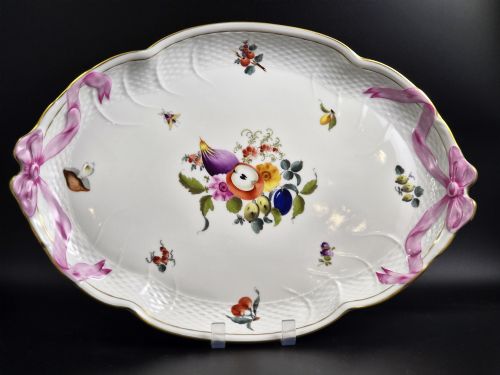
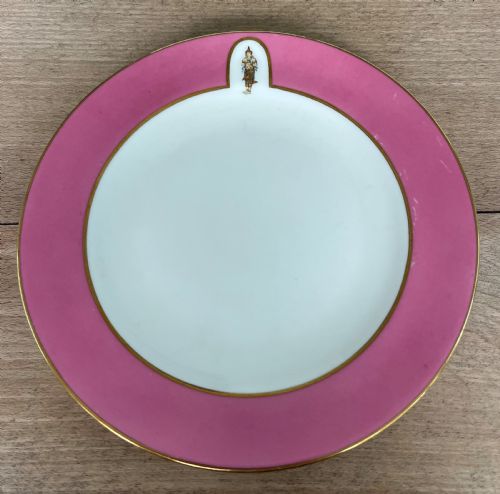


Pink Porcelain Cabinet Plate
A pink porcelain cabinet plate brings high-fired colour and hand-painted artistry to a display space, offering a distinct focal point for collectors of fine ceramics.
Pink Porcelain Cabinet Plate
A pink porcelain cabinet plate is a decorative ceramic piece designed primarily for display rather than daily service, appearing across various 18th Century, 19th Century, and early 20th Century periods. These pieces often feature hand-painted scenes, armorial bearings, or rich enamel grounds alongside delicate gilding.
The selections available on this page include dessert plates, chargers, and serving dishes from European factories and Chinese export wares. Makers such as Minton, Chamberlains Worcester, Barr Flight and Barr, and Kornilov Brothers represent the diverse origins of these decorative items.
Styles range from Rococo and Neo-Rococo curves to Neoclassical symmetry and Victorian opulence. Collectors encounter both French factory pieces and English works produced during the Regency and Edwardian eras.
Assessing quality in decorative plates
Quality rests in the execution of the hand-painted artistry and the precision of the gilding. Superior examples display intricate brushwork, such as detailed landscape scenes or finely rendered historical figures, rather than simplified or transfer-printed motifs.
The purity of the porcelain body and the evenness of the pink enamel ground distinguish finer factory output from standard domestic wares. Factory marks and armorial provenance further elevate a piece by linking it to specific royal or noble commissions.
One plate records an imperial order meant for the King of Siam, proving that pink porcelain travelled rather far from home.
Kornilov Brothers·Chamberlain Worcester·Barr Flight And Barr·Cauldon Ltd·Furstenberg
The Pink Porcelain Cabinet Plate Glossary
- Cabinet plate
- A decorative ceramic plate intended for display in a cabinet or on a wall rather than for dining use. These items typically showcase superior painting and gilding techniques.
- Pâte-sur-pâte
- A ceramic decorating technique where successive layers of liquid clay are applied to a background to build up a cameo-like relief design. This method requires great skill from the artisan.
- Armorial
- A term describing ceramics painted with a family crest, coat of arms, or noble insignia. Such pieces were frequently ordered as bespoke services for prominent households.
- Charger
- A large decorative plate used as a base or centrepiece on a table or sideboard. In porcelain, these pieces demand significant technical skill to fire without warping.
- Gilding
- The application of gold leaf or gold paint to ceramic surfaces for ornamentation. High-quality pieces often feature burnished gold details that catch the light.
Pink Porcelain Cabinet Plate: Frequently Asked Questions
What is a pink porcelain cabinet plate used for?
These pieces served as decorative items for display in drawing rooms or cabinets rather than for everyday dining.
Wealthy households utilised them to showcase artistic taste, often mounting them on stands or displaying them on specialised wall brackets.
How do I identify the period of a plate?
Dating relies on factory marks, style indicators such as Neoclassical or Rococo moulding, and the specific composition of the porcelain body.
Comparing the hand-painted motifs and ground colours to documented factory output helps narrow down the decade of production.
Were these plates meant for dining?
Most cabinet plates and chargers were created strictly for visual display, featuring delicate gilding and intricate painted scenes unsuited to heavy use.
Dessert plates and side plates within the group might have seen light service during formal dining courses.