


English Porcelain Dessert Service
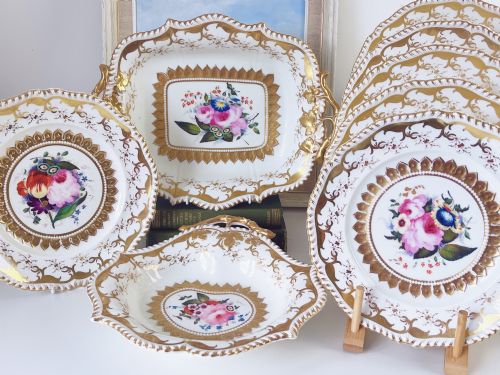
An English porcelain dessert service brings handpainted florals and gilded comports to the table, designed for grand nineteenth-century dining.
English Porcelain Dessert Service
An English porcelain dessert service comprises matching plates, serving dishes, and comports created for the final course of a formal meal. These sets span periods from the eighteenth century through the Victorian era and into the early twentieth century.
The services found here include partial sets, individual cabinet plates, and chestnut baskets alongside complete multi-piece arrangements. Makers represented range from early Worcester factories to nineteenth-century establishments like Derby and Minton.
How they were made
Potters utilised soft-paste porcelain, bone china, and earthenware, shaping them into plates, oval dessert dishes, and baskets. Pieces received handpainted botanical and landscape subjects beneath protective glazes.
Makers applied gold leaf and enamel decoration to enrich the surfaces, often securing the pigments through subsequent kiln firings.
Thomas Steele painted fruit so convincingly on Derby plates that one might be tempted to reach out and take a plum.
What varies in quality
The distinction between standard production and exceptional work lies in the execution of the handpainting and gilding. Services featuring named botanical studies or intricate landscape scenes by skilled hands command greater attention.
The crispness of the porcelain moulding and the preservation of the enamel and gold leaf determine the overall standing of an individual plate or serving dish.
Grainger Lee And Co·Derby Porcelain·Royal Crown Derby·John Ridgway·Spode·Minton·Flight Barr And Barr·Barr Flight And Barr·Wedgewood
The English Porcelain Dessert Service Glossary
- Comport
- A elevated dish or bowl used for serving fruit as part of a dessert service. These pieces usually stand upon a central foot.
- Soft-paste porcelain
- An artificial ceramic body developed before true hard-paste porcelain became common in England. It possesses a warm tone and interacts distinctively with glazes.
- Bone china
- A type of porcelain incorporating bone ash, developed to create a durable yet translucent body. It forms the foundation for many nineteenth-century sets.
- Enamel
- Vitreous pigments applied over the glazed surface of porcelain. These colours require low-temperature firing to fuse with the glaze.
- Gilt
- Gold leaf or liquid gold applied to the rims and borders of plates and dishes. This decoration elevates the formality of the service.
English Porcelain Dessert Service: Frequently Asked Questions
What pieces comprise a dessert service?
An English porcelain dessert service typically includes a collection of plates alongside specialised serving vessels such as comports, oval dishes, and chestnut baskets.
These components were designed to present fruit, sweetmeats, and confectionery at the conclusion of a formal dinner.
How do I date an English porcelain service?
Dating relies on factory marks stamped or painted on the underside, alongside stylistic clues such as Regency border patterns or Victorian colour palettes.
Factory pattern numbers and specific shapes also help narrow the decade of production.
Can I use these antiques for dining?
Most collectors prefer to display these fragile porcelain services or use them sparingly for light formal occasions.
Handpainted enamels and delicate gold leaf require gentle hand washing rather than modern dishwashers.