


Pink Glass Kerosene Lamp
These pink glass kerosene lamps bring soft, glowing colour and period charm to any room.
Pink Glass Kerosene Lamp
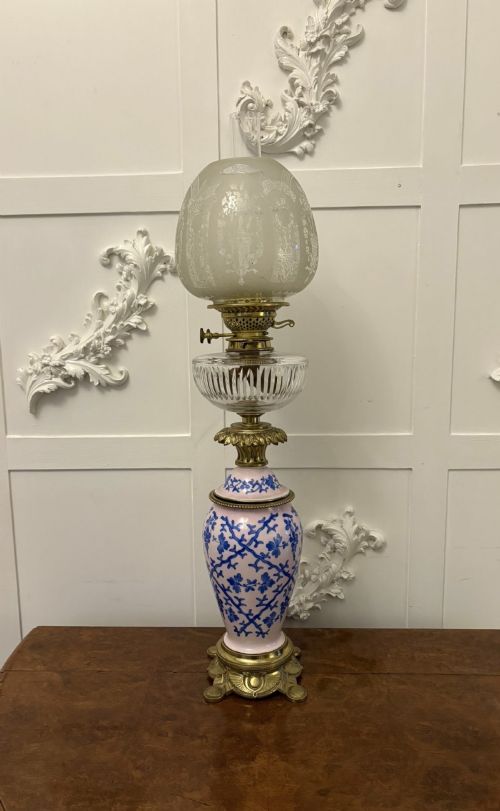
When you search for a pink glass kerosene lamp, you are looking at domestic lighting pieces chiefly from the Victorian and Edwardian eras. These domestic lamps combine metal burners with glass or porcelain vessels designed to hold fuel and illuminate period interiors.
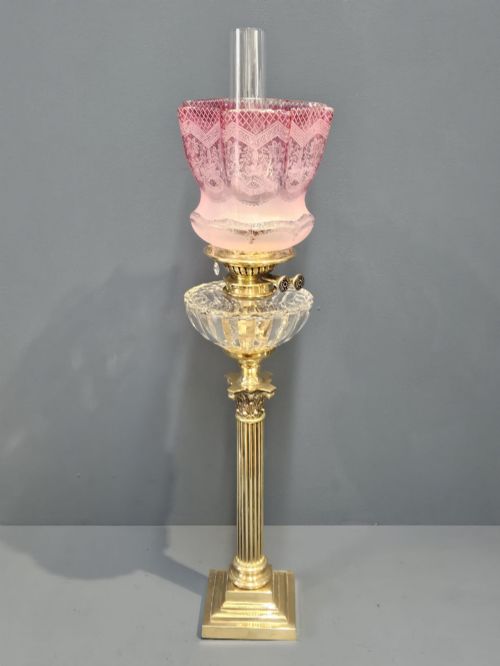
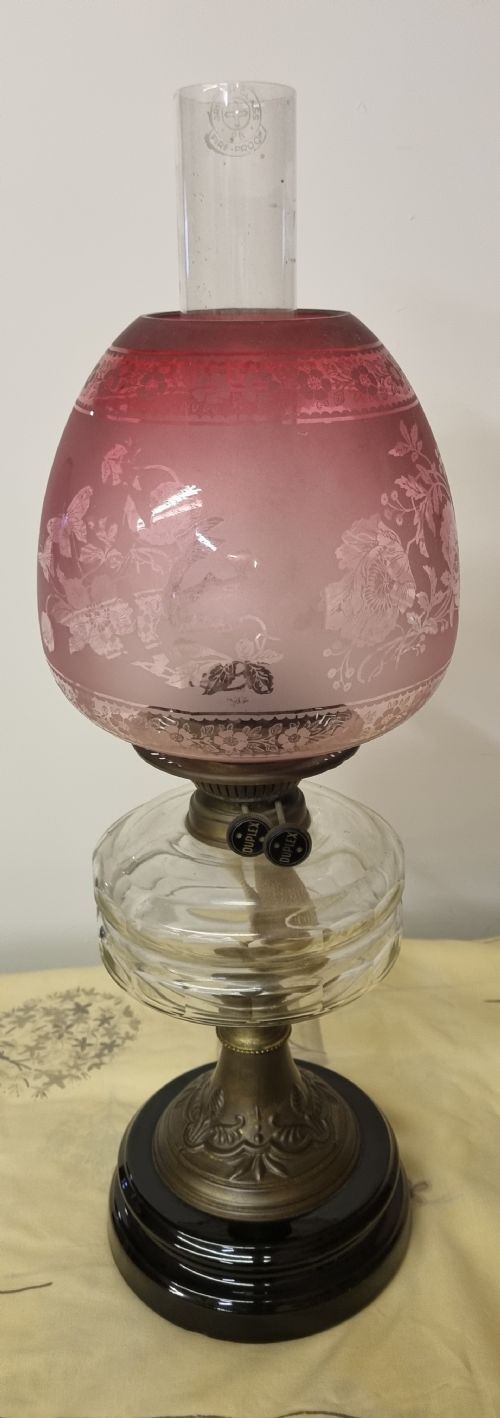
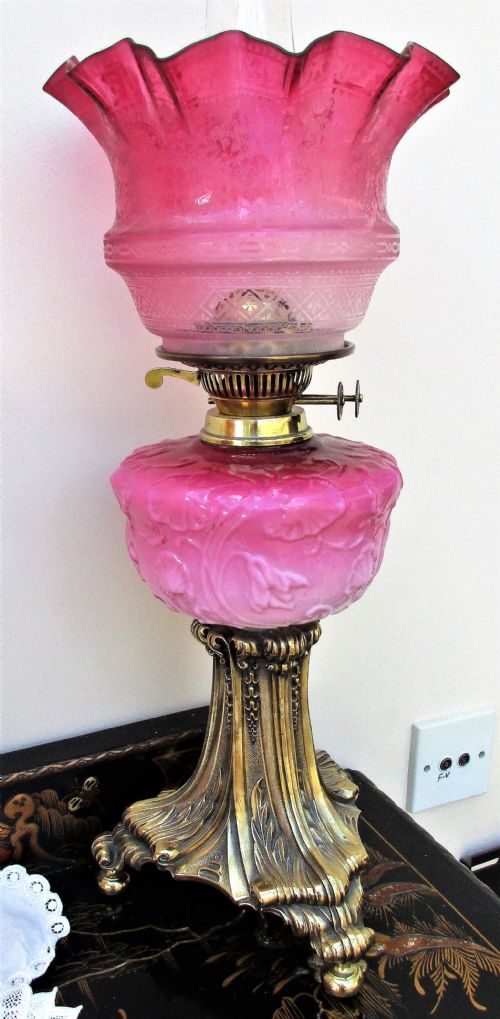
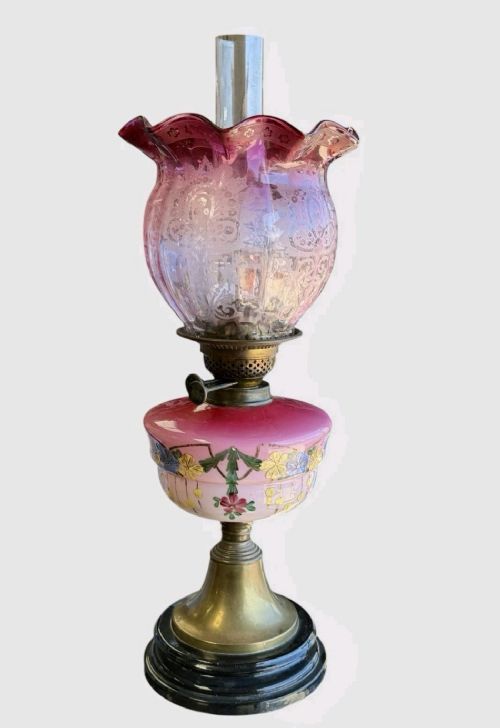
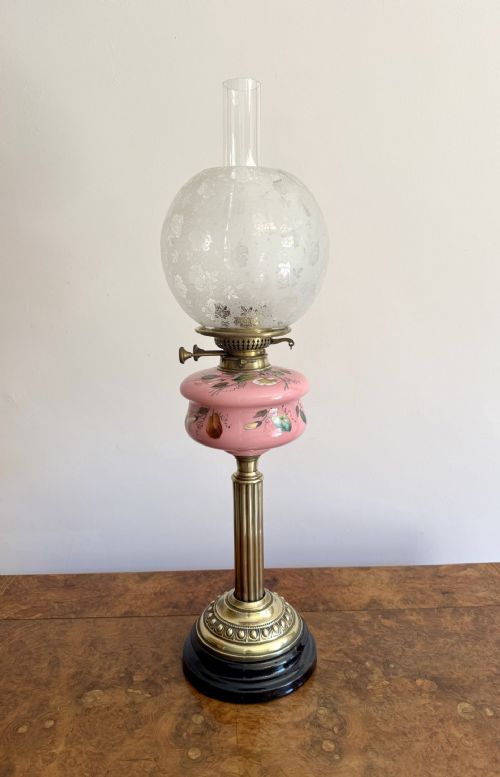
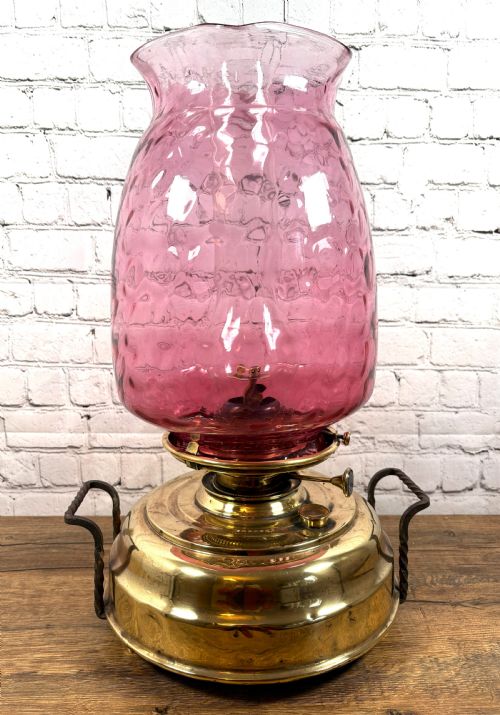
You will most frequently meet examples featuring vibrant cranberry or pink opaque glass vessels, often paired with matching shades and brass or porcelain columns. The forms range from simple table models to elaborate column lamps with etched or hand-painted details.
How they were made
The construction of these lamps relies on the combination of blown or moulded glass, brass, and porcelain elements. Makers shaped the glass fonts and shades through blowing and pressing techniques, frequently adding hand-painted or gilt decoration to the outer surfaces.
Metal components such as brass columns and burners provide structural stability and the mechanical housing for the wick and flame. Clear and coloured glass, including cranberry and pink opaque varieties, forms the decorative centrepiece of each vessel.
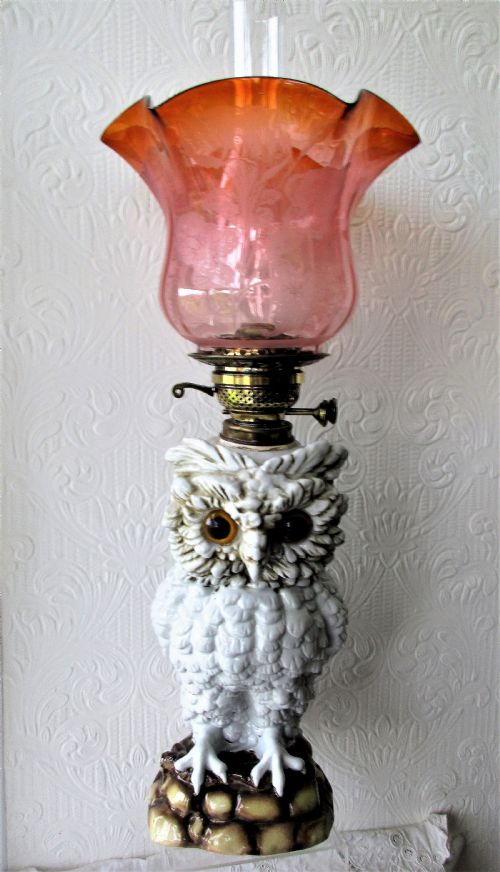
Several Victorian models take the form of wise ceramic owls peering out from the sideboard with built-in burners.
What varies in quality
The distinction between standard production and superior examples rests on the depth of hand-finishing and the integrity of the materials. Fine models display crisp moulding, rich colour saturation in the glass, and intricate hand-painted or gilt motifs rather than plain finishes.
Proportion and weight also dictate the grade of a piece, with taller column lamps and heavier brass mounts commanding greater presence. The complexity of the shade design, from simple etched glass to elaborate hand-painted decoration, marks the higher tiers.
Sitzendorf
The Pink Glass Kerosene Lamp Glossary
- Font
- The oil reservoir of the lamp, typically formed from coloured glass or porcelain and seated above the base.
- Cranberry glass
- A rich red-pink transparent glass created by adding gold chloride to the molten batch during manufacture.
- Corinthian column
- An architectural column style featuring an ornate capital with acanthus leaves, frequently adopted for brass lamp bases.
- Etched shade
- A glass shade decorated by applying acid to eat away the surface design, leaving a frosted pattern against clear or tinted glass.
Pink Glass Kerosene Lamp: Frequently Asked Questions
How do I clean a glass font?
Warm soapy water and a soft cloth are sufficient for cleaning the exterior glass surfaces without damaging any delicate gilt or hand-painted decoration.
Avoid submerging metal mounts or harsh scrubbing on painted areas to preserve the original finish.
Can these lamps still burn oil?
Most antique lamps are kept for display and decorative interior styling rather than active daily illumination.
If you intend to use the burner mechanism, ensure a professional checks the condition of the fuel reservoir and wick assembly first.
How do I date a Victorian lamp?
Examination of the brass burner stamps, collar threading, and the weight of the glass components helps establish the period of manufacture.
Stylistic cues like Corinthian columns or specific cranberry glass hues also point towards late nineteenth-century production.
Where should I place a table lamp?
These pieces suit sideboards, mantelpieces, or large entrance tables where their height and coloured glass can catch ambient light.
Ensure they sit on stable, level surfaces away from busy household traffic to protect the extended glass shades.