
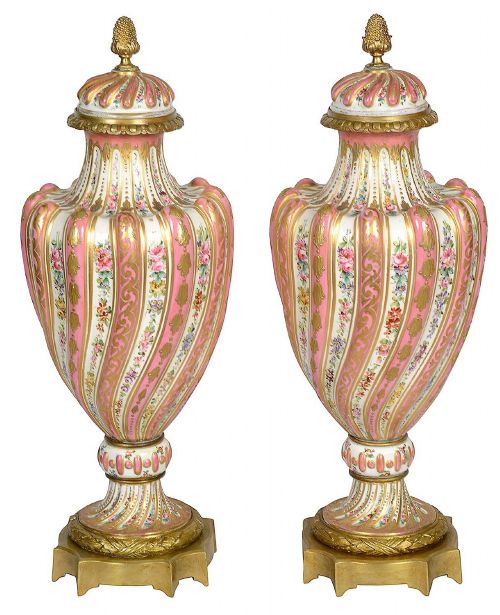


Pink Gilt Porcelain Vase
These pink gilt porcelain vases combine delicate enamel work with rich gilding, offering striking Victorian and Chinese export decorative presence for any mantelpiece.
Pink Gilt Porcelain Vase
A pink gilt porcelain vase represents a diverse group of nineteenth century ceramic vessels, spanning English manufactories, French decorative styles, and Chinese export pieces. When searching for a pink gilt porcelain vase, collectors encounter everything from monumental baluster jars to delicate pilgrim flasks and lidded garnitures.
The pieces on this page heavily favour nineteenth century examples, encompassing Victorian interpretations, Regency works, and Qing Dynasty Cantonese production. Forms range from classical ewers and urns to converted table lamps retaining their original ceramic bodies.
Materials and construction
These items utilise high-fired ceramic bodies decorated with pink enamel grounds and applied gold leaf, gilding, or ormolu mounts. Makers combined hand-painted floral panels and figural scenes with intricate reticulation and raised gilt detailing.
Mounts in ormolu, gilt bronze, and brass frequently secure the bases and rims of French and English vessels, while Japanese and Chinese workshops focused on rich polychrome enamel palettes upon porcelain.
Gallant courting scenes painted on fragile porcelain flasks ensure that even an empty vase comes with its own miniature Regency drama.
Assessing quality and execution
Quality rests upon the crispness of the hand-painted details and the purity of the porcelain body, distinguishing factory output from simpler decorative wares. Finer specimens display superior brushwork in figurative or floral panels alongside thick, burnished gold leaf rather than flat paint.
The integration of metal mounts, such as cast ormolu collars and handles, also dictates the tier of the piece. Heavy, detailed bronze mounts elevate nineteenth century works above standard commercial production.
Grainger Worcester·Flight Barr and Barr·Royal Worcester·Coalport
The Pink Gilt Porcelain Vase Glossary
- Gilt bronze
- Copper alloy cast and finished with a layer of gold, providing decorative mounts for nineteenth century vessels.
- Cantonese
- Chinese porcelain decorated in Canton with vibrant enamels and gilding for the export market.
- Reticulation
- An openwork ceramic lattice pattern created by cutting through the clay body before firing.
- Garniture
- A set of three or more matching vases and urns designed to sit together on a mantelpiece.
Pink Gilt Porcelain Vase: Frequently Asked Questions
How do I style a pink gilt porcelain vase?
These vessels demand prominent placement on sideboards or mantelpieces where their bright pink grounds and gold leaf catch the light. Pairing them with neutral backgrounds allows the intricate hand-painted details to stand out without visual competition.
Larger specimens converted into lamps require careful placement near simple shades that do not obscure the painted ceramic body or the ormolu mounts below.
Are these vases purely decorative?
Most examples function primarily as ornamental garnitures, urns, or display pieces rather than functional flower holders. Their historical value and delicate gilding mean they are best appreciated as standalone works of art.
Several pieces have been adapted over time into table lamps while retaining their original nineteenth century porcelain forms and painted decoration.
How do I date a nineteenth century vase?
Dating relies upon examining the style of the painting, the paste of the porcelain, and any factory marks hidden on the base. Victorian and Regency pieces often show distinct revivalist influences, such as French Rococo or Gothic motifs.
Comparing the hand-painted motifs with documented factory production periods helps narrow down the decade of manufacture.
Can I use water in these antique vases?
Putting water inside nineteenth century decorative vases risks damaging internal glaze crazing and delicate enamel work. Many of these pieces were created purely for visual display in grand interiors.
If utilised for floral arrangements, placing a small glass liner inside protects the antique ceramic body from moisture damage.