

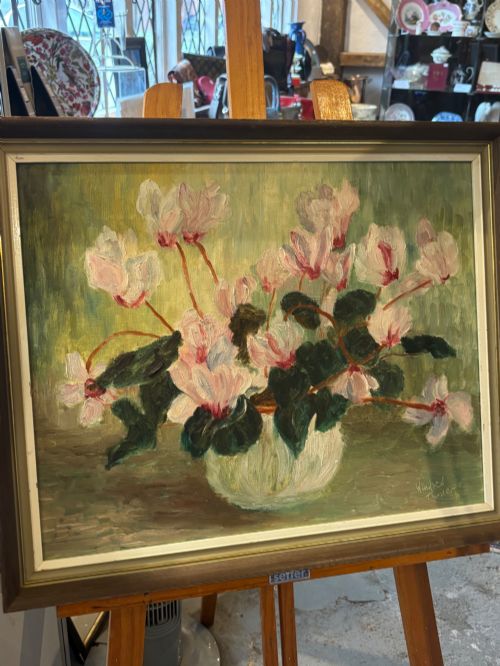


Pink Flower Oil Painting
A pink flower oil painting brings botanical warmth to a room, offering enduring floral subjects rendered in oil on canvas or board across multiple periods.
Pink Flower Oil Painting
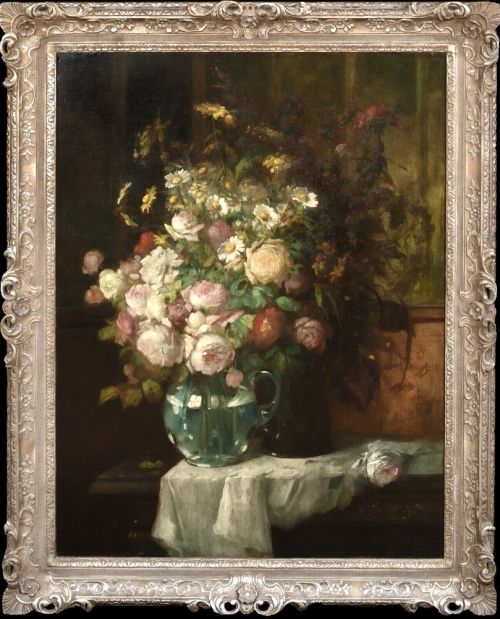
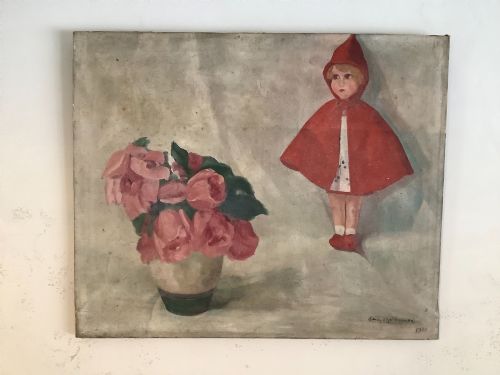
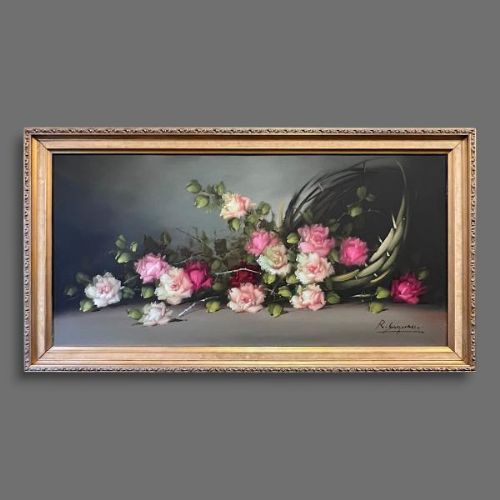
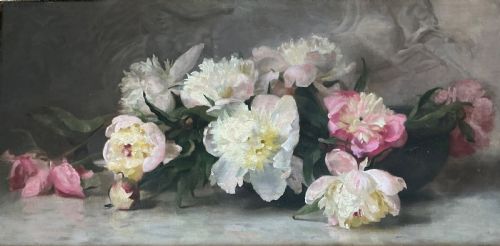
A pink flower oil painting captures floral subjects like roses, peonies, sweet williams, and orchids, rendered primarily in oil paint during the eighteenth, nineteenth, and twentieth centuries. These works range from naive compositions and French pairs to large still life arrangements spilled from wicker baskets or set in bowls.
The version most commonly met on this page is the twentieth-century still life, spanning Edwardian, interwar, and mid-century modern decades, frequently executed on canvas or board by named British and continental artists. Such pieces often depict vases or garden views created within impressionist or post-war modernist traditions.
Earlier examples extend back to the eighteenth and nineteenth centuries, including formal portraiture featuring subjects with baskets of flowers and nineteenth-century Austrian or French impressionist studies. Buyers encounter diverse framing materials, including gilt and gilded wood, alongside works attributed to specific makers and painters.
How these pink flower oil paintings were made
Artists painted primarily with oil paint applied to prepared canvas or wooden board, occasionally utilising tempera or mixed techniques depending on the period. The handling of the medium varies from structured academic brushwork to looser impressionist strokes that capture the soft petals of roses and peonies.
Framing typically involves wood, gilt, or gilded wood, which protects the edges of the canvas or board and provides a finished presentation for wall display. These physical supports preserve the pigment layers across centuries, from eighteenth-century portraits to mid-century modernist floral studies.
Materials recorded in the archive and current listings include canvas, oil paint, wood, gilt, gilded wood, oil on canvas, and oil on board.
What varies in quality
The sophistication of brushwork and composition separates expressive, confident works from simpler naive efforts, particularly in the rendering of light upon petals and foliage. Skilled handling of pigment creates depth within a vase or garden setting, whereas lesser works remain flat.
The preservation of the original paint surface and the integrity of the canvas or board dictate desirability, alongside the presence of period framing such as gilt wood. Named authorship by established painters adds documentary weight to a piece compared to anonymous studies.
Konstantin Stoitzner·Gertrude Hayes·Winifred Turner·Ernest Higgins Rigg·Owen Bowen·Freda Marston·Stuart Armfield·Henry Schouten·L Wilford·William Thomas Wood·Tilly Kettle·Louisa Mary Bancroft·E A Bower·M Van Lente
The Pink Flower Oil Painting Glossary
- Canvas
- A closely woven fabric stretched across a wooden frame to serve as a support for oil paint. It provides a flexible and durable surface utilised by artists across centuries.
- Oil Paint
- A slow-drying paint made by combining pigments with a drying oil, typically linseed oil. This medium allows for rich colour blending and textured impasto application.
- Still Life
- An artwork depicting inanimate subject matter, typically commonplace objects such as flowers in a vase or fruit in a basket. This genre emphasises composition, light, and colour harmonies.
- Impressionism
- A nineteenth-century art movement characterised by relatively small, thin yet visible brush strokes and an emphasis on accurate depiction of light. Artists working in this style captured fleeting visual impressions of floral subjects.
- Gilt
- Covered thinly with gold leaf or gold paint, frequently applied to wooden frames. This technique enhances the decorative appearance of the display setting.
Pink Flower Oil Painting: Frequently Asked Questions
What periods do these paintings come from?
The listings span from the eighteenth century through the nineteenth century and into various decades of the twentieth century, including Edwardian, interwar, and mid-century periods.
Buyers will find works representing eighteenth-century portraiture, nineteenth-century impressionism, and post-war twentieth-century modernist floral studies.
What surfaces were used for these artworks?
Artists used canvas and wooden board as the primary physical supports for applying oil paint, sometimes incorporating tempera.
These surfaces were typically housed in wood or gilt frames to protect the edges and complete the presentation.
How should I care for an oil painting?
Keep the artwork away from direct sunlight and fluctuating humidity levels to protect both the oil paint and the canvas or board support.
Dust the surface gently with a soft, dry brush and avoid using liquid cleaners on the paint or the gilt wood frame.
Are these paintings signed by the artists?
Many works include attribution to specific painters such as Gertrude Hayes, William Thomas Wood, or Tilly Kettle, while others remain anonymous naive or study pieces.
Signatures or inscriptions are typically located near the edges of the canvas or board.
What subjects accompany the pink flowers?
The floral subjects appear alongside vases, wicker baskets, bowls, and window settings, or within broader garden and landscape views.
Some compositions focus strictly on specific blooms like roses, peonies, sweet williams, orchids, and wax begonias.