


1920s French Fine Art
These pieces of 1920s french fine art capture the experimental spirit and vibrant palette of the period, offering buyers a direct connection to early twentieth-century Parisian modernism.
1920s French Fine Art
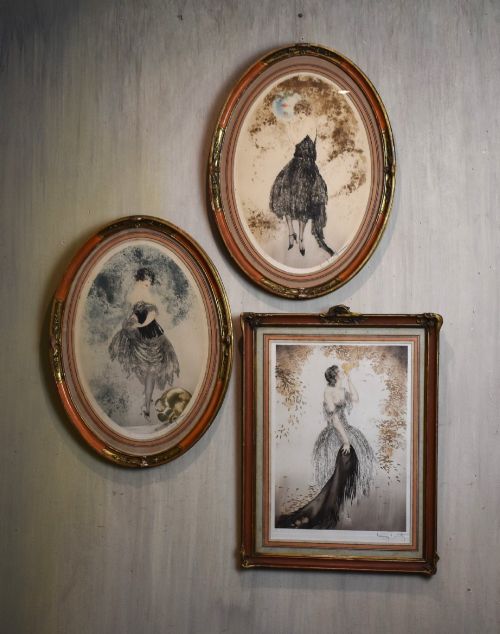
When searching for 1920s french fine art, buyers encounter a diverse selection of paintings, drawings, and prints spanning movements like Fauvism, Cubism, and Realism. These works capture figurative subjects, nudes, landscapes, and portraits produced by artists working in France during the interwar years.
The objects on this page frequently manifest as oil on canvas, charcoal on paper, and framed prints. Alongside paintings, the selection extends to related decorative objects and jewellery from the same stylistic milieu, reflecting the broad aesthetic output of the era.
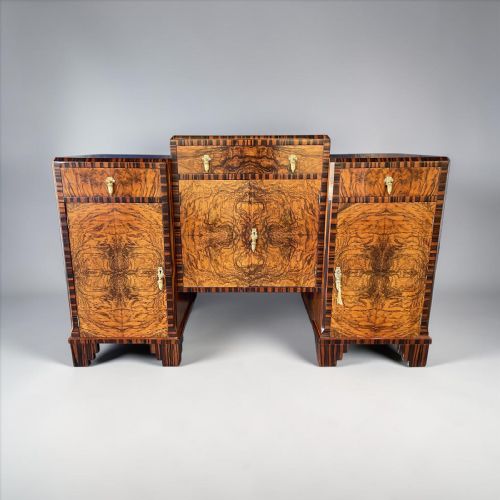
Most items originate from the 1920s and 1930s, though occasional nineteenth-century pieces also appear alongside Art Deco furniture and accessories. Buyers are most likely to meet oil paintings and works on paper depicting female figures, coastal scenes, and still lifes.
Materials and technique
Canvases, wood panels, and heavy paper form the primary supports for these artworks, painted with oil or rendered in charcoal and encaustic. Artists applied pigment with varying brushwork, from the flat, expressive planes of the Fauves to the structured geometries of the Cubists.
Precious metals and gemstones appear in related wearable pieces, combining platinum, 18ct gold, diamonds, emeralds, and pearls within intricate platinum and gold settings. These items demonstrate precise metalwork characteristic of the Art Deco workshop tradition.
Listings feature oil paintings, drawings on paper, and brooches spanning the 1920s and 1930s, alongside nineteenth-century works.
Assessing quality and execution
The strength of the composition and the firmness of the artist's hand determine the distinction between ordinary decorative items and superior works. Pieces that demonstrate confident handling of line and colour, particularly within avant-garde or modernist idioms, stand apart from standard academic exercises.
The preservation of the original surface, whether oil paint, encaustic, or delicate charcoal on paper, influences the integrity of the piece. Works retaining their original framing and undisturbed pigments offer a more complete historical record.
In jewellery and decorative objects, the precision of the gem-setting and the quality of the materials dictate the tier of craftsmanship. Finer pieces exhibit balanced proportions, well-matched stones, and clearly articulated maker signatures or hallmarks.
Louis Icart·Raymond Moritz·Georges Goursat·Girieud·Jean Hippolyte Marchand·Ary Bitter·Cartier Paris
The 1920s French Fine Art Glossary
- Fauvism
- An early twentieth-century painting movement characterised by strong colours and painterly qualities over realistic values. Practitioners applied bold, non-naturalistic hues directly from the tube.
- Cubism
- An avant-garde art style that revolutionised European painting by breaking subjects down into multi-angled geometric shapes. Figures and objects are depicted from multiple viewpoints simultaneously.
- Encaustic
- A painting technique involving heated beeswax mixed with coloured pigments. The liquid or paste is applied to a surface, usually wood or canvas.
- Provenance
- The chronology of the ownership, custody or location of a historical object. Documented history often supports the attribution of a work.
1920s French Fine Art: Frequently Asked Questions
What defines 1920s French art?
These works are defined by their engagement with modernist movements such as Fauvism, Cubism, and Realism. Artists working in France during this decade broke away from strict academic traditions to explore new forms of abstraction and vibrant colour palettes.
The selection includes oil paintings, charcoal drawings, and prints that reflect the cultural dynamism of interwar Paris. Subjects range from expressive nudes and intimate portraits to coastal landscapes and floral still lifes.
How do I display a painting?
Displaying these works requires careful consideration of light levels and environmental stability. Direct sunlight should be avoided to protect sensitive oil pigments and paper supports from fading over time.
Matching the frame to the period of the artwork helps maintain historical context while protecting the edges of the canvas or paper. Secure wall mountings ensure stability for heavier framed pieces and panels.
How are periods identified?
Periods are identified through stylistic markers, artist signatures, and recorded dates within the medium itself. Art Deco and modernist compositions typically feature specific geometric or chromatic traits characteristic of the interwar decades.
Physical evidence such as canvas types, panel construction, and maker stamps on jewellery provide additional chronological markers. Comparing these details against documented works by known makers helps verify the era.
Where were these items made?
These pieces were produced primarily in France, reflecting the dominant artistic centres of Paris and regional hubs during the early twentieth century. Studios and workshops in the capital served as incubators for avant-garde experimentation.
Artisans and painters gathered in French communities to develop new techniques in painting, drawing, and decorative craft. This geographic origin connects each piece to a specific moment in European art history.