

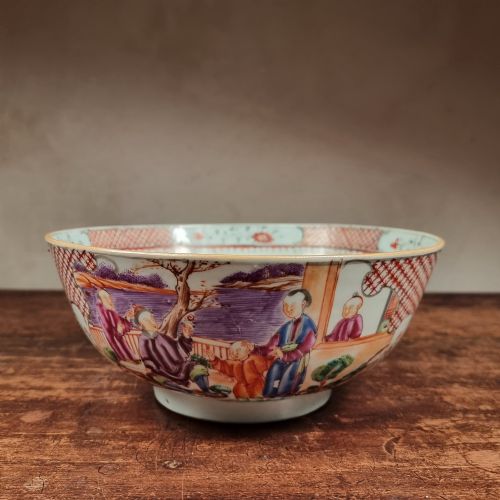
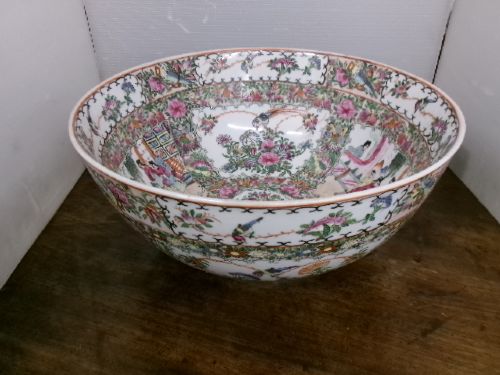
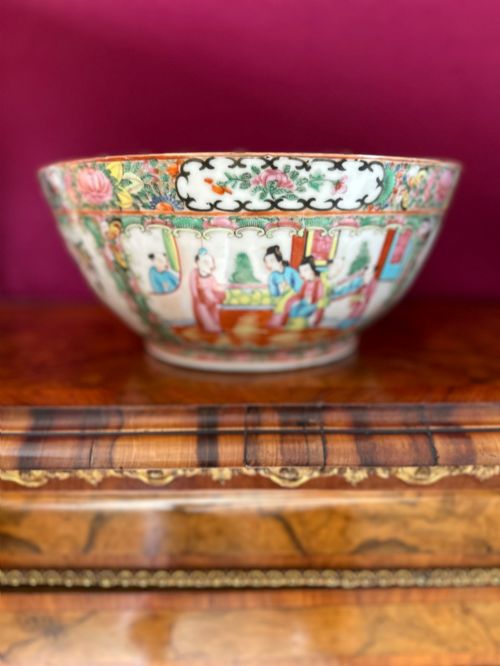
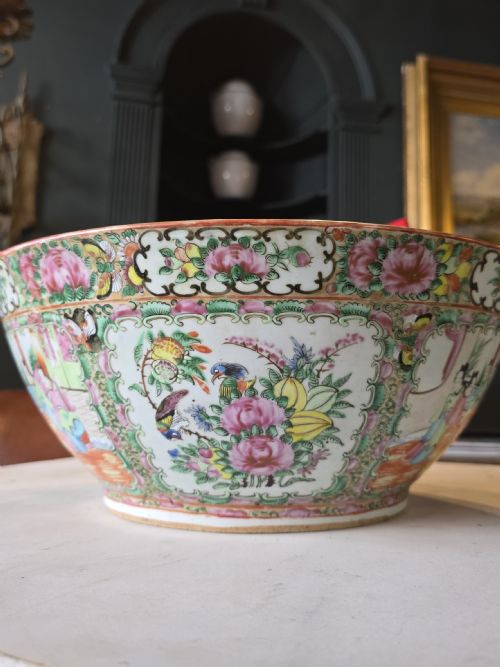


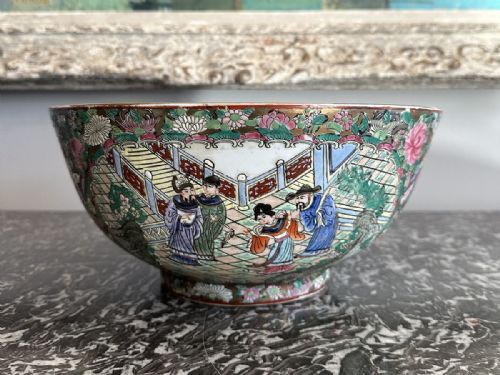


Pink Enamel Porcelain Bowl
A pink enamel porcelain bowl brings vibrant floral palettes and hand-painted scenes to a table.
Pink Enamel Porcelain Bowl
A pink enamel porcelain bowl brings hand-painted artistry to domestic settings through pieces designed for display, dining, and serving. When you search for a pink enamel porcelain bowl, you encounter objects originating largely from Chinese export workshops alongside nineteenth-century European interpretations.
The selections span small tea bowls and saucers through to large punch bowls, jardinières, and pedestal dishes. Nineteenth-century Cantonese examples dominate the offerings, frequently displaying intricate rose medallion patterns alongside eighteen-century Qianlong and Daoguang period vessels.
Materials and construction
The physical objects rely on hard-paste porcelain bodies finished with overglaze enamel colours, where pink pigment takes a prominent role in floral and figurative motifs. Artisans applied these pigments over fired ceramic, often combining them with cobalt blue accents.
Gilding and gold leaf frequently enhance the rims and borders of these vessels, complementing the detailed brushwork. Techniques range from hand-painted Mandarin palettes to intricate armorial designs executed by both Chinese export workshops and European factories like Samson of Paris.
Pink Enamel Porcelain Bowl Retail Price Guide 2026
Typical asking prices for pink enamel porcelain bowl among the pieces listed under this phrase on Sellingantiques today, from the lower quarter to the upper quarter. They describe what is for sale here now, not the wider market.
Listings feature porcelain forms spanning the eighteenth and nineteenth centuries, including Victorian pieces, Chinese Export wares, and French interpretations.
Assessing quality and execution
The distinction between tiers rests upon the precision of the hand-painted brushwork and the complexity of the figural or botanical scenes. Superior examples exhibit tightly controlled overglaze enamel applications and finely rendered details across large surfaces.
The density and richness of the gilding further separate standard vessels from exceptional ones. Heavier forms, such as large punch bowls and jardinières with well-preserved rose medallion palettes, demonstrate superior craftsmanship.
The Pink Enamel Porcelain Bowl Glossary
- Overglaze enamel
- A decorative technique where coloured glass fluxes are painted onto previously fired and glazed porcelain before undergoing a lower-temperature firing.
- Famille rose
- A palette of opaque overglaze enamels introduced in the eighteenth century, distinguished by its characteristic pink or opaque crimson colour derived from colloidal gold.
- Mandarin palette
- A style of Chinese export porcelain decoration featuring elaborate panels filled with human figures engaged in daily activities or court scenes.
- Rose medallion
- A densely patterned decorative scheme divided into alternating panels of figures, birds, butterflies, and flowers, unified by pink enamel tones.
- Punch bowl
- A large hemispherical vessel historically utilised for mixing and serving communal drinks during social gatherings.
Pink Enamel Porcelain Bowl: Frequently Asked Questions
What is a pink enamel porcelain bowl?
These pieces are ceramic vessels decorated with overglaze enamels featuring pink pigments, commonly originating from Chinese export production and nineteenth-century European kilns.
They encompass a variety of forms ranging from intimate tea bowls to large punch bowls and decorative jardinières.
How were these bowls used historically?
Large vessels served as punch bowls for communal entertaining or as decorative centrepieces in grand interiors, while smaller examples functioned as tea bowls and saucers.
Jardinières were specifically utilised for housing potted plants within domestic reception rooms.
How do I date a Chinese export bowl?
Dating relies on stylistic indicators such as the specific palette, motif complexity, and potting characteristics associated with periods like the Qianlong or Daoguang reigns.
Nineteenth-century Cantonese pieces often display dense rose medallion patterns that help distinguish them from earlier eighteenth-century exports.
How do I care for antique porcelain?
Antique porcelain requires gentle hand washing in tepid water with mild soap, avoiding abrasive sponges that might damage delicate overglaze enamels and gilding.
Display these vessels away from direct sunlight and sudden temperature shifts to protect the integrity of the ceramic body.