




Pink Ceramic Jug
These pink ceramic jug examples bring distinctive lustre glazes, transfer prints and earthenwares straight to your table from Georgian and Victorian potting traditions.
Pink Ceramic Jug
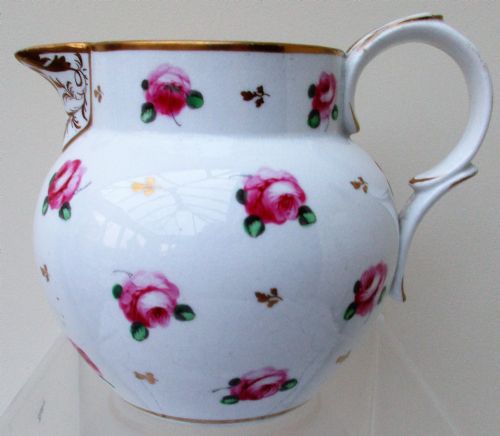
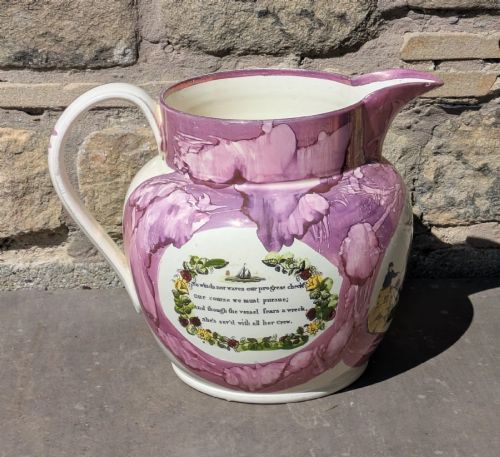
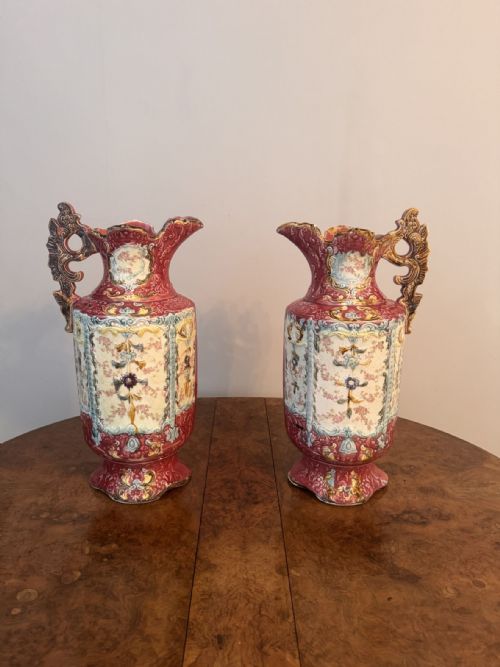
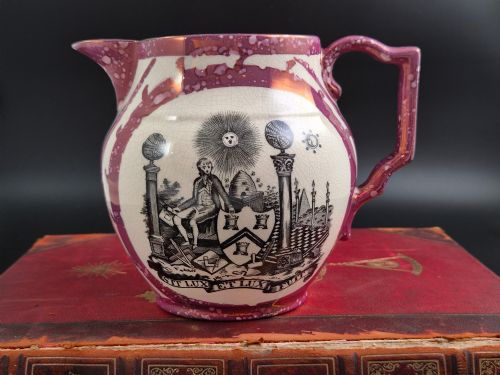
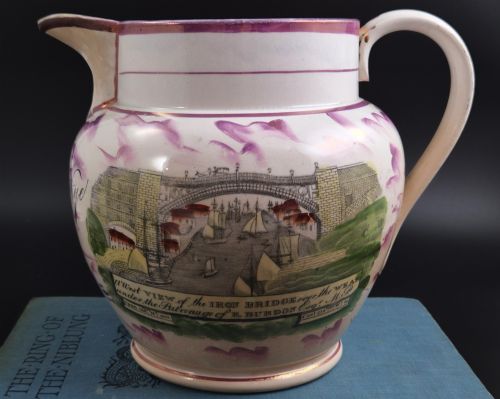
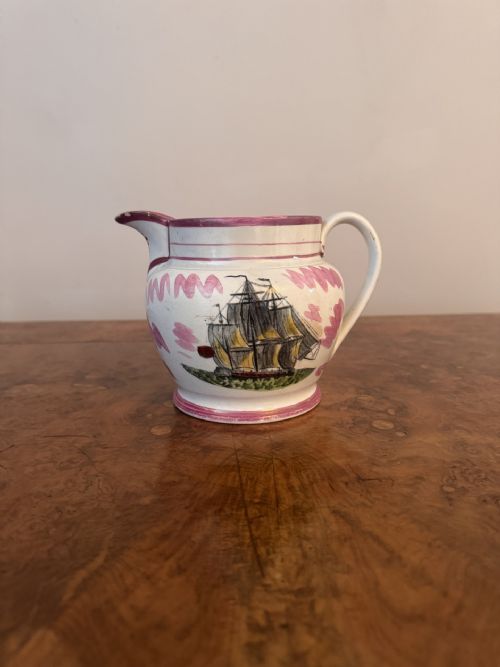
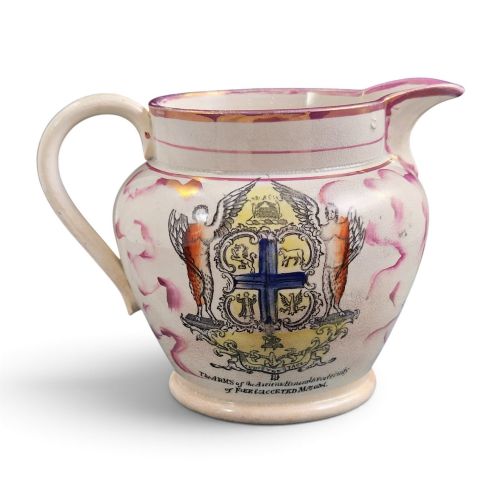
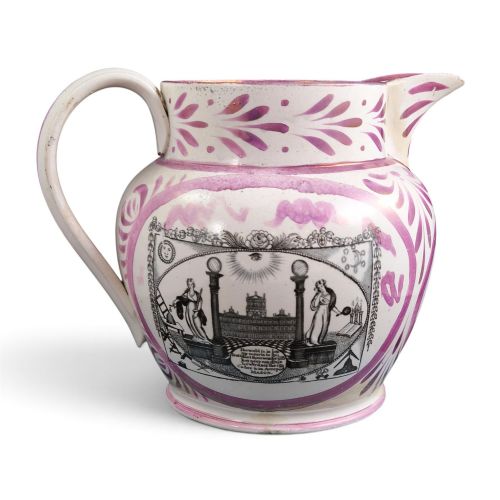
A pink ceramic jug covers practical cream jugs, decorative ewers and large maritime pitchers spanning the Georgian and Victorian periods into the early twentieth century. You will frequently encounter Sunderland lustre pieces decorated with transfer prints of tall ships, masonic symbols or poetic verses.
The selection ranges from small cream jugs with clip handles to large commemorative vessels carrying historical transfer decoration. Earthenware and porcelain bodies dominate the forms, often enhanced by metallic lustre glazes and hand-painted touches.
How they were made
Potters shaped these vessels using earthenware, pearlware or porcelain before applying metallic lustre glazes, enamel colours and transfer printing techniques. Splash lustre effects were achieved by flicking metallic colour onto the wet glaze prior to firing.
Gilt highlights and hand-painted details frequently finish the surface, complementing the transfer-printed maritime scenes and poetic panels found on nineteenth-century pieces.
Pink Ceramic Jug Retail Price Guide 2026
Typical asking prices for pink ceramic jug among the pieces listed under this phrase on Sellingantiques today, from the lower quarter to the upper quarter. They describe what is for sale here now, not the wider market.
What varies in quality
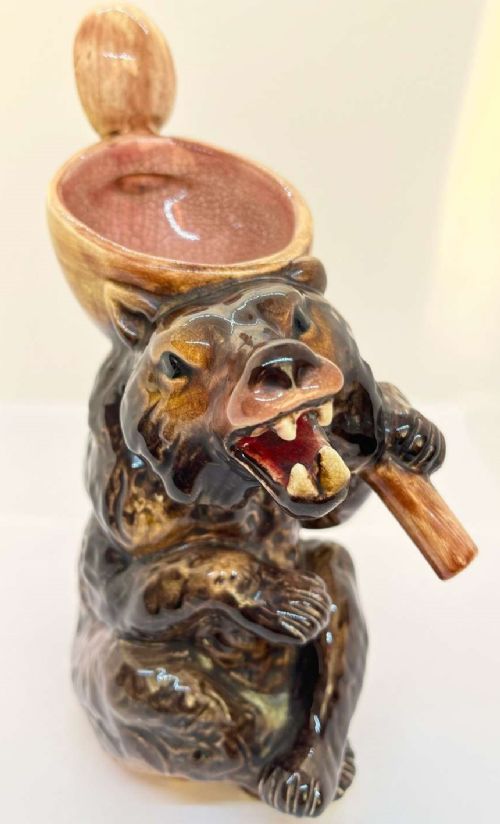
Quality rests in the crispness of the transfer printing and the richness of the pink lustre glaze, which can appear flat or display deep iridescent metallic pools. The finesse of the moulding, particularly on relief-decorated majolica and reticulated porcelain ewers, dictates the tier of the piece.
Provenance and specific named subjects, such as detailed depictions of the Iron Bridge over the Wear or named maritime vessels, elevate individual examples above standard production wares.
Holdcroft·Sunderland Garrison Pottery·Grainger Worcester·Royal Worcester·New Hall·John Rose Coalport·Royal Vienna·Royal Dux·George Jones
The Pink Ceramic Jug Glossary
- Lustre glaze
- A metallic film applied to ceramics to create an iridescent, reflective surface sheen. This technique defines much of the nineteenth-century Sunderland output.
- Pearlware
- A refined earthenware body with a bluish glaze that mimics Chinese porcelain. It forms the base of many early pieces.
- Ewer
- A large decorative jug with a wide spout and elaborate handle, often used for display rather than pouring. Victorian examples show sculptural modelling.
- Transfer printing
- A method of applying detailed designs to ceramics using an engraved copper plate and tissue paper. It allowed complex maritime scenes to be reproduced consistently.
Pink Ceramic Jug: Frequently Asked Questions
How do I date a pink ceramic jug?
Dating relies on the ceramic body type, such as early pearlware versus later Victorian earthenware, alongside stylistic clues in the transfer prints. Commemorative subjects and named historical events often provide a reliable production window.
Potting marks, where present, help pinpoint the decade and the pottery responsible for the glaze and decoration.
What is pink splash lustre?
Pink splash lustre refers to a specific decorative technique where metallic pink solutions were spattered onto the surface of the ceramic vessel. This created a mottled, cloud-like pattern distinct from solid lustre bands.
Pottings from the Sunderland area frequently utilised this method to frame transfer-printed maritime and masonic scenes.
Were these jugs used daily?
While many smaller cream jugs and utilitarian pitchers saw active service on dining tables, larger Sunderland lustre vessels served primarily as commemorative or decorative display items. Their maritime themes made them prized possessions in coastal homes.
Delicate reticulated porcelain ewers and decorative pieces were intended for formal rooms rather than kitchen use.
How should I display my jug?
Position these pieces where adequate light can catch the iridescent metallic glazes and pink lustre surfaces. Grouping them away from direct sunlight preserves the enamel colours and transfer prints.
Ensure they rest on stable surfaces out of high-traffic areas, as antique earthenware and porcelain bodies remain vulnerable to accidental knocks.