
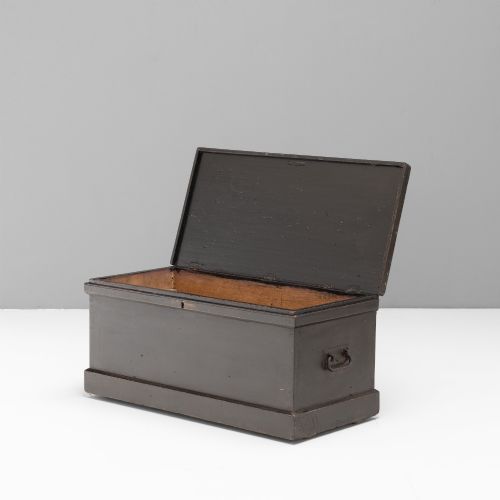
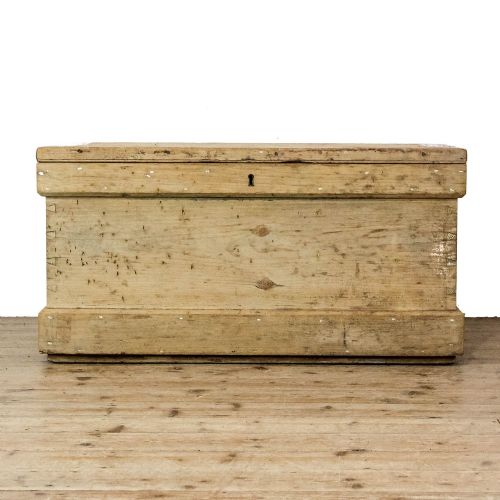
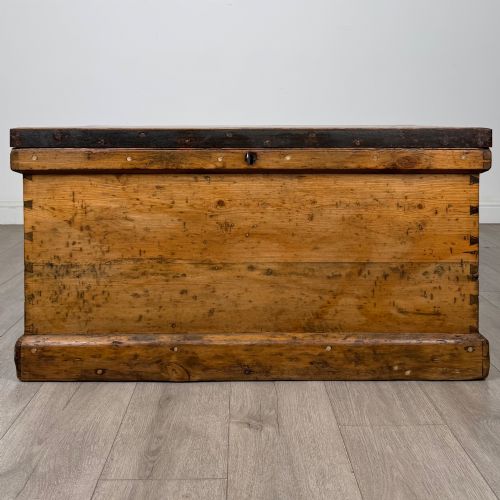

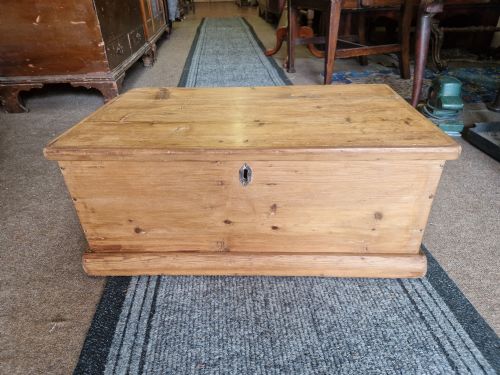
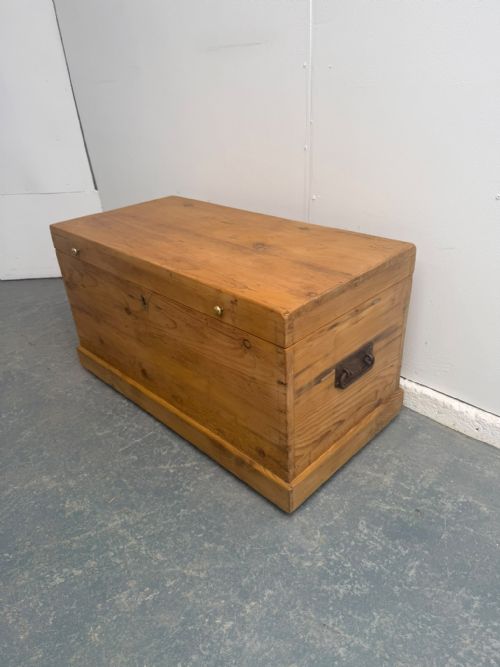


Pine Tool Trunk
Pine tool trunk pieces are sturdy utilitarian storage chests built for trade and travel, offering robust everyday practicality and honest historical character.

Pine Tool Trunk
A pine tool trunk serves as a robust storage box built for carpenters, shipwrights, and artisans, frequently encountered in Victorian, 19th Century, and Edwardian forms. These heavy-duty chests appear across various styles including rustic farmhouse, industrial loft, and maritime, reflecting their original hardworking trades.
Most examples found on this page consist of solid pine or pitch pine carcasses, often equipped with iron or brass hardware for heavy lifting and transit. Their practical nature means they function easily today as blanket boxes, coffee tables, or deep storage containers in modern interiors.
Materials and construction
Makers constructed these trunks primarily from solid pine and pitch pine, selecting the timber for its resilience and ability to withstand heavy daily use in workshops and aboard ships. Iron and brass hardware, such as side lifting handles, corner brackets, and working locks, provided essential reinforcement for frequent transport.
Surface treatments varied from simple waxed finishes and natural darkened pine to protective coats of paint or scumble glaze. Specialised maritime and trade versions often featured internal fitted compartments, candleboxes, and dovetailed joints designed to keep specialised instruments secure.
Listings feature pieces spanning the Victorian and Edwardian eras, utilising materials like pine, pitch pine, iron, brass, and rope.
Gradations in quality
Quality in these utility chests rests on the sophistication of their internal carpentry and the integrity of their hardware rather than decorative excess. Finer examples display complex fitted interior drawers, secret compartments, and dovetailed corner construction intended for professional cabinet makers or shipwrights.
The survival of original surfaces, such as authentic paint, scumble finishes, or maker inscriptions, elevates an ordinary work chest into a more notable historical piece. Robust original brass mounts and functioning locks with keys further distinguish the top tier of these utilitarian survivals.
Gnome Et Le Rhone Engine Company·W.G. Pollard
The Pine Tool Trunk Glossary
- Pitch pine
- A resinous variety of pine known for its durability and strong grain patterns. It was frequently utilised for heavy-duty maritime and trade trunks.
- Scumble pine
- Pine treated with a translucent glaze layer manipulated with tools to imitate the richer grain of more expensive hardwoods. This decorative technique protected the underlying softwood while improving its appearance.
- Candlebox
- A small internal compartment built into the side of a chest to hold lighting supplies. It often included a small lidded recess beneath for keeping valuables secure.
- Dovetail
- An interlocking corner joint formed by interlocking wedge-shaped fingers. This method provides exceptional tensile strength without relying on metal fasteners.
- Ebonised
- Timber treated with a chemical stain or dark finish to simulate the appearance of ebony. Workshops applied this treatment to give utilitarian boxes a smarter, finished aesthetic.
Pine Tool Trunk: Frequently Asked Questions
What were pine tool trunks originally used for?
Carpenters, shipwrights, engineers, and farriers used these durable wooden chests to transport and protect their valuable hand tools between jobs and across long journeys. The interior compartments kept specialised instruments organised and secure during rough transit by rail, sea, or cart.
Over time, these hardworking containers transitioned from active trade environments into domestic settings. Today, their sturdy construction makes them ideal for storing household textiles or serving as functional coffee tables.
How can I tell the period of a pine trunk?
Dating these chests relies on observing construction methods, hardware types, and surface finishes across Victorian, Edwardian, and earlier 19th-century examples. Earlier pieces frequently display hand-cut joinery and forged iron handles, while later Edwardian versions often incorporate machine-cut elements and brass fittings.
Documented dates inscribed on the wood, original maker labels, or specific trade markings also help pinpoint the exact era. Examining the wear patterns and type of timber, such as pitch pine versus standard softwood, provides further clues to its age.
Are these trunks sturdy enough for daily use?
These utilitarian boxes were engineered to endure heavy loads, punishing travel conditions, and demanding workshop environments. Their solid pine construction and reinforced metal hardware mean they remain exceptionally strong and capable of supporting daily household demands.
Whether utilised as a coffee table or a deep storage blanket box, they easily handle everyday wear. Maintaining the wood with appropriate waxes helps preserve both the surface and the structural integrity over years of use.
How should I clean a painted pine trunk?
Preserving the original surface requires gentle cleaning with a soft, dry cloth to remove accumulated dust and surface grime. Avoid harsh chemical cleaners or excessive water, which can damage historic paint, scumble glazes, or exposed waxed pine.
Applying a traditional beeswax feed helps nourish older timber surfaces without stripping away their hard-earned patina. Regular, light maintenance keeps the historic finish stable while protecting the softwood underneath.