





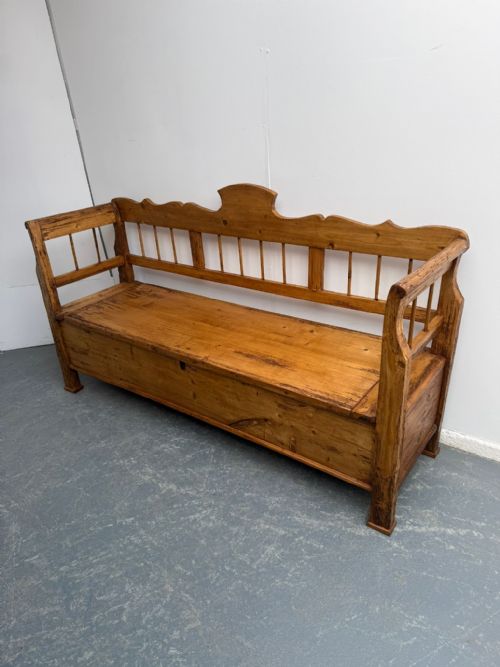
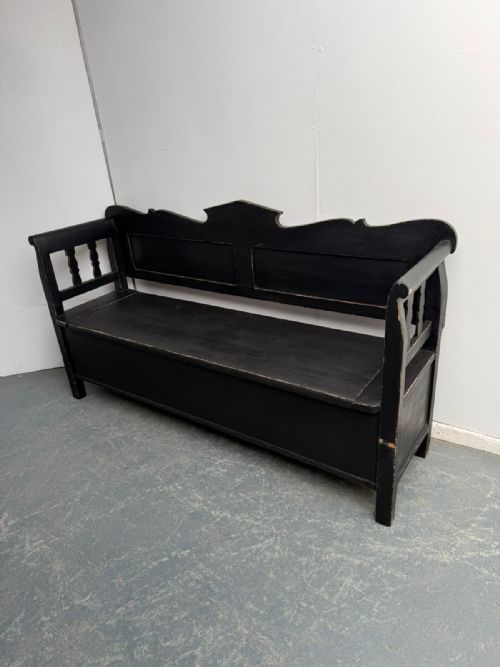
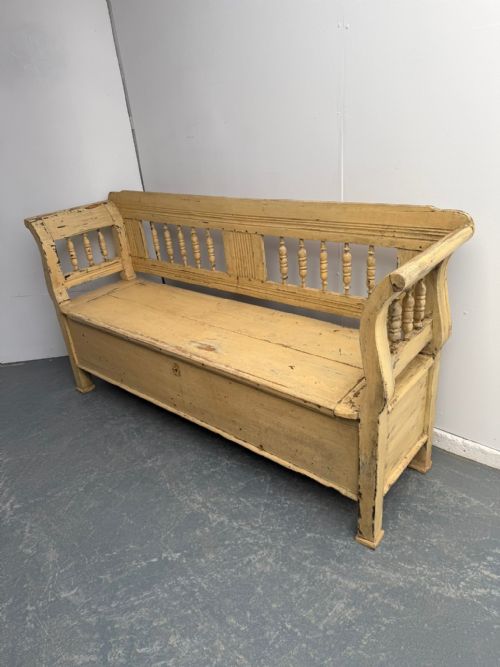
Pine Storage Settle
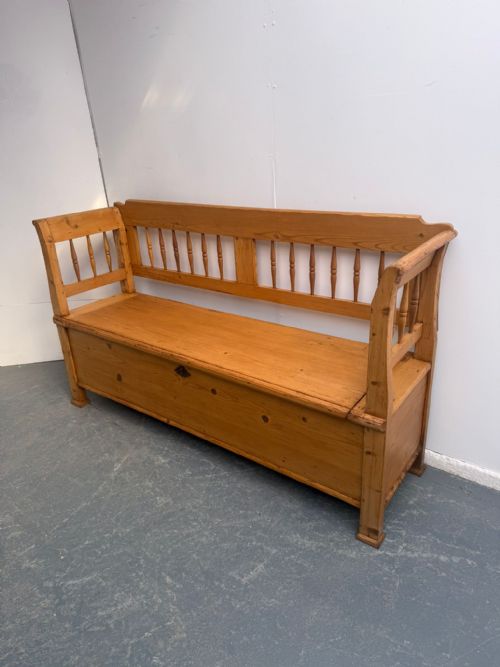
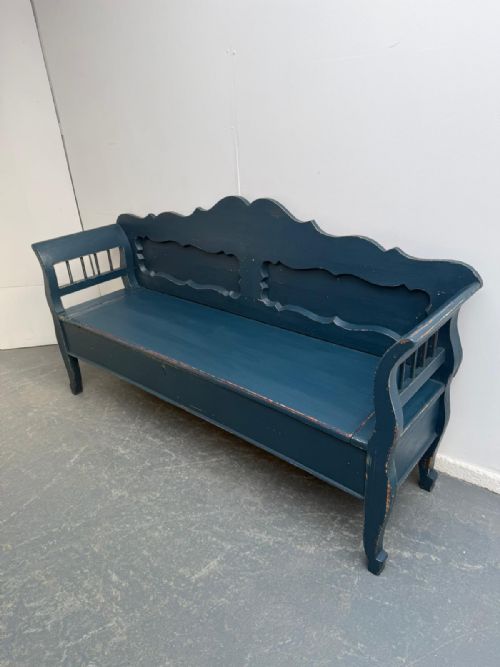
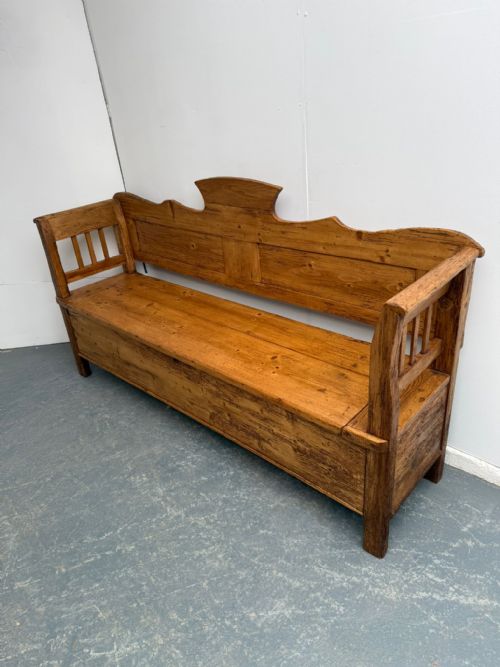
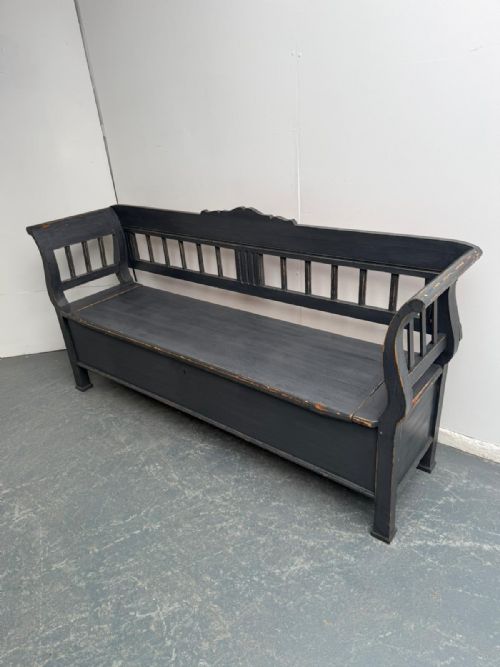
A pine storage settle offers a high-backed seat combined with a hidden compartment beneath, serving as a practical multi-purpose bench.
Pine Storage Settle
When you search for a pine storage settle, you encounter robust seating forms designed for communal rooms and hallways, predominantly configured as two, three, or four-seater benches with lift-up lids. The pieces span Georgian, Victorian, and Edwardian periods, frequently originating from country workshops in Hungary, Sweden, and England.
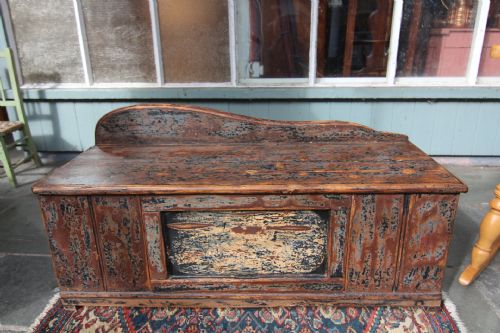
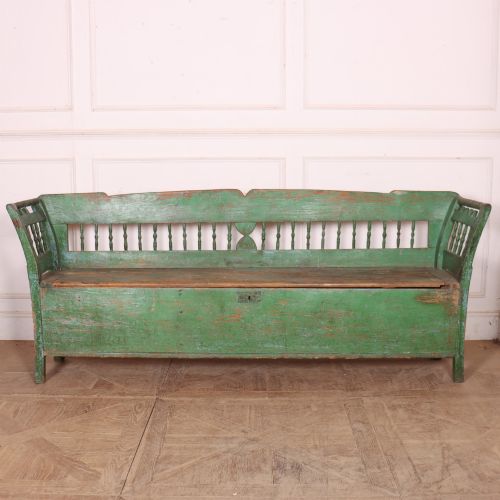
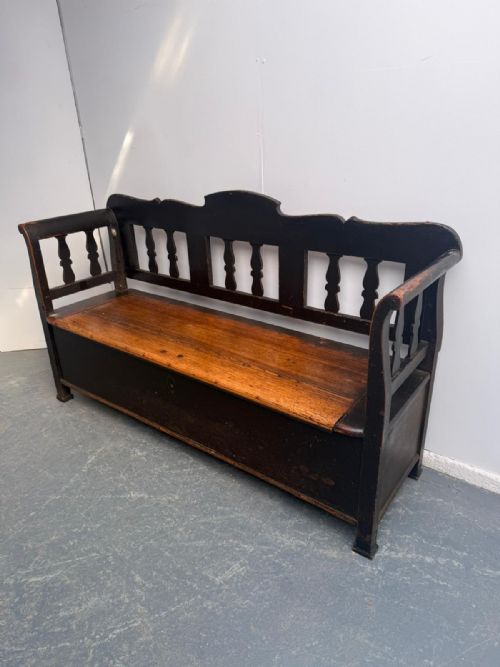
The version most commonly met on this page is the Hungarian or Scandinavian country box settle, often retaining traces of original painted finishes in blue, grey, cream, or black alongside simpler waxed surfaces. These seating units combine high wooden backs that shielded occupants from draughts with deep under-seat storage boxes.
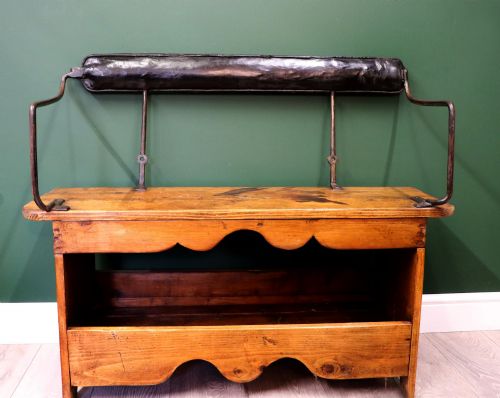
Beyond standard box settles, the evidence includes related forms such as panelled hall benches, monks benches, barge box seats, and tavern settles. These variations incorporate spindle details, low backs, or specific regional proportions while retaining the characteristic timber construction.
How they were made
Makers constructed these settles primarily using solid pine, occasionally incorporating pitch pine, walnut, or iron hardware for hinges and fastenings. Surfaces were either finished with natural wax to nourish the timber or coated in layers of paint, including blue, grey, cream, and black pigments.
Joinery techniques relied on sturdy panel construction, peg joints, and hinged seat lids to withstand daily domestic use in farmhouses, taverns, and large halls. Regional variations in construction reflect vernacular traditions across English, Hungarian, Swedish, and Austrian domestic workshops.
The documented materials on this page include solid pine, pitch pine, iron hardware, and historical painted finishes.
What varies in quality
Quality rests heavily on the integrity of the original timber and the survival of early or untouched paint surfaces, distinguishing genuinely old country pieces from later assembled items. The weight and thickness of the pine used for the high back and box base dictate the structural longevity of the bench.
Proportion and regional detailing set superior examples apart, particularly where spindled galleries, panelled backs, or original iron hardware remain intact. Pieces retaining their authentic Hungarian, Swedish, or English country character command greater appreciation among collectors.
The Pine Storage Settle Glossary
- Settle
- A wooden bench with a high back, solid arms, and a compartment beneath the seat for storage. It was traditionally placed near the hearth to block cold draughts.
- Box settle
- A specific variant of the settle featuring a hinged seat that lifts to reveal a deep storage chest underneath. The enclosed base prevented floor-level drafts from chilling the sitter's legs.
- Pitch pine
- A durable, resinous variety of pine timber often utilised for heavy-use furniture and seating. It provides distinct grain patterns and robust structural strength.
- Tavern settle
- A high-backed communal bench designed for public houses, offering privacy and protection from room drafts. These pieces often feature sturdy panel construction to endure heavy commercial use.
- Polychrome
- Painted in multiple colours, frequently seen on folk art and regional European furniture. This surface treatment adds decorative visual interest to utilitarian pine pieces.
Pine Storage Settle: Frequently Asked Questions
Where were settles placed in homes?
Settles were traditionally positioned close to the hearth in farmhouse kitchens or main living areas to block cold floor drafts from reaching the occupants.
They were also utilised in hallways and entranceways to store outdoor garments and footwear inside the integrated bench compartment.
How do I care for a waxed pine settle?
Maintain waxed pine surfaces by applying a natural beeswax polish periodically to nourish the dry timber and protect against everyday wear.
Avoid placing the furniture in direct sunlight or near heat sources to prevent the pine from warping or splitting over time.
How can I tell if the paint is original?
Original paint finishes show natural wear patterns, minor crackle, and subtle patination consistent with age and domestic use.
Closer inspection often reveals older layers beneath surface chips, whereas modern repainting presents a uniform texture without historical depth.