


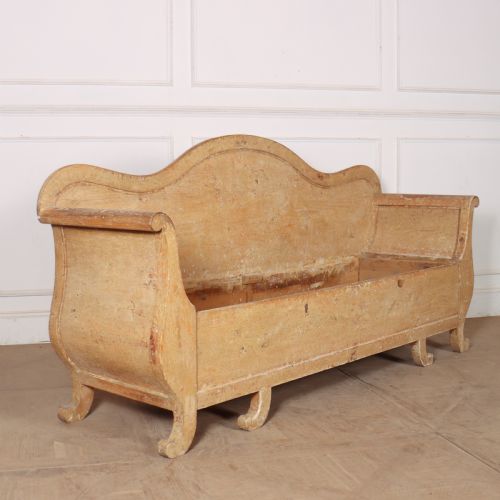


Swedish Pine Settle
A Swedish pine settle is a high-backed wooden bench built for warmth and storage, offering rustic Scandinavian character for any hallway or kitchen.
Swedish Pine Settle
When you search for a Swedish pine settle, you look at heavy wooden seating designed to block draughts in older northern European homes. These pieces combine a bench seat with a high back and enclosed lower storage, serving both practical and social functions.
On this page, the pieces you meet most often date from the nineteenth century and the eighteenth century. They appear in forms described variously as benches, settle benches, and storage benches, spanning Scandinavian country, Gustavian, and Austrian country styles.
How they were made
These items rely primarily on pine and softwood timber, constructed by regional carpenters using local coniferous woods. The timber is often finished with paint, creating painted pine surfaces that range from distressed layers to cleaner Gustavian tones.
Additional materials such as fabric and linen appear on cushioned versions, while structural joinery keeps the heavy high-backed forms stable. The construction prioritises durability and utility, using solid boards joined to withstand daily household use.
Materials recorded across the inventory include pine, softwood, painted pine, fabric, and linen, reflecting both structural timbers and upholstery elements.
What varies in quality
Quality in these benches rests upon the integrity of the original timber and the authenticity of the surface finish. Pieces retaining their early paint layers command greater interest than those stripped down or heavily reworked in later decades.
Proportions and decorative details also distinguish finer examples from plain utility pieces. Gustavian-inspired flourishes or crisper regional carving set certain items apart from simpler rustic workshops.
The Swedish Pine Settle Glossary
- Settle
- A wooden bench with high backs and arms, designed to shield occupants from draughts in domestic rooms. They frequently incorporate a hinged seat concealing a storage chest below.
- Gustavian
- The Swedish neoclassical style developed during the late eighteenth and early nineteenth centuries. It simplifies French court tastes into cleaner, lighter geometric lines.
- Softwood
- Timber from conifer trees such as pine, used widely in Scandinavian cabinetmaking for its availability and workability. It forms the primary structural body of these regional benches.
- Painted pine
- Wood treated with traditional oil or milk-based paints to protect the surface and provide colour. Over generations, this finish develops a distinct patinated texture.
Swedish Pine Settle: Frequently Asked Questions
What is a Swedish pine settle?
A traditional wooden bench featuring a high back and solid sides designed to block cold draughts in older homes. Many examples include a concealed box beneath the seat for storing household goods.
These pieces originate from Scandinavian workshops and reflect regional country aesthetics, utilising local pine timbers built for robust daily use.
How were these settles used?
They served as primary seating beside the hearth, where the high back trapped heat from the fire for the people sitting on the bench. The enclosed base kept firewood, blankets, or provisions close at hand.
In larger rooms, they also functioned as dividers to organise living spaces and block cold air currents moving across wooden floors.
Where should I place one?
A settle fits naturally into a hallway, boot room, or large kitchen where its high back and storage capacity provide both seating and practicality. Ensure you measure the height and depth carefully, as these pieces often feature substantial proportions.
They pair well with plain walls and natural floorboards, allowing the painted pine finish and rustic form to anchor the room.
How do I care for pine furniture?
Keep wooden settles away from direct heat sources and sudden temperature shifts to prevent the pine boards from splitting or warping. Dust them gently with a dry cloth and avoid harsh chemical cleaners that might damage aged painted surfaces.
Wax can be applied sparingly to unpainted timber elements to nourish the wood and maintain its natural lustre over time.