
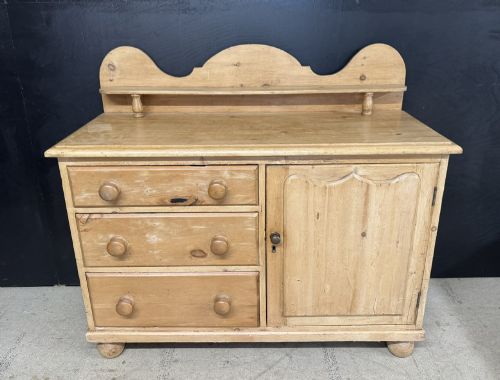
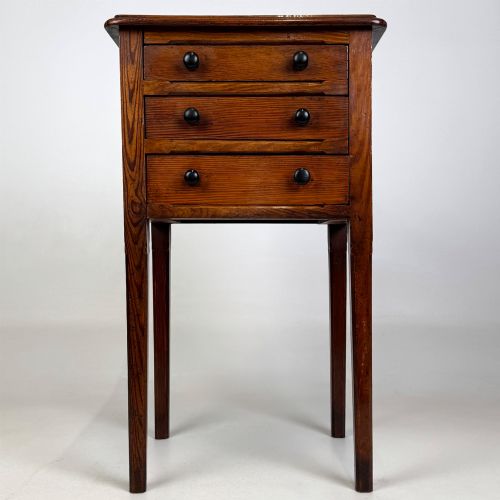
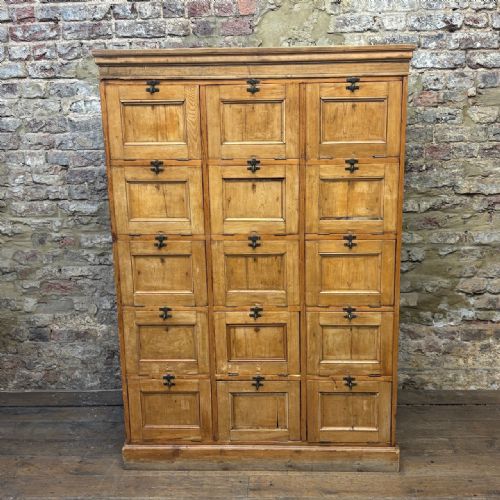
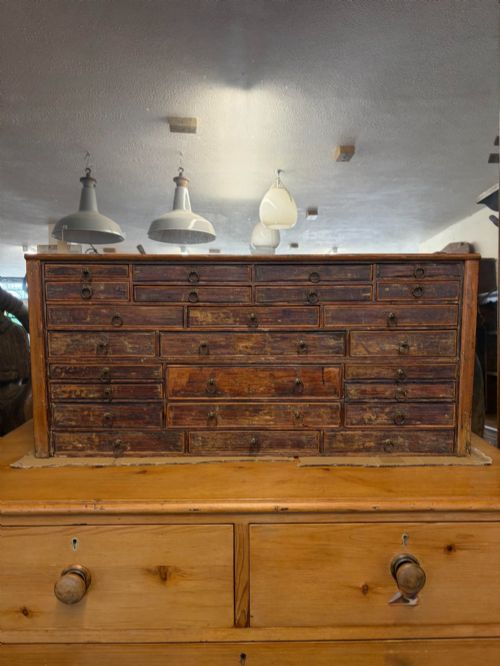
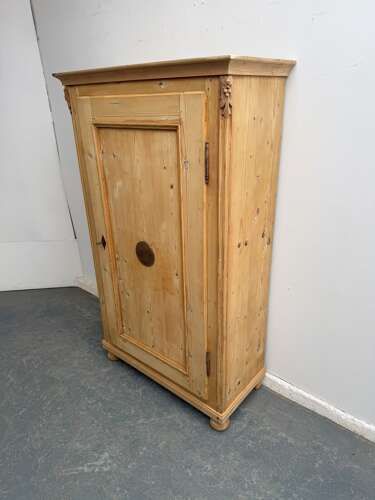
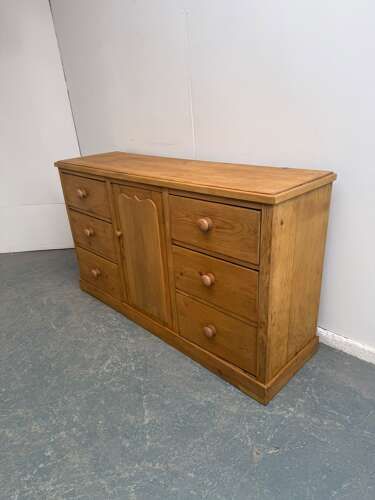
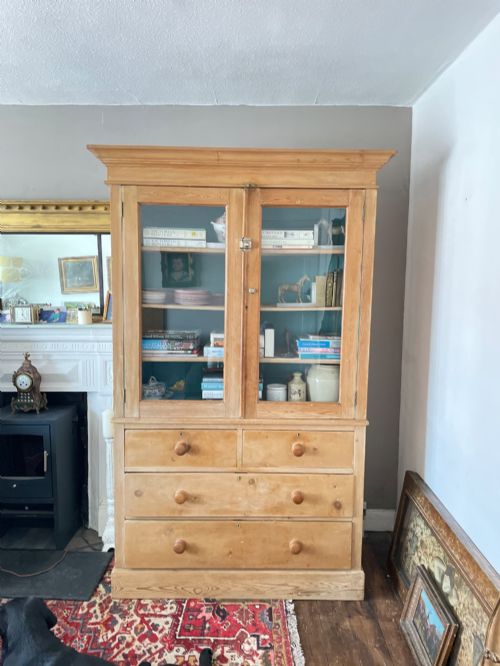
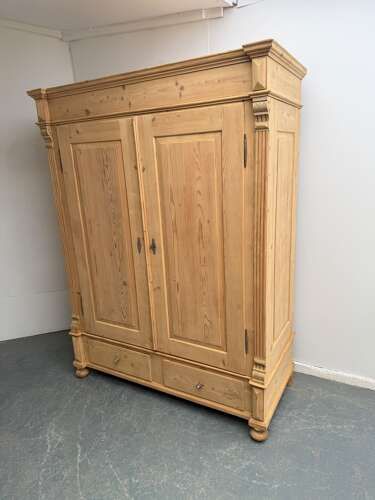

Pine Storage Cupboard Drawers
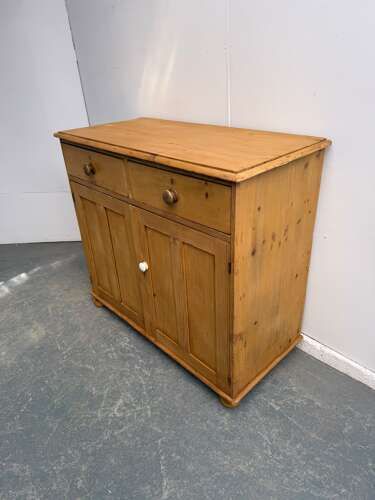
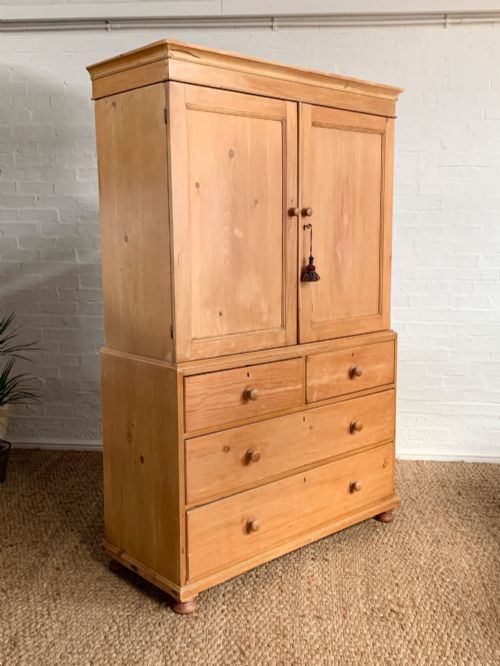
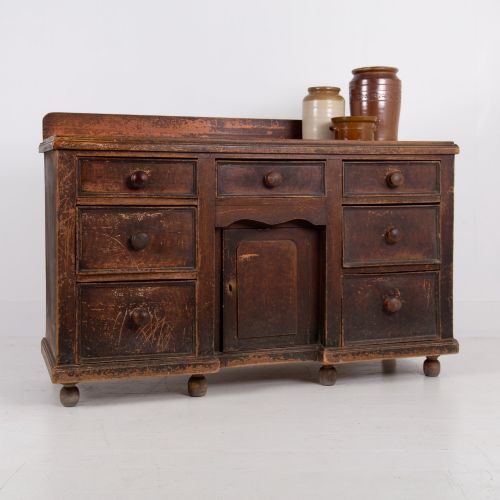
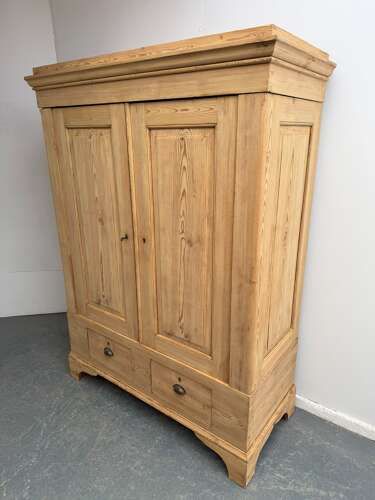
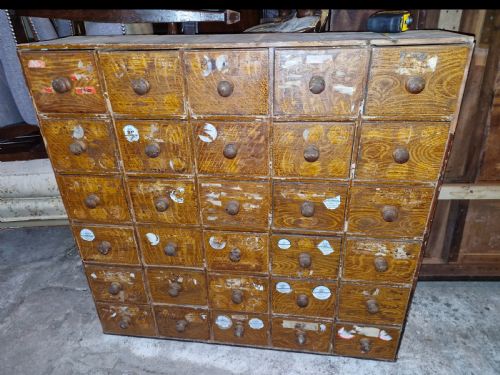
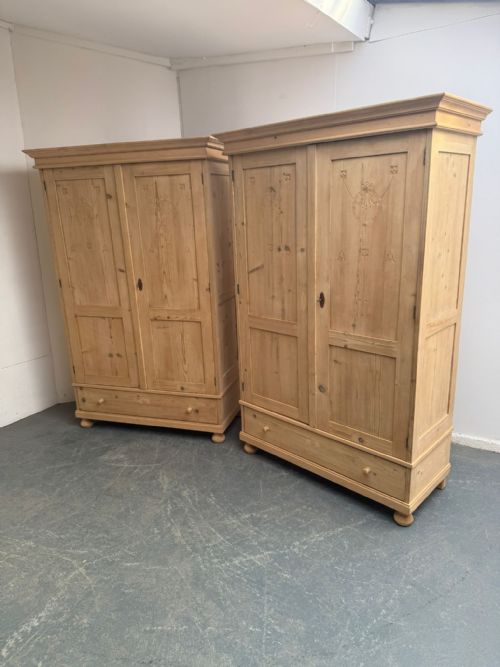
Pine storage cupboard drawers bring honest utility and warmth to a room, offering practical storage through time-tested wooden compartments.

Construction and Materials
Makers utilised solid pine alongside structural elements of iron and brass for hinges, locks, and handles. Surfaces frequently received a coat of paint or a traditional wax finish to protect the soft timber.
Joinery techniques relied on straightforward carpentry traditions, producing robust knockdown wardrobes, dressers, and shop fittings designed for longevity. Drawer construction employed dovetailed joints and solid timber bases to withstand daily use.
Assessing Quality
Quality rests in the integrity of the timber selection and the preservation of original surfaces, such as early paint finishes or deep wax patination. Pieces retaining their original brass or iron hardware stand apart from later replacements.
Proportion and scale dictate the success of a piece, separating utilitarian workshop furniture from finer domestic furnishings. Superior examples exhibit careful timber matching and sound, uncompromised structural joinery.
Listings feature pieces spanning the Georgian, Victorian, and Edwardian periods, constructed primarily from pine with iron, brass, and ceramic elements.
Luxmore's of Ilfracombe·D Napier & Sons
The Pine Storage Cupboard Drawers Glossary
- Pitch pine
- A resinous variety of pine known for its dense grain and durability. It yields a darker, more figured appearance than standard softwoods.
- Dresser base
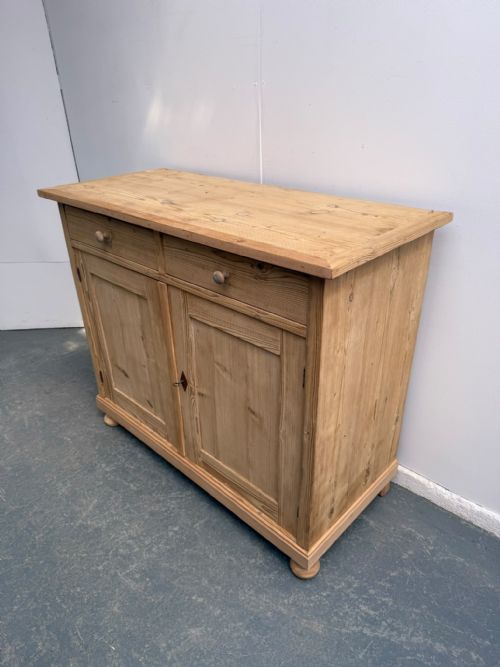
- The lower section of a kitchen dresser featuring cupboards and drawers beneath a work surface. This form served as a primary food preparation and storage station.
- Linen press
- A tall storage piece containing sliding trays or shelves enclosed by doors above a bank of drawers. It was traditionally used for storing folded textiles.
- Chifferobe
- A hybrid furniture form combining the hanging space of a wardrobe with the drawer capacity of a chest. It offers versatile storage in a compact footprint.
- Knockdown wardrobe
- A large piece of furniture engineered to be dismantled into flat panels for ease of transport. It uses peg or bolt fixings rather than permanent glue joints.
Pine Storage Cupboard Drawers: Frequently Asked Questions
What rooms suit a pine storage cupboard drawer unit best?
These versatile storage pieces integrate smoothly into kitchens, boot rooms, and bedrooms where practical organisation is required. Their natural timber or painted surfaces complement both rustic and contemporary interior schemes.
Larger configurations like dresser bases and multi-drawer units provide substantial surface space and internal capacity for everyday domestic items.
How do I care for waxed or painted pine furniture?
Maintain waxed pine surfaces by applying a traditional beeswax polish periodically to nourish the soft timber and preserve the sheen. Avoid placing wooden furniture near direct heat sources or damp environments to prevent warping.
Painted pieces require gentle cleaning with a soft, slightly damp cloth without harsh chemical detergents. This preserves the integrity of historic surface treatments.
What is the difference between a dresser base and a sideboard?
A dresser base typically originates from a kitchen or pantry context, featuring robust construction designed for heavy culinary use. These pieces often combine multiple drawers with enclosed cupboard storage beneath a thick wooden top.
Sideboards generally emerged from dining room settings with more formal decorative detailing. However, in country furniture, the distinction often blurs according to regional vernacular.