

Pine Refectory Dining Table
When you search for a pine refectory dining table, you find a sturdy communal board built for daily domestic life.
Pine Refectory Dining Table
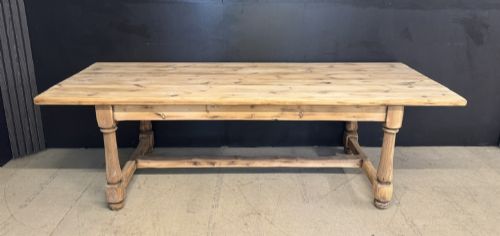
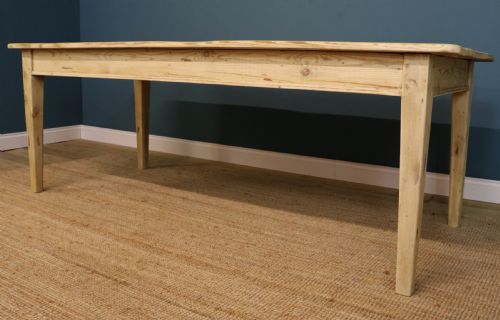
A pine refectory dining table provides a long, linear surface historically designed for communal dining in large halls and country houses. These pieces bridge the gap between working kitchen tables and formal dining furniture, accommodating multiple seated guests along their flanks.
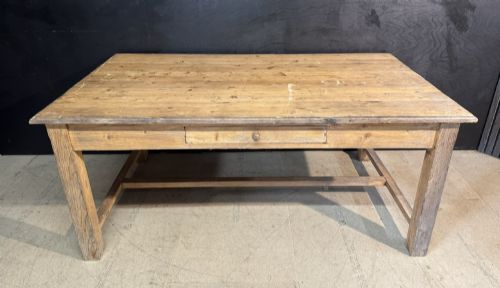
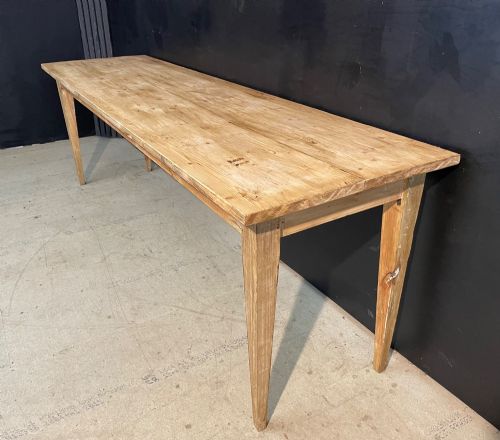
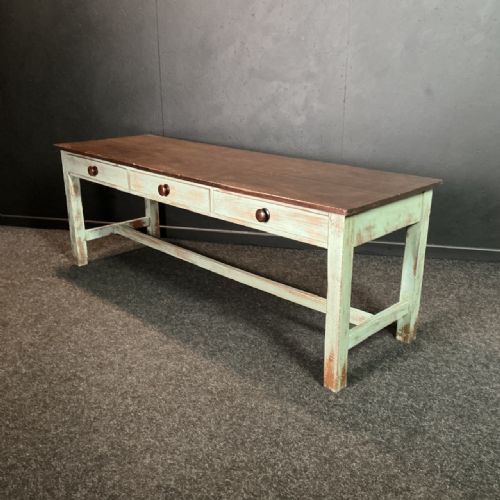
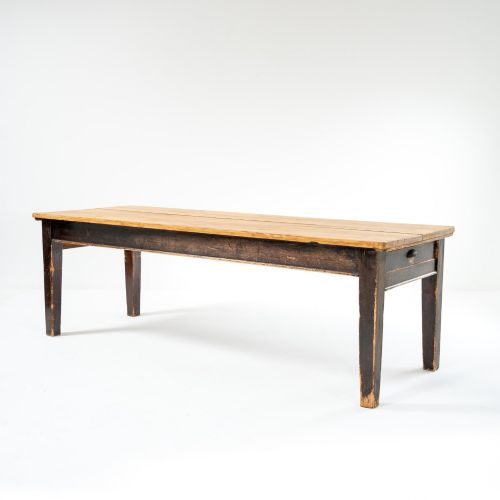
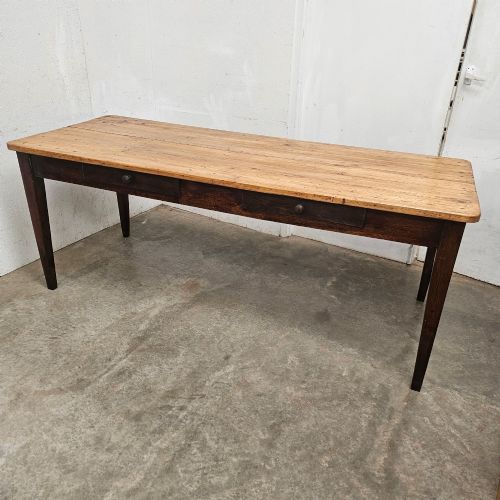
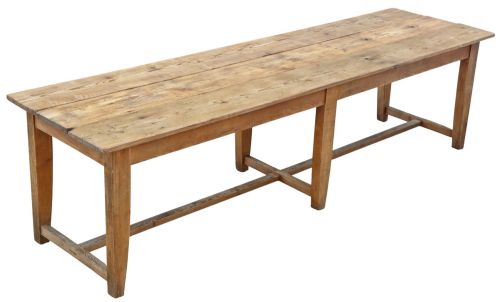
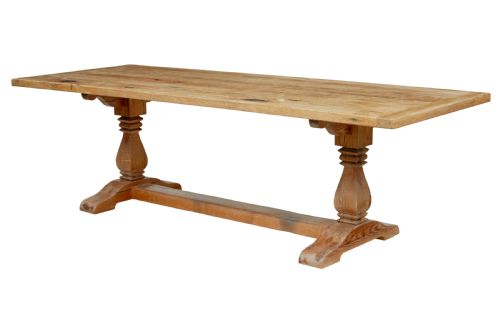
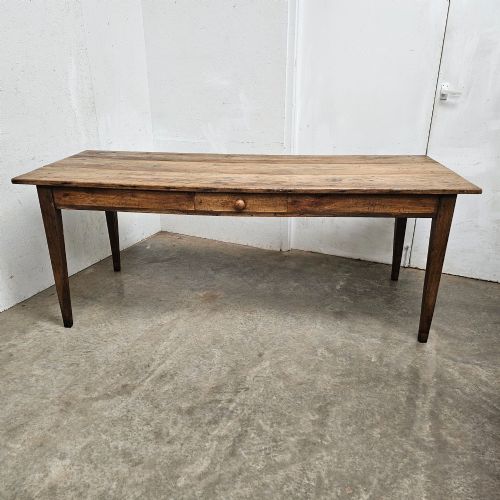
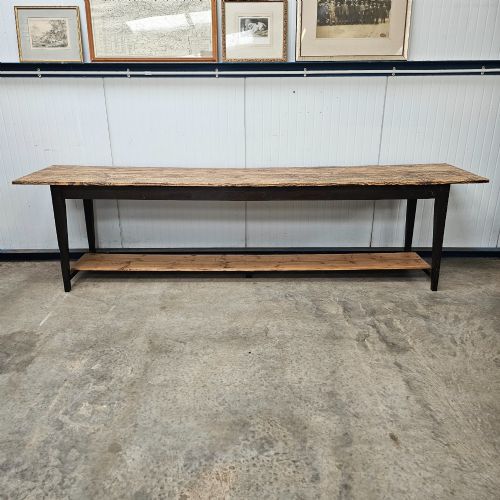
The versions most common on this page emerge from nineteenth-century and early twentieth-century domestic contexts. They appear in forms ranging from simple plank-and-trestle formats to substantial versions featuring drawers, painted bases, and combined oak or fruitwood timbers.
How They Were Made
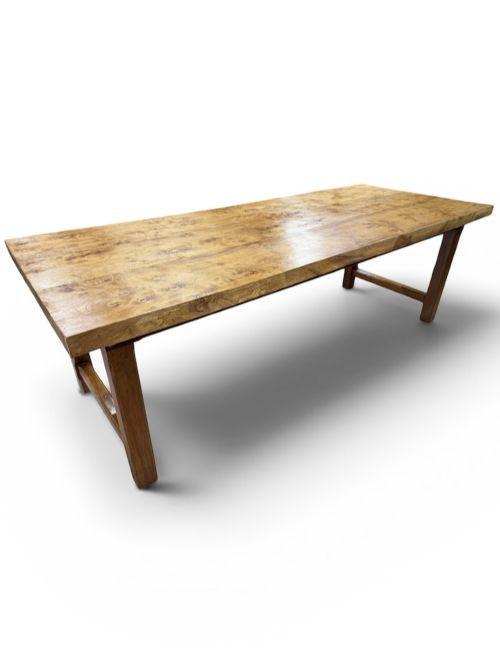
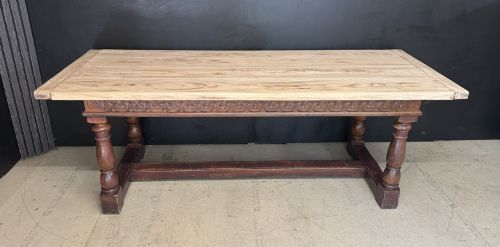
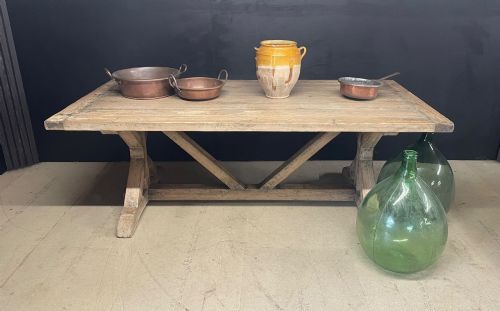
Carpenters constructed these tables using a combination of softwoods and hardwoods, pairing resilient pine tops with sturdy oak, fruitwood, or pitch pine frames. Planks were joined with cleated ends and supported by square section uprights, trestle structures, or X-frame braces.
Surface treatments varied from scrubbed natural timber to painted finishes and dark beeswax applications. Drawers were occasionally integrated into the aprons using traditional jointing methods to store household implements.
Several tables include hidden drawers for kitchen tools.
What Varies in Quality
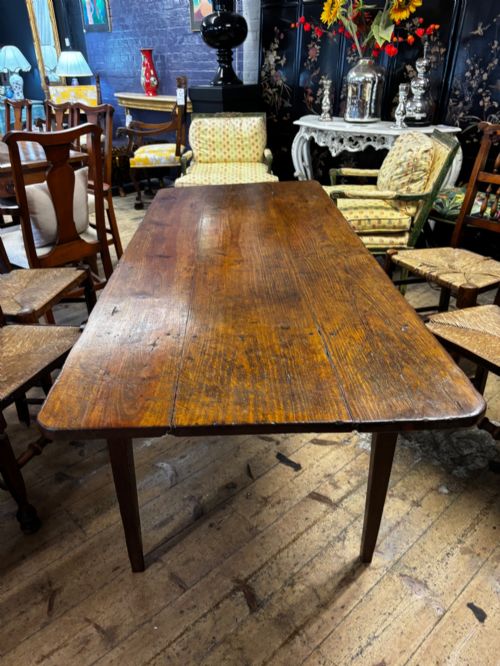
Quality rests in the integrity of the timber selection and the retention of original structural elements. Tables built with thick, wide single-plank pine tops demonstrate superior material quality compared to multi-plank assemblies joined later.
The balance between the pine top and the supporting frame dictates the overall character. Examples featuring integrated drawers, period hardware, and uncompromised structural joinery represent the finer end of the surviving range.
The Pine Refectory Dining Table Glossary
- Refectory table
- A long dining table historically used for communal meals in monastic or large domestic settings. These boards are characterised by their elongated proportions and sturdy undercarriages.
- Scrub top
- A bare wooden table surface designed to be aggressively scoured clean with water and sand. This treatment leaves the pine grain raised and pale.
- Trestle table
- A table supported by two or more upright frames connected by a horizontal stretcher. This design maximises legroom along the length of the board.
- Cleated end
- A transverse piece of wood fixed to the ends of a tabletop to prevent warping. It allows the main planks to expand and contract naturally with humidity changes.
- Pitch pine
- A dense, resinous variety of pine valued for its durability and strong grain patterns. It frequently appears in heavy Victorian and Edwardian framing.
Pine Refectory Dining Table: Frequently Asked Questions
How many people do they seat?
These tables vary significantly in length, ranging from compact six-seater versions to community harvest boards measuring over ten feet long. Their linear design allows benches or multiple chairs to fit comfortably along both sides.
Larger formats often accommodate eight to twelve diners easily, making them practical for hosting gatherings. Shorter variants suit more intimate kitchen spaces while retaining the generous depth of traditional refectory boards.
Can I use one outdoors?
While these tables originated in robust working environments like sculleries and farmhouses, they are historic indoor furniture. Exposure to modern central heating and damp outdoor conditions can cause old pine to warp or split.
Keeping them in stable indoor dining spaces preserves the historic timber and original finishes. Regular indoor maintenance involves simple dry dusting and occasional waxing rather than harsh outdoor treatments.
How do I clean the pine top?
Historic scrub tops and bare pine surfaces respond best to gentle cleaning with a damp cloth and mild soap. Avoid soaking the wood or using harsh modern chemicals that strip the aged patina.
Many owners embrace the marks, stains, and indentations accumulated over generations of domestic use as part of the piece's character. Nourishing the timber with a traditional beeswax polish helps maintain a healthy surface sheen.
Are scrub tops original?
Scrub tops reflect the nineteenth-century practice of scouring kitchen tables with sand and water after food preparation. Many period examples retain this characteristic pale, weathered timber surface from decades of active use.
Some tables have been planed down or refinished later in their lifespan to remove surface wear. Examining the depth of the grain and the edges helps determine the history of the timber.