
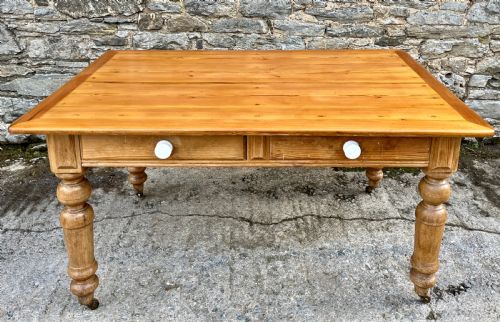


Pine Harvest Dining Table
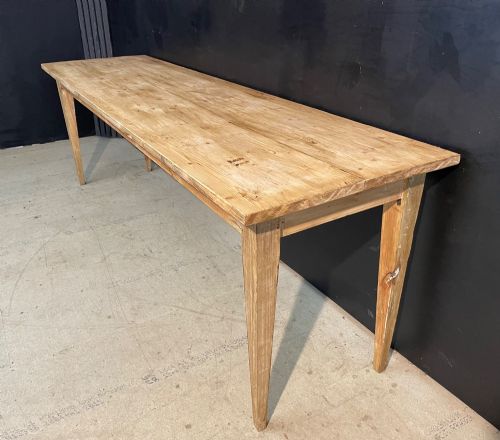
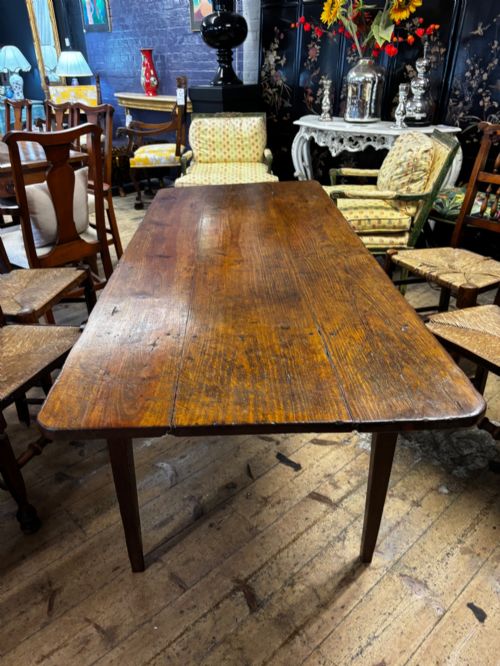
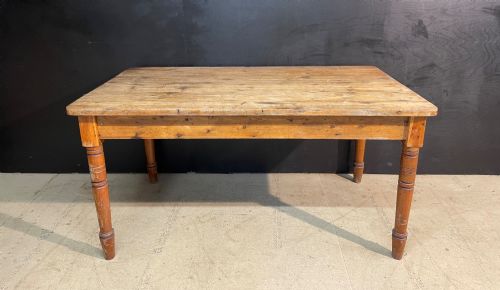
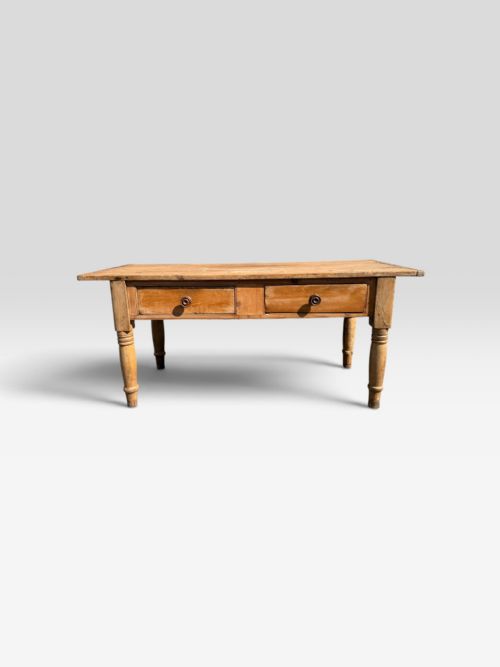
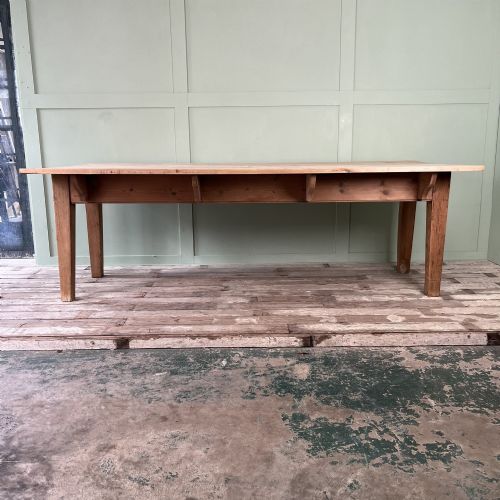
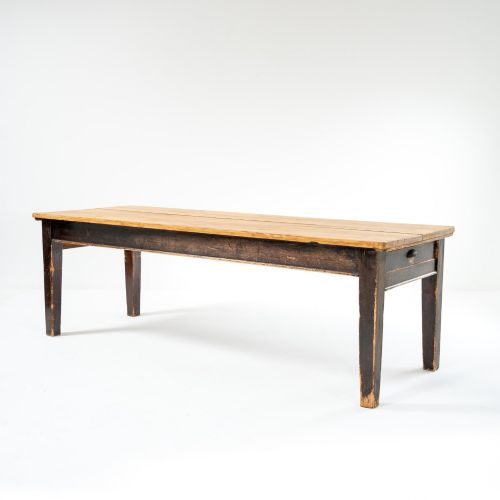
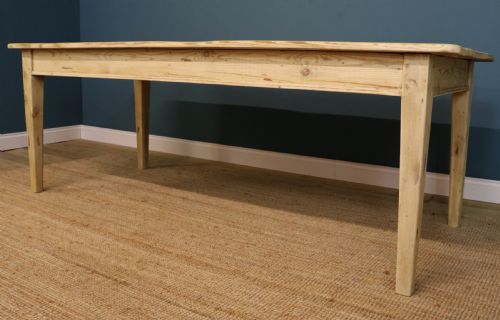
A pine harvest dining table offers generous surface area and sturdy construction, making it the practical centrepiece for large gatherings.
Pine Harvest Dining Table
A pine harvest dining table provides substantial proportions designed to seat many guests comfortably for communal meals. These pieces originate from various periods including the nineteenth century and the early twentieth century, spanning styles such as Victorian country, rustic farmhouse, and French provincial.
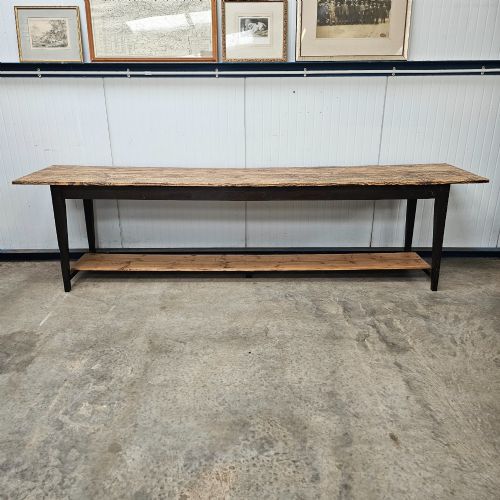
The selections encountered here range from large communal boards measuring over twelve feet to scrubbed kitchen tables and two-tier timber designs. Many examples utilise pine alongside fruitwood and oak, maintaining a vernacular country aesthetic suited to everyday use.
Makers and origins stretch across English and Welsh workshops as well as French provincial regions. Buyers frequently encounter tables featuring square section supports, refectory framing, or X-frame tavern bases.
Materials and construction methods
Construction relies primarily on solid timber, with pine, pitch pine, and fruitwood forming the main surfaces and structural frames. Certain examples combine pine with oak, particularly in multi-tier designs or reinforced supports.
Surfaces receive various treatments ranging from scrubbed finishes to original painted details, such as red paint on tavern bases. Joinery focuses on robust refectory and X-frame configurations to support extended lengths.
The inventory includes regional forms such as Welsh tavern tables, French provincial styles, and long community refectory boards.
Assessing quality and proportion
Quality rests in the integrity of the timber and the retention of original surface treatments, such as historic scrubbed finishes or early paint layers. Substantial dimensions, such as extended community lengths, indicate utility for large gatherings.
The refinement of the base supports, from plain square sections to architectural X-frames, distinguishes standard utility pieces from more distinctive regional workshops.
The Pine Harvest Dining Table Glossary
- Scrubbed pine
- Timber surfaces washed repeatedly with soap and water to achieve a pale, clean finish. This method was common in Victorian kitchens.
- Pitch pine
- A dense, resinous variety of pine known for strong grain patterns and durability. It frequently appears in nineteenth-century utilitarian furniture.
- Refectory table
- A long narrow dining table traditionally used in monasteries and large halls. Examples in this category often feature sturdy wooden framing.
- X-frame
- A structural base design formed by intersecting diagonal timbers. This configuration provides lateral stability for tavern and farmhouse tables.
- Two-tier table
- A table incorporating an additional lower shelf beneath the main surface. This layout allows for extra storage of kitchen or dining items.
Pine Harvest Dining Table: Frequently Asked Questions
How do I clean a pine harvest table?
Wipe surfaces regularly with a damp cloth and mild soap to preserve the natural wood. Avoid harsh chemical cleaners that strip historical finishes.
Dry the timber thoroughly after cleaning to prevent moisture damage and maintain the condition of the top.
Can these tables be used daily?
These tables were built for heavy domestic use in kitchens and communal dining spaces. Their robust construction handles everyday meals and gatherings easily.
Using mats and coasters helps protect older surfaces from heat and moisture marks while allowing normal usage.
What rooms suit a large harvest table?
Large communal boards require substantial floor space to allow comfortable seating on all sides. Kitchens and open-plan dining rooms accommodate the generous lengths best.
Measuring the room clearance ensures guests can move freely around the edges of the table.
How do I identify a Victorian pine table?
Victorian examples often display vernacular country styling with straightforward joinery and sturdy timber construction. Examining the grain and underside reveals construction methods typical of the period.
Finish types, such as scrubbed surfaces or original paint remnants, provide further clues to the manufacturing era.