


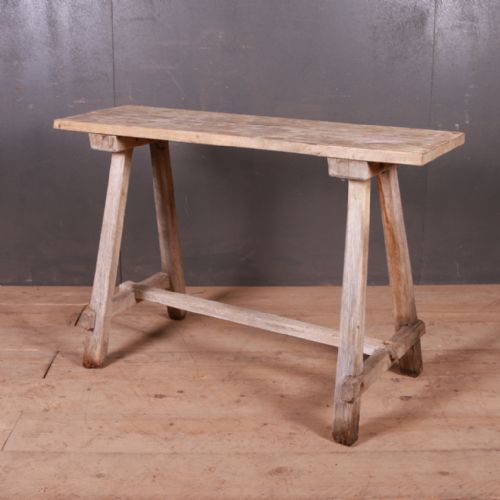

Pine Entry Table
A pine entry table brings warmth and utility to a hallway, offering practical surface space rooted in nineteenth-century craftsmanship.
Pine Entry Table
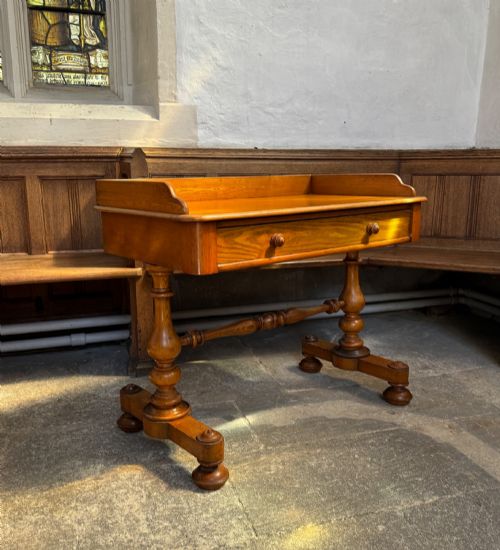
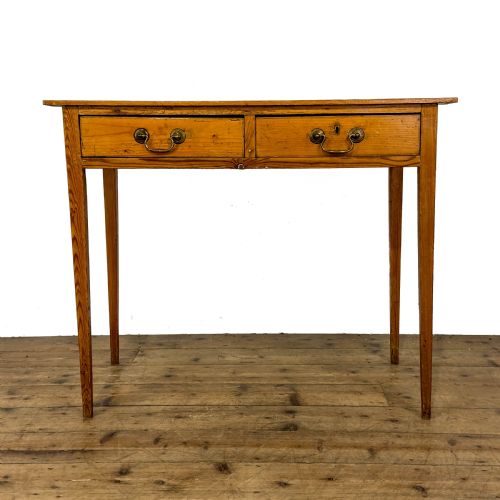
A pine entry table encompasses console tables, side tables, and washstands designed for narrow spaces and hallways. The pieces appearing here predominantly date from the Victorian era and the nineteenth century, reflecting utilitarian origins and domestic utility.
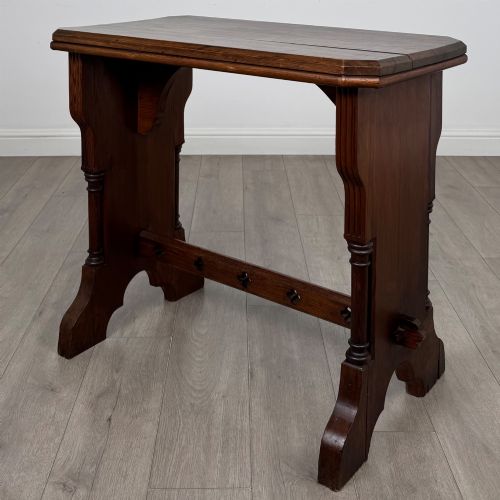
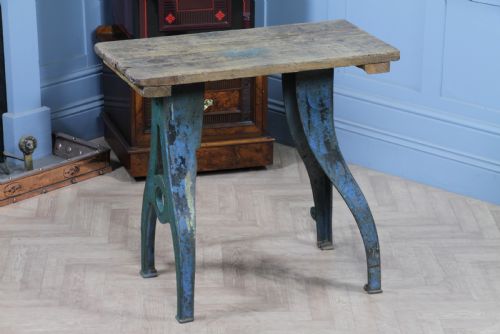
Makers utilised various timber types, most notably standard pine and pitch pine, occasionally pairing the wood with brass, paint, marble, or cast iron bases. Forms range from simple side tables with drawers to Gothic revival designs and industrial upcycled machine bases.
Origin points vary across the listings, featuring English, Scottish, French, and Dutch examples. Buyers encounter narrow freestanding tables, demi-lune hall stands with lift-up lids, and trestle structures shaped for corridors and small rooms.
Materials and construction methods
Makers constructed these tables primarily from solid pine and dense pitch pine, selecting timber for durability in busy domestic hallways. Structural elements occasionally incorporate oak or heavy cast iron for industrial machine bases.
Surface treatments range from natural waxed grain and historic painted finishes to inset marble slabs. Metal fittings typically comprise brass handles or hinges, while framework designs include trestle supports and Gothic revival ornamentation.
Assessing quality in nineteenth-century pine
Quality rests upon the selection of timber, particularly the density and grain pattern found in pitch pine versus standard pine. Superior examples display thoughtful joinery and original hardware rather than modern replacements.
Proportion and form dictate distinction within the range, moving from plain utilitarian washstands to elaborate Corinthian capitals, marble tops, and bow-front demi-lune shapes. The integrity of the original surface patina separates untouched pieces from heavily altered ones.
The Pine Entry Table Glossary
- Pitch pine
- A dense, resinous softwood timber favoured in the nineteenth century for its durability and strong grain pattern.
- Demi-lune
- A half-moon shape used for console tables and hall stands designed to sit flush against a wall.
- Washstand
- A domestic table originally constructed to hold a washbasin and pitcher, frequently adapted today as a side or hallway table.
- Console table
- A narrow table supported by wall brackets or console legs, built specifically for entryways and corridors.
- Trestle table
- A board resting on two or more upright supports, appearing in various regional nineteenth-century styles.
Pine Entry Table: Frequently Asked Questions
Where should I place a pine entry table?
These narrow tables suit hallways, corridors, and landings where floor space is limited. Their shallow depths allow them to sit against walls without obstructing pathways.
They provide a convenient surface for post, keys, and decorative lamps while introducing nineteenth-century character to entrance spaces.
How do I clean antique pine furniture?
Dust surfaces regularly with a dry, soft cloth to prevent particulate buildup on the wood. Avoid harsh chemical cleaners that strip historic wax or paint finishes.
Apply a traditional beeswax polish occasionally to nourish the timber and maintain a soft, protective sheen.
Are these tables sturdy enough for daily use?
Nineteenth-century pine and pitch pine are robust timbers chosen for heavy domestic utility. Tables featuring cast iron machine bases or solid jointed frames offer exceptional stability.
Routine placement in a hallway easily accommodates normal everyday items like bags and keys without straining the structure.
How can I tell a Victorian pine table's age?
Examine the construction joints, timber characteristics, and hardware for signs of nineteenth-century manufacture. Hand-cut dovetails and timber shrinkage indicate period authenticity.
Styles such as Gothic revival, classical revival, and utilitarian washstands align with the Victorian era and regional European workshop practices.