
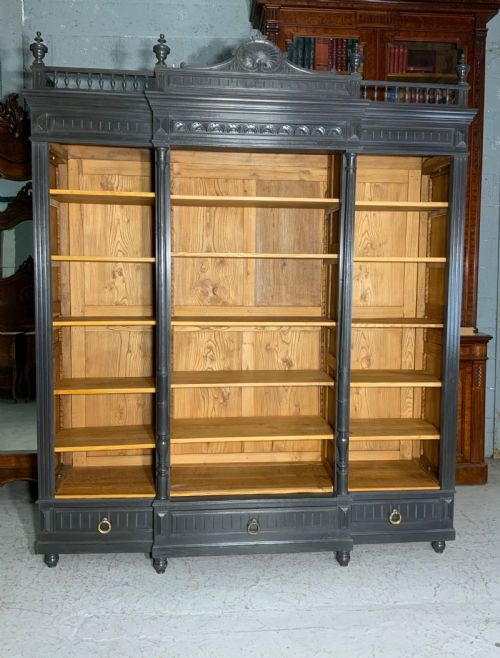
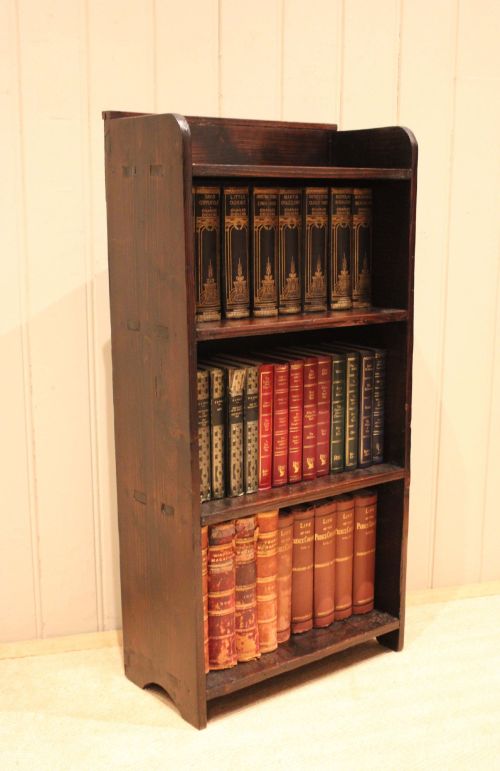

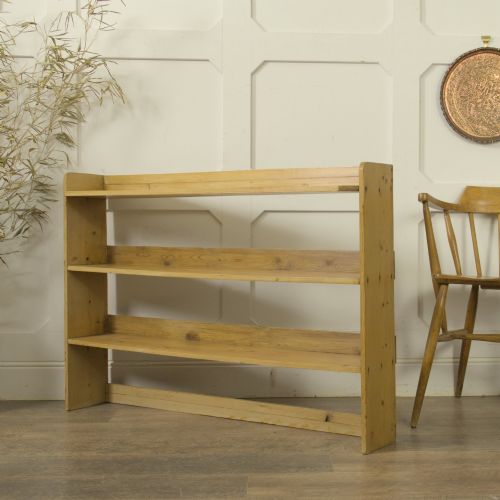



Pine Display Shelves
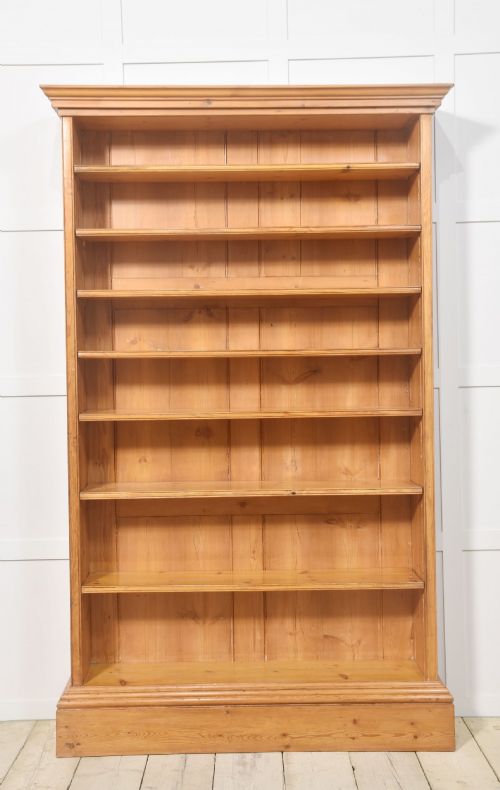
These pine display shelves bring honest utility to any room, offering versatile storage for books and ornaments.
Pine Display Shelves
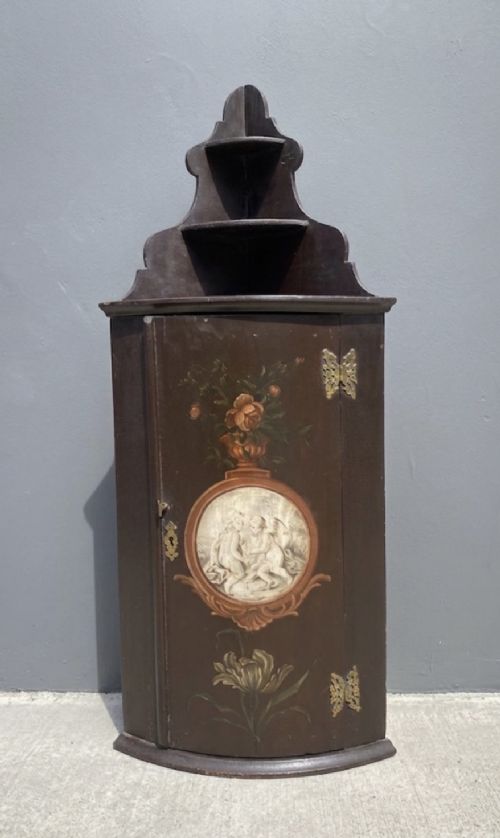
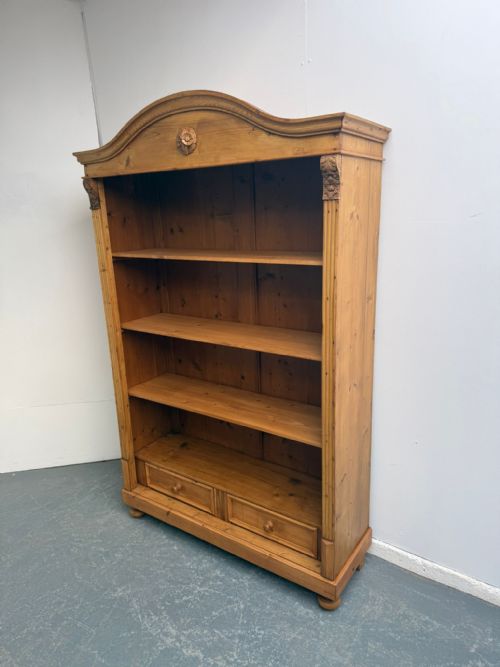
Pine display shelves encompass a wide range of open bookcases, wall shelves, plate racks, and corner cabinets intended for practical storage and domestic display. The pieces on this page span several eras, stretching from the eighteenth century through the Victorian period and into the early twentieth century.
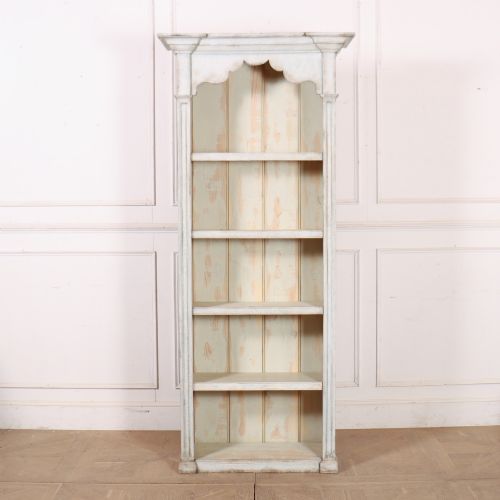
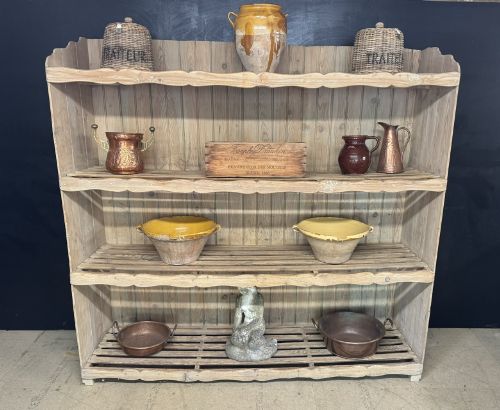
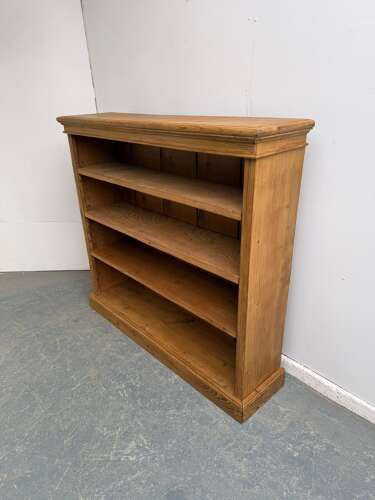
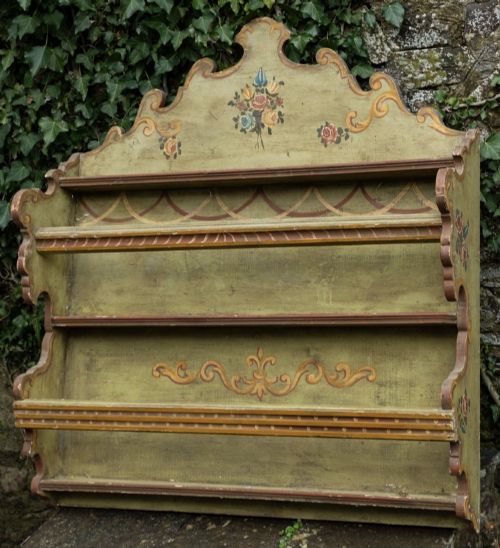
Buyers will encounter various forms, including rustic country open bookcases, French painted units, and traditional plate racks. These items originate from diverse stylistic traditions such as Georgian, Victorian, and French provincial design.
Materials and construction
Construction relies primarily upon solid pine and deal wood, sometimes enhanced with oak, walnut, or brass hardware. Makers utilised standard joinery techniques suited to utility furniture, shaping uprights, shelves, and backboards to withstand everyday domestic use.
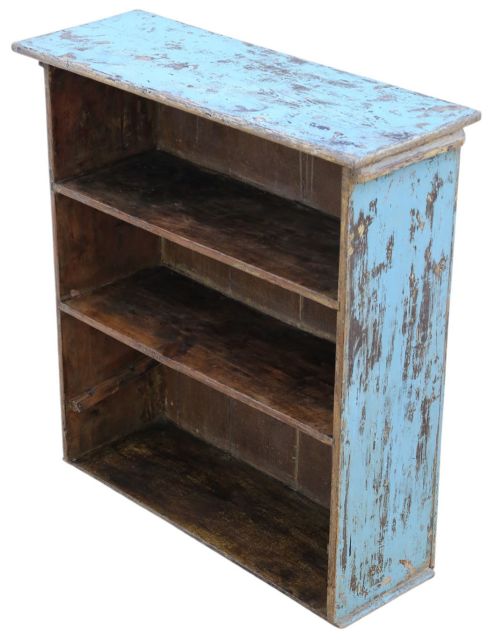
Surface treatments vary significantly across the inventory, ranging from clear waxed finishes that highlight the grain to layers of historic blue or decorative paint. Some items incorporate carved details, fretwork, or applied mouldings, while others remain strictly utilitarian.
The listings on this page span from the eighteenth century to the twentieth century, utilising pine, oak, walnut, and paint.
Judging quality and character
Quality in these pieces depends on the integrity of the timber, the subtlety of the proportions, and the authenticity of the surface finish. Earlier eighteenth-century examples often display finer joinery and decorative elements like fretwork or columns, whereas later items lean towards robust simplicity.
The character of the piece is heavily dictated by its patina, whether through decades of waxing or the charming wear on painted surfaces. Proportion and balance separate standard utilitarian shelving from finer vernacular items.
The Pine Display Shelves Glossary
- Pine
- A softwood commonly used in British and European vernacular furniture for its workability and abundance. It takes paint and wax finishes readily.
- Delft rack
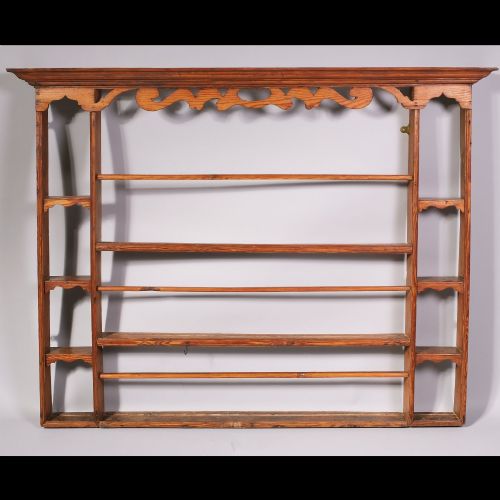
- A wall-mounted or dresser-top rack specifically designed for displaying plates and ceramics. These often feature grooved plate rails and shaped friezes.
- Deal wood
- A historical term for fir or pine timber used extensively in country furniture and carcass construction. It forms the basis of many robust nineteenth-century bookcases.
- Fretwork
- Openwork ornamentation cut with a fretsaw, seen on mid-eighteenth-century pieces to add decorative flair to cornices or brackets.
- Patina
- The surface sheen and colour acquired by wood and paint over decades of handling, cleaning, and ageing.
Pine Display Shelves: Frequently Asked Questions
How do I clean waxed pine shelves?
Dust regularly with a dry cloth and apply a quality bees-wax periodically to nourish the wood and maintain its soft lustre.
Avoid using modern silicone sprays or excessive water, which can damage the traditional wax finish over time.
Are these shelves strong enough for heavy books?
Most solid pine and deal bookcases are structurally robust and capable of supporting standard book collections.
Heavier volumes benefit from fixed rather than adjustable shelves to prevent any potential sagging under sustained weight.
How can I tell an eighteenth-century piece apart from a Victorian one?
Earlier eighteenth-century pieces often display hand-planed surfaces, pegged joinery, and specific stylistic cues like fretwork or classical mouldings.
Victorian and later items generally utilise machine-sawn timber and simpler construction methods suited to mass domestic production.
Can painted pine furniture be placed in modern interiors?
Painted pine suits contemporary spaces remarkably well, adding texture and a relaxed, lived-in feel to neutral rooms.
The distressed blue and French painted finishes currently available blend easily with both traditional and modern decor.