


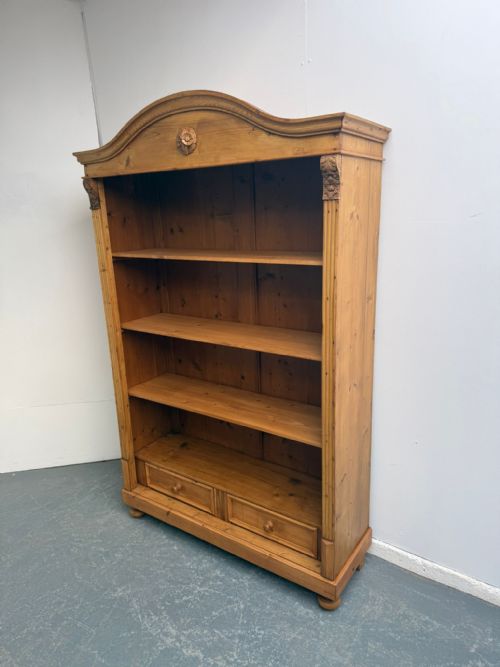


Honey Pine Shelves
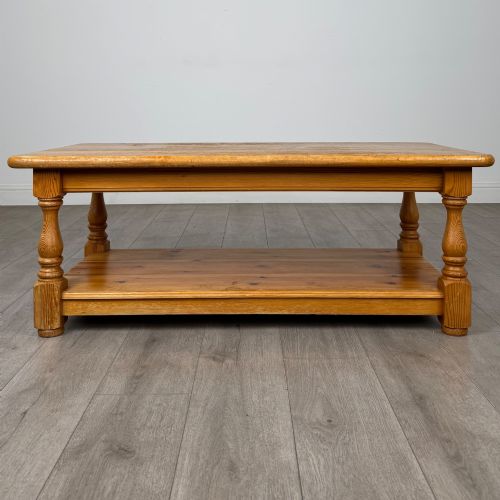
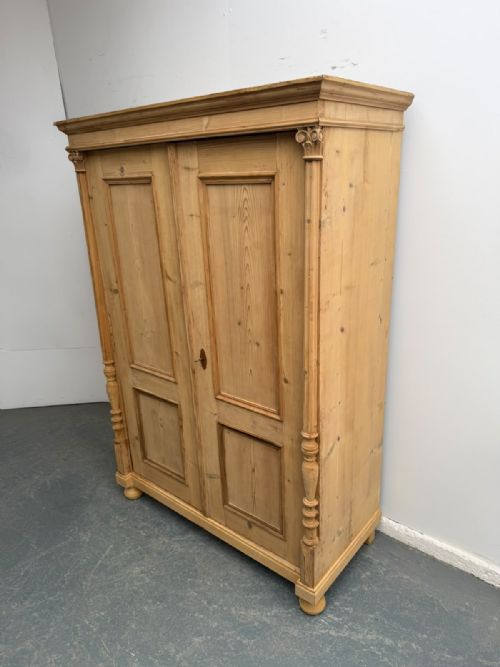
Honey pine shelves bring warm timber grain and practical storage to a room, ranging from simple wall racks to tall bookcases.
Honey Pine Shelves
You are most likely to meet pieces from the Victorian and Edwardian periods, alongside items dated broadly to the nineteenth century. These forms reflect everyday domestic use in country houses and farmhouses.
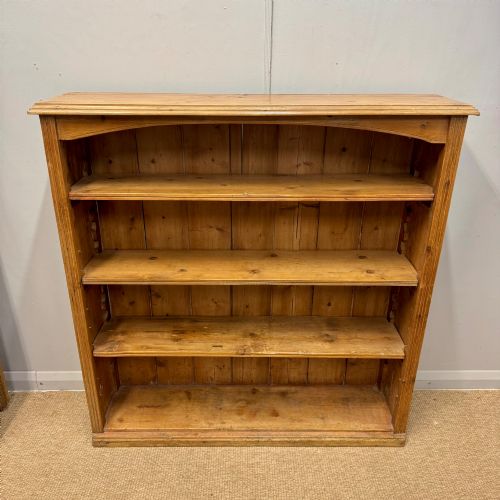
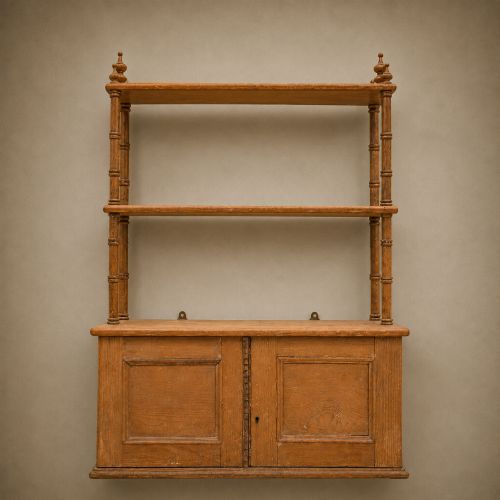
The objects vary from tall adjustable bookcases designed for libraries to compact wall shelves intended for daily kitchen storage. Each piece displays the honest construction typical of rustic farmhouse and country workshops.
How they were made
Makers utilised solid pine and pitch pine, selecting timber that accepted wax finishes well and developed a rich patina over time. Metal fittings occasionally appear on cabinets and wall racks for hanging or structural support.
Construction relies on straightforward joinery suited to utilitarian furniture, with surfaces finished in traditional wax. Some pieces retain traces of old paint or wax finishes applied during their working lives.
Some kitchen racks still carry the faint aroma of nineteenth-century baking spices locked deep within the pine grain.
What varies in quality
Quality rests in the proportion of the timber and the integrity of the original construction, whether a piece is an adjustable bookcase or a fixed wall rack. Simpler country pieces sit alongside more considered Victorian examples with fitted cupboards and pot shelves.
The depth of the honey tone and the condition of the timber grain distinguish finer examples from plain utilitarian boxes. Original surfaces that have aged naturally without excessive modern intervention command greater appreciation.
The Honey Pine Shelves Glossary
- Pine
- A softwood commonly used in British furniture making, prized for its workability and the warm golden colour it develops as it ages.
- Pitch Pine
- A dense, resinous variety of pine with a pronounced grain pattern, often utilised for heavier furniture and architectural fittings.
- Dresser Base
- A low sideboard or cupboard originally used in kitchens for food preparation and storage, frequently featuring open pot shelves below.
- Adjustable Bookcase
- A shelving unit equipped with a mechanism or slots to alter the height of the shelves, offering practical flexibility for book storage.
Honey Pine Shelves: Frequently Asked Questions
Where were honey pine shelves used?
These pieces served practical storage functions in kitchens, pantries, and living spaces across Victorian and Edwardian homes. Wall racks held kitchenware, while taller bookcases organised household libraries.
Their utilitarian origins meant they were built for daily service rather than formal display. Over time, their warm timber tones made them popular for bringing character into domestic interiors.
How do I care for honey pine?
Maintain the timber by applying a traditional beeswax polish to nourish the grain and protect the surface from drying out. Avoid placing pine furniture in direct sunlight or near heat sources to prevent warping.
Gentle dusting with a soft cloth keeps the finish clean without stripping the aged patina. Simple care preserves the warm honey colour that develops over decades.
What periods do these pieces come from?
The selection spans the Victorian and Edwardian eras, with many items attributed broadly to the nineteenth century and around nineteen hundred. These dates reflect the height of traditional pine furniture production in Britain.
Pieces from this timeframe exhibit the construction methods and honest proportions typical of country workshops. Styles range from plain rustic farmhouse forms to adjustable library bookcases.
Are all honey pine shelves adjustable?
Not all pieces feature moveable shelving, as many everyday cupboards and wall racks were built with fixed shelves suited to specific kitchen items. Adjustable examples tend to appear in bookcases designed for libraries and studies.
When adjustable mechanisms are present, they utilise simple wooden supports or early mechanical systems. Both fixed and adjustable formats reflect the practical demands of their original owners.