

Pine Collectors Cabinet
A pine collectors cabinet gathers small specimens, seeds, or notes in numbered drawers made for a Victorian study, workshop, or shop.
Pine Collectors Cabinet
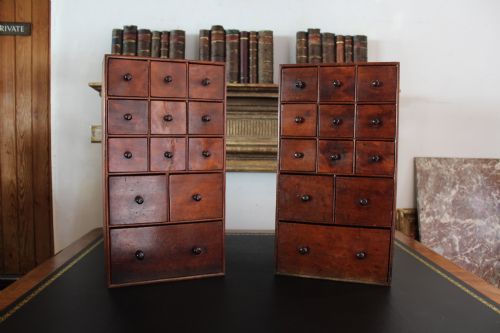
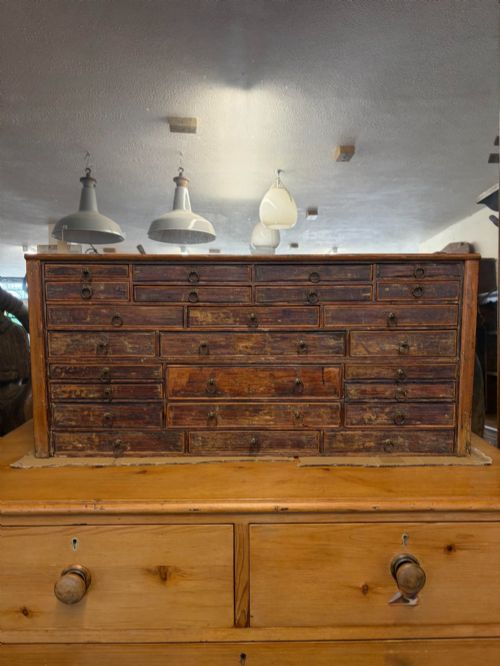
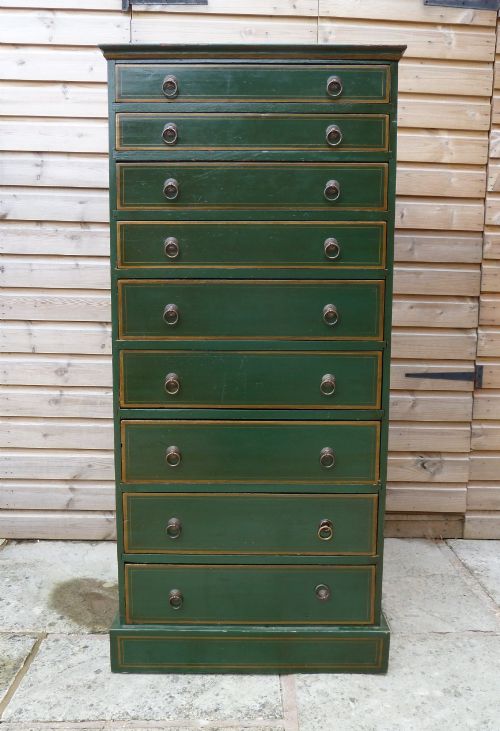
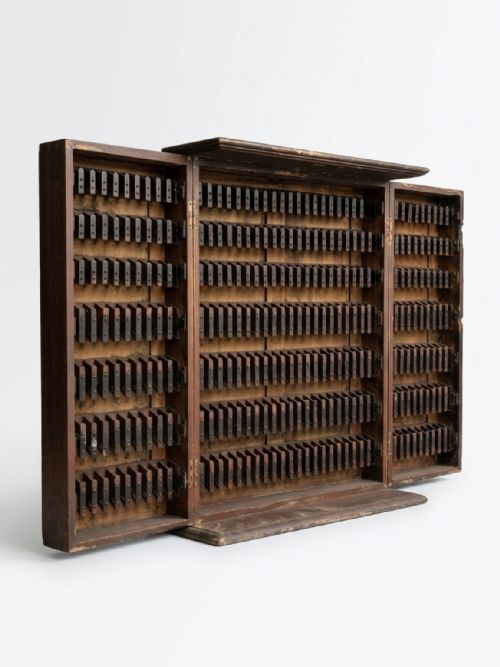
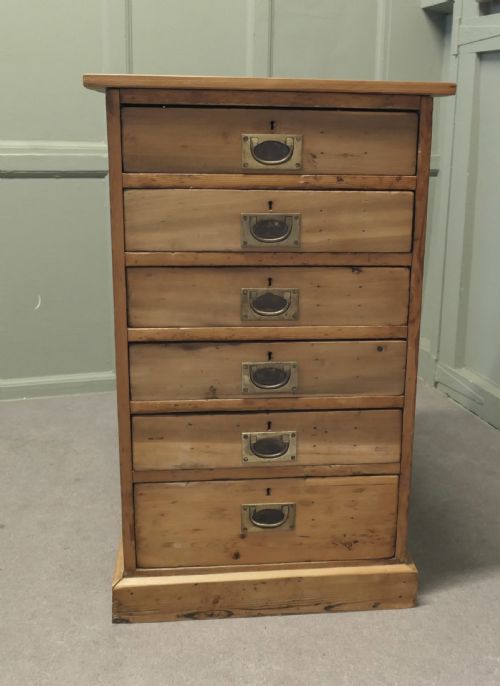
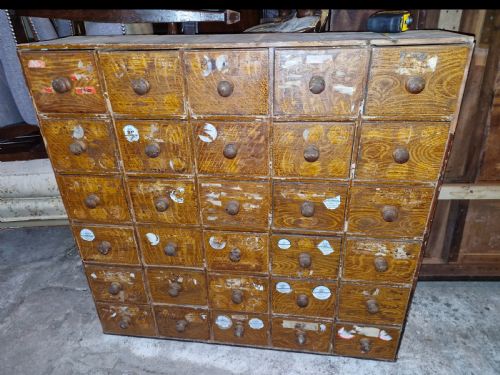
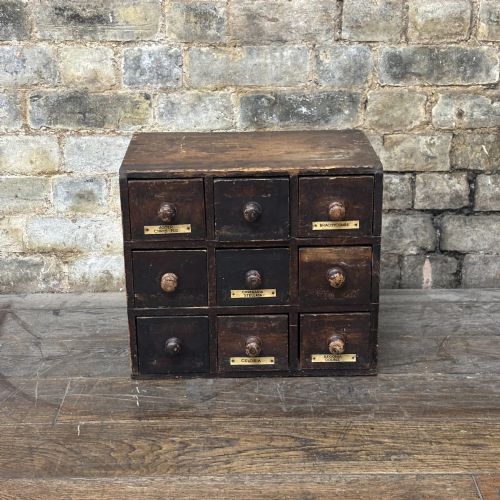
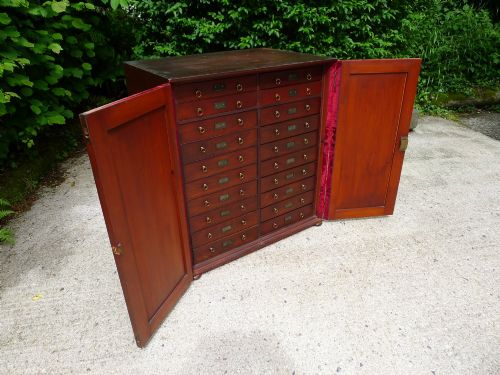
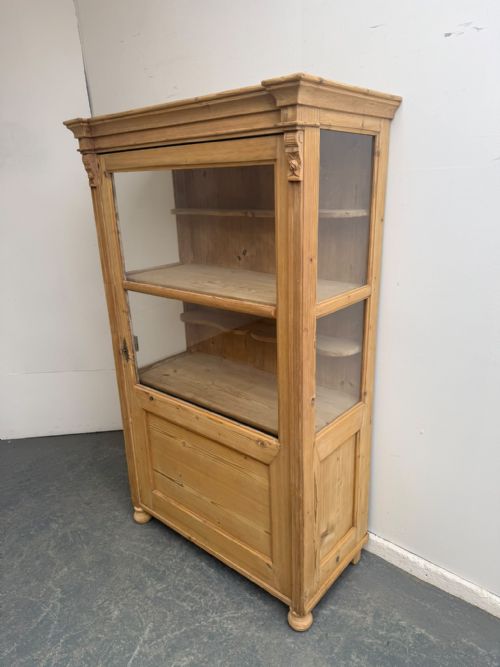
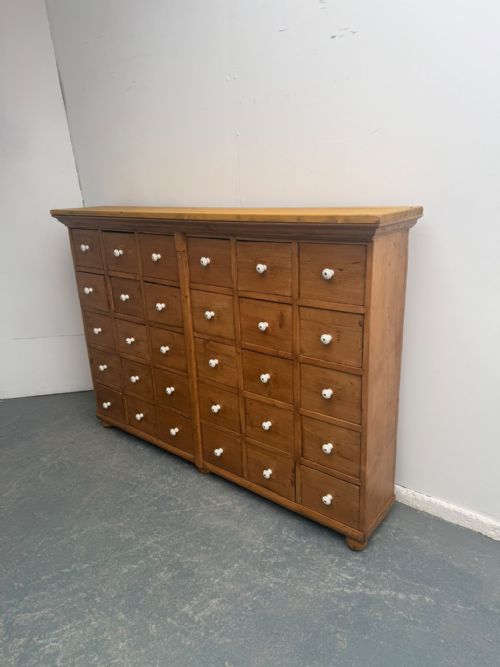
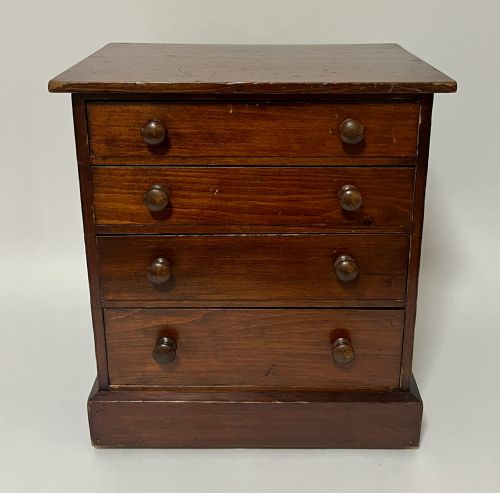
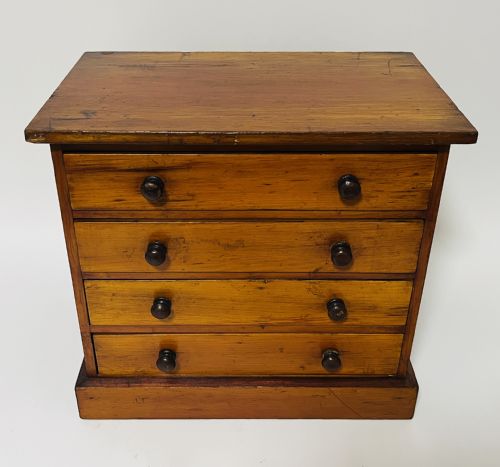
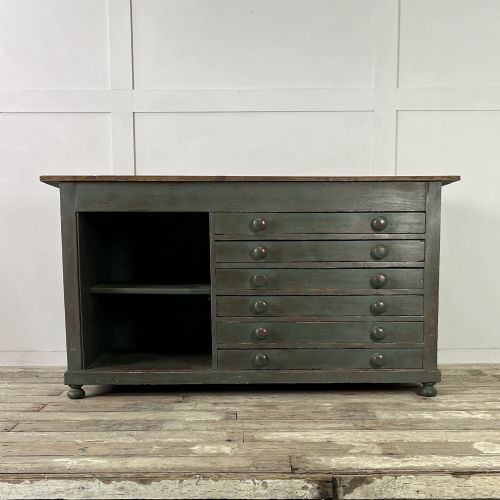
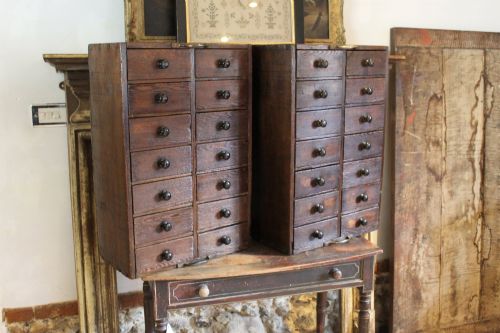
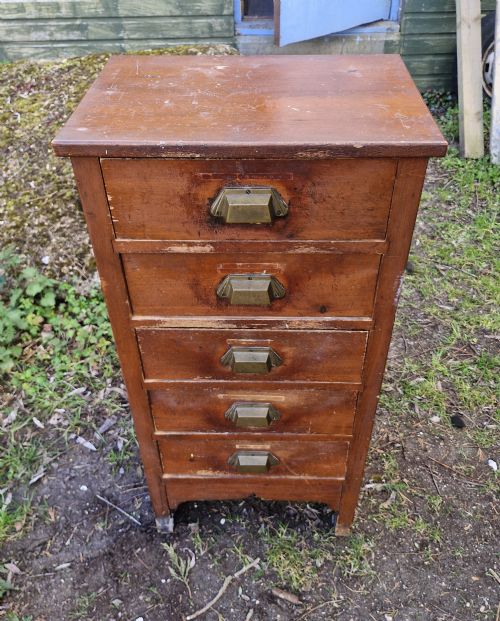
A pine collectors cabinet functions primarily as a set of small, shallow drawers built to organise specimens, apothecary items, or office documents. The forms range from multi-drawer banks and tall Wellington chests to table-top specimen cases and wall-mounted display units.
Most pieces seen here belong to the Victorian and Edwardian periods, stretching from the mid-nineteenth century into the early twentieth century. These domestic and commercial storage pieces often originate from chemists, botanists, and offices.
Buyers meet variations that include painted finishes, stained deal, and figured pitch pine with brass or iron hardware. The smaller table-top and apprentice variants sit alongside massive multi-drawer workshop banks.
What varies in quality
Construction methods and timber selection separate utilitarian workshop storage from finer display furniture. Figured pitch pine and detailed ebonised mouldings indicate a more deliberate standard of manufacture.
Original hardware, intact glass panels, and retention of original painted or polished surfaces determine the desirability of surviving examples. The scale and complexity of multi-drawer banks also influence the character of the piece.
Pine Collectors Cabinet Retail Price Guide 2026
Typical asking prices for pine collectors cabinet among the pieces listed under this phrase on Sellingantiques today, from the lower quarter to the upper quarter. They describe what is for sale here now, not the wider market.
Listings feature pieces spanning from the mid-nineteenth century through the Edwardian era into the mid-twentieth century.
Luxmore's of Ilfracombe·D Napier and Sons·J T Crockett
The Pine Collectors Cabinet Glossary
- Pitch pine
- A dense, resinous softwood with a prominent grain pattern utilised for durable nineteenth-century furniture. It often accepts a deep polish.
- Deal
- A historical term for softwood timber cut from fir or pine trees. It served as a primary material for utilitarian cabinetry.
- Wellington chest
- A tall, narrow chest of drawers secured by a hinged vertical locking strip on one side. This design kept sensitive contents secure in offices and consulting rooms.
- Specimen cabinet
- A specialised housing unit with shallow drawers designed for natural history collections, insects, or botanical samples. These pieces prioritise dust-sealed closure.
- Apprentice piece
- A small-scale model created by a woodworker to demonstrate mastery of a trade. These items display the same joinery techniques as full-sized furniture.
Pine Collectors Cabinet: Frequently Asked Questions
What were pine collectors cabinets used for?
These cabinets stored botanical samples, homeopathic remedies, watchmaker parts, and office documents in commercial or domestic settings.
Their multiple shallow drawers kept small items organised and protected from dust.
How do I date a pine collectors cabinet?
Dating relies on timber choice, handle design, and construction methods characteristic of the nineteenth and early twentieth centuries.
Victorian pieces often feature hand-cut joints and turned brass pulls, while later utility items show simpler industrial fixings.
Are these cabinets suitable for modern homes?
The compact footprint and numerous small drawers make them practical for organising jewellery, stationery, or craft supplies today.
Their varied finishes, from raw pine to painted surfaces, allow them to fit into hallways, studies, and living spaces.
What is the difference between a specimen cabinet and a filing drawer?
Specimen cabinets generally feature very shallow drawers designed for flat items or insects, often with tight-fitting frames.
Filing drawers provide deeper internal capacity built to hold papers, tickets, or office stationery.