

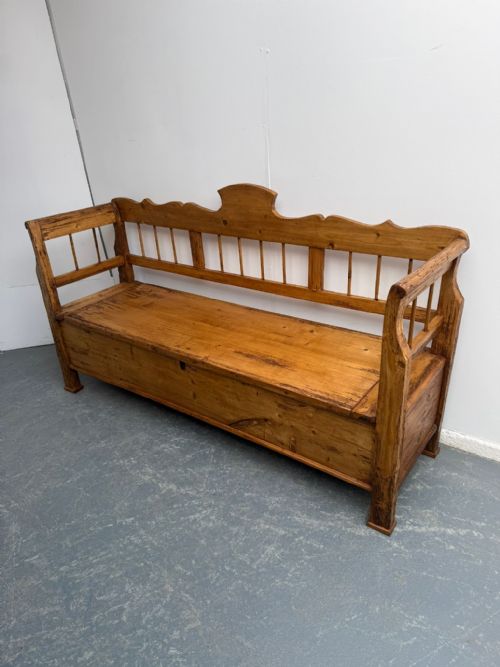


Pine Box Seat Bench
These pine box seat bench examples are sturdy country seating with hidden storage, offering authentic rustic charm for everyday living.
Pine Box Seat Bench
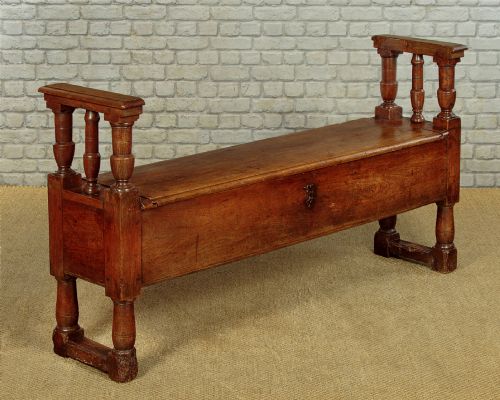
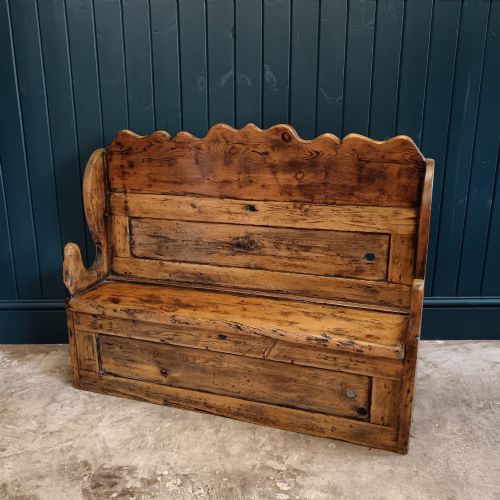
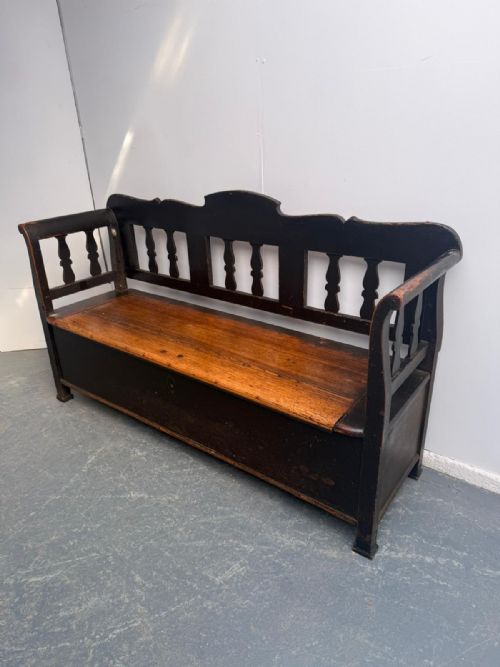
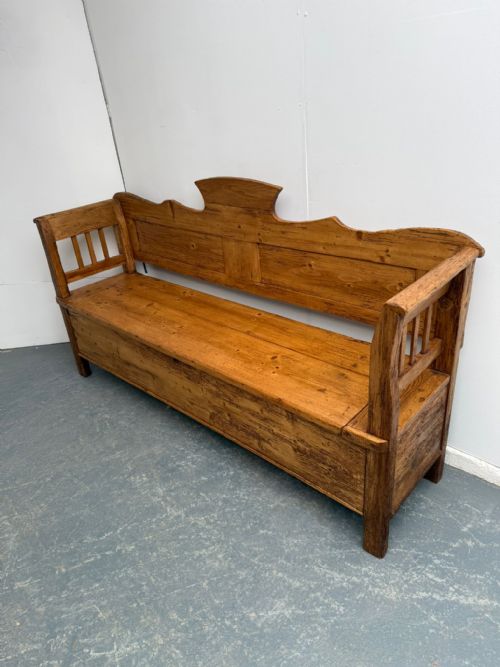
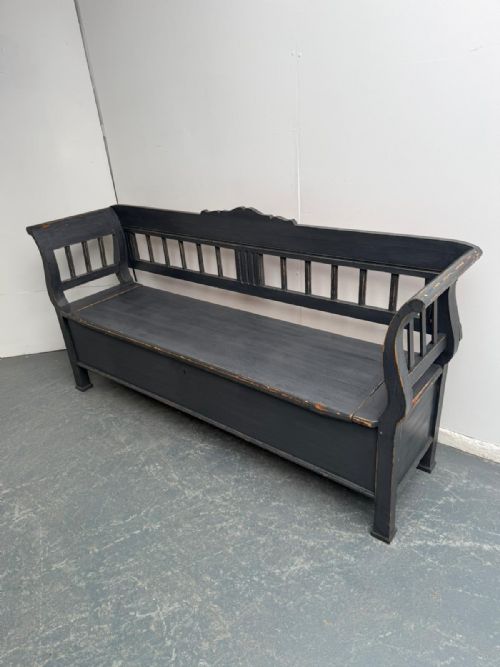
A pine box seat bench combines a traditional seating option with integrated underseat storage, serving functional purposes in hallways, kitchens and living spaces. Buyers searching this phrase encounter substantial seating forms designed to maximise utility while maintaining rustic character.
The pieces appearing on this page span the Georgian, Victorian and nineteenth century periods, reflecting diverse regional aesthetics from British and continental traditions. Most examples emerge as country primitive, folk art or farmhouse styles, incorporating elm components alongside primary pine construction.
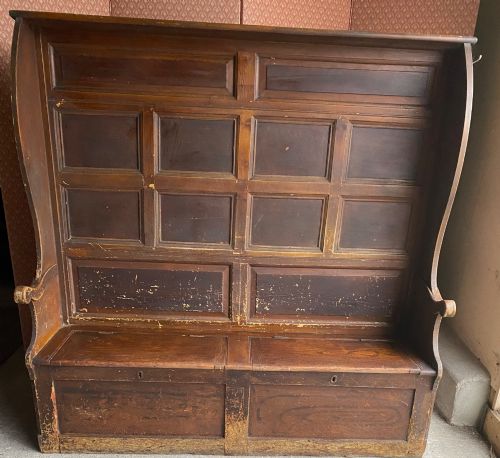
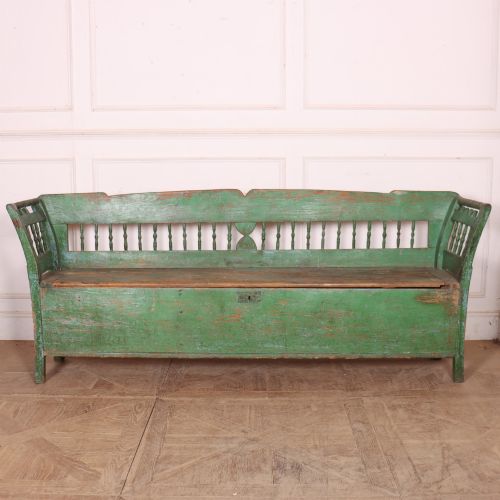
Forms range from two-seater variants to expansive four-seater box settles, frequently featuring lift-up seats that reveal deep compartments. Regional diversity shows in Hungarian folk art pieces, Swedish storage benches and Welsh settle benches with historic painted finishes.
Materials and Construction
Construction relies heavily on solid pine, occasionally combined with elm for structural integrity or seating surfaces, built by regional makers using traditional joinery methods. Many pieces incorporate iron hardware such as hinges and brackets to support the heavy lift-up box seats.
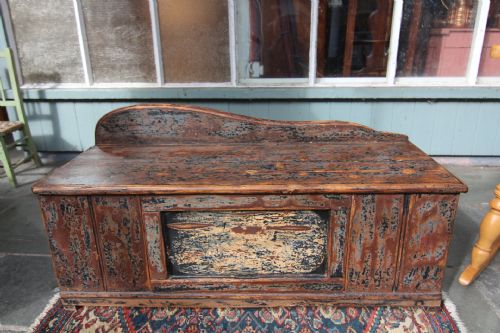
Surface treatments vary widely between natural finishes and historic decorative schemes, utilising wax to nourish the bare timber or traditional paint in polychrome, grey, cream, green and black. These applied finishes often show weathering and patination accumulated over decades of domestic use.
Pine Box Seat Bench Retail Price Guide 2026
Typical asking prices for pine box seat bench among the pieces listed under this phrase on Sellingantiques today, from the lower quarter to the upper quarter. They describe what is for sale here now, not the wider market.
Regional styles include Hungarian folk art, Swedish storage benches and traditional Welsh settle forms.
Assessing Quality and Character
Quality in these seating forms rests upon the integrity of the original timber and the survival of early or untouched surface finishes. Pieces retaining their original paint schemes or rich waxed patina command greater interest than those stripped or overly restored.
Structural proportion and regional detailing differentiate standard utilitarian furniture from exceptional folk art examples. The presence of untouched underseat compartments, robust iron fixings and authentic vernacular joinery elevates the standing of an individual piece.
The Pine Box Seat Bench Glossary
- Box Settle
- A wooden bench featuring a high back, solid armrests and an enclosed storage compartment beneath the lift-up seat. This form provided draught protection in traditional kitchens and halls.
- Folk Art
- Artistic production originating from rural communities, created by self-taught or local craftsmen using traditional methods. Items display regional decorative traits rather than formal academic styles.
- Polychrome
- Painted in several different colours, typically applied to woodwork to create vibrant decorative schemes. This technique appears on specific regional folk pieces.
- Pitch Pine
- A durable resinous softwood derived from pine species, known for its distinct grain pattern and strength. It frequently appears in heavy utilitarian furniture.
- Settle
- A wooden bench with a high back, solid wooden sides and arms designed to keep out cold draughts. The base often incorporates a chest or box for storage.
Pine Box Seat Bench: Frequently Asked Questions
What is a pine box seat bench used for?
These pieces function primarily as hallway or kitchen seating while providing concealed storage beneath the lift-up lid for household items.
Historically, the enclosed base kept boots, blankets or provisions dry and organised in rural homes.
How do I identify the period of a bench?
Dating relies on construction methods, timber characteristics and stylistic cues typical of Georgian or Victorian rural craftsmanship. Hand-cut joinery and historic surface wear offer key insights into age.
Examining the hardware, such as handmade iron hinges, helps confirm the era of manufacture.
Are painted finishes on these benches original?
Many pieces retain historic or original painted finishes, ranging from early grey and cream schemes to vibrant polychrome folk art decorations. Close inspection reveals layers of wear and patination consistent with age.
Untouched painted surfaces often exhibit craquelure and softening that modern repainting cannot replicate.
How should I care for a waxed pine bench?
Maintain waxed surfaces by applying a quality beeswax periodically to nourish the dry pine and preserve the natural sheen. Avoid placing the timber near direct heat sources to prevent warping.
Dust regularly with a soft cloth and wipe up moisture promptly to protect the historic patina.