


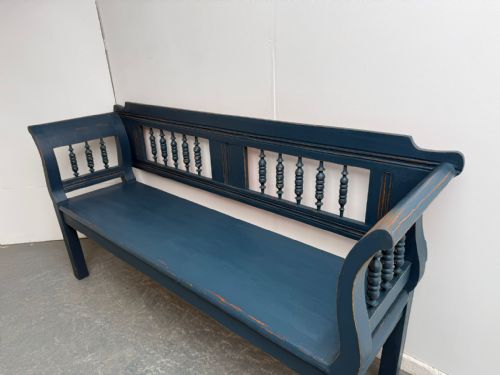

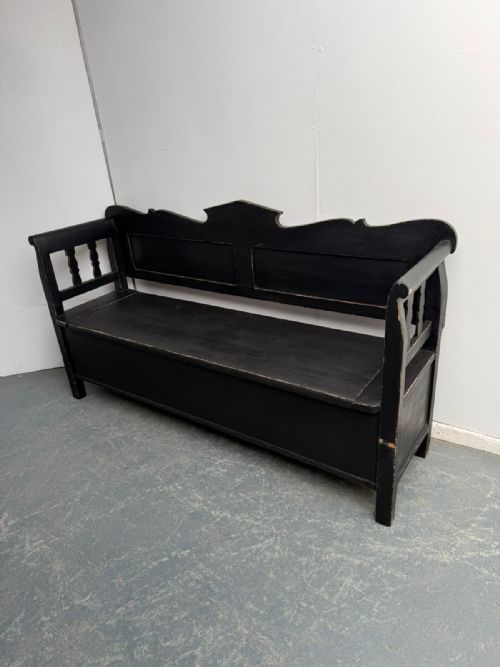


Rustic Painted Hall Bench
A rustic painted hall bench brings immediate character to an entryway, offering practical seating paired with regional folk charm.
Rustic Painted Hall Bench
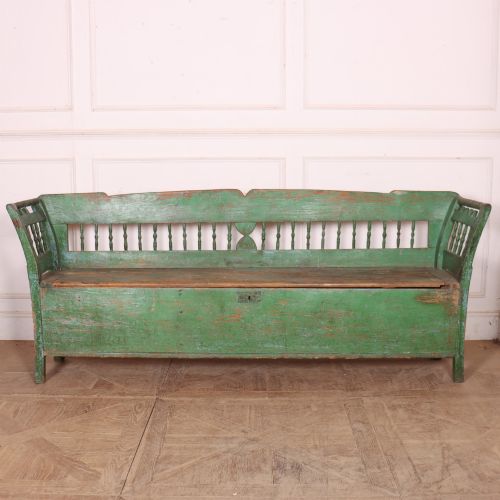
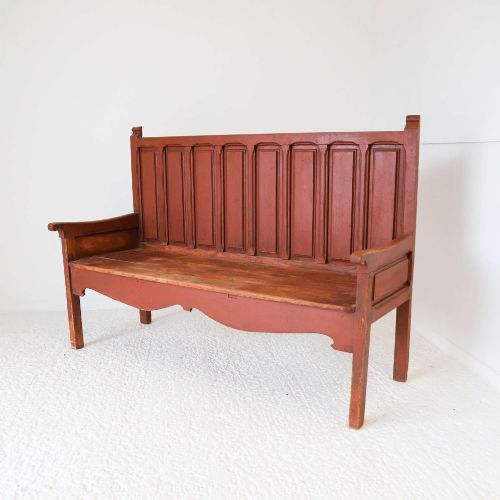
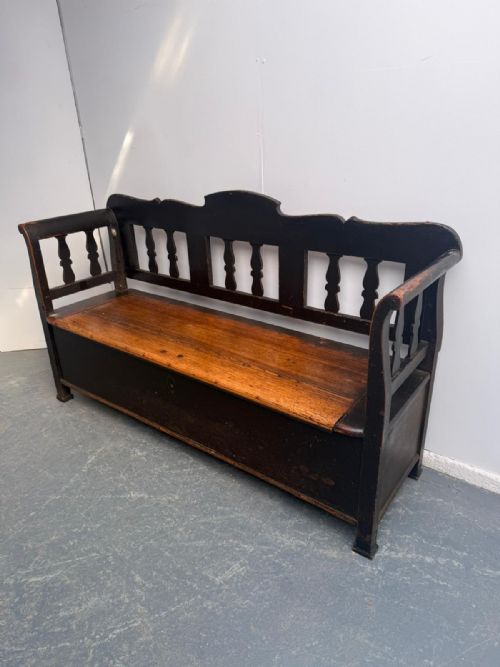
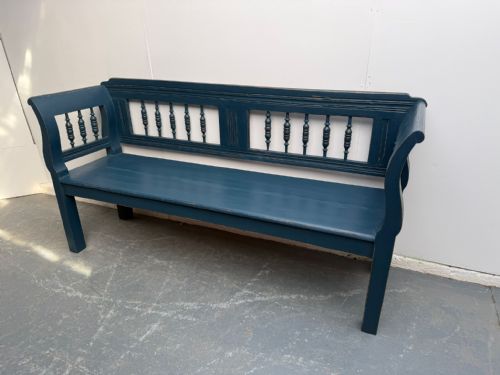
A rustic painted hall bench provides practical entryway seating combined with useful storage or high-backed draught protection. These pieces range from simple open pine forms to enclosed box settles originating across English, Welsh, and European country traditions.
The selections available here lean heavily into 18th century, Georgian, and 19th century periods. You will frequently encounter Hungarian, Austrian, and Swedish examples alongside English tavern benches and Spanish settles.
Forms vary from standard three or four seater benches to tall barrel back settles and box settles with integrated storage. Many retain their original painted surfaces in muted greys, blues, creams, or blacks.
How they were made
Carpenters constructed these utility seating pieces primarily from solid pine and softwood timber, utilising sturdy joined panels to withstand daily domestic use. Iron fixings and hardware frequently reinforce the structural joints of box settles and heavy tavern benches.
Surfaces were finished with traditional paint formulations that have aged and weathered over decades of use. Certain regional pieces incorporate decorative folk art motifs or scumble graining applied over the base pine.
Rustic Painted Hall Bench Retail Price Guide 2026
Typical asking prices for rustic painted hall bench among the pieces listed under this phrase on Sellingantiques today, from the lower quarter to the upper quarter. They describe what is for sale here now, not the wider market.
The listings here feature pine and softwood construction spanning the 18th century through the Victorian era, alongside Georgian and 19th-century periods.
What varies in quality
Quality rests in the survival of original painted surfaces rather than later cosmetic decoration. The integrity of the underlying pine structure and timber thickness dictate the overall durability.
Proportions and regional vernacular details separate standard utility seating from finer examples of folk art. Pieces retaining untouched historical paint layers and original box storage compartments hold greater interest for collectors.
The Rustic Painted Hall Bench Glossary
- Box settle
- A high-backed wooden bench featuring a concealed storage compartment beneath the seat. This design sheltered occupants from cold draughts in historical hallways and kitchens.
- Scumble
- A decorative painting technique where a translucent glaze is dragged or manipulated over a base colour to simulate wood grain or texture. It appears on regional country furniture.
- Barrel back
- A seating form featuring a curved, solid wooden back that wraps around the occupant. This enclosed shape offered maximum protection from cold air in unheated spaces.
- Softwood
- Timber derived from conifer trees, predominantly pine in the context of these country benches. It served as the standard accessible material for regional furniture makers.
- Tavern bench
- A long, sturdy seating form historically produced for public houses and inns. These pieces prioritized robust construction and simple lines to endure heavy public usage.
Rustic Painted Hall Bench: Frequently Asked Questions
Where should I place a painted settle?
These pieces suit narrow hallways, boot rooms, and large kitchens where practical seating and enclosed storage are both required.
The high back provides a defined boundary in open-plan spaces while offering a convenient spot for daily footwear storage.
How do I care for original painted pine?
Dust the surface regularly with a soft, dry cloth and avoid harsh chemical cleaners that can damage fragile historical paint layers.
Keep the timber away from direct heat sources and strong sunlight to prevent the old softwood from drying out or warping.
What is the difference between a bench and a settle?
A standard bench provides open seating without structural armrests or a high enclosed back.
A settle incorporates solid panelled backs and sides designed specifically to block cold draughts in historical domestic interiors.
How do I identify regional country styles?
Regional identity often reveals itself through specific construction methods, timber selection, and traditional folk art paint palettes.
Hungarian and Austrian pieces frequently display distinctive decorative brushwork, while English and Welsh examples rely on simpler utility forms.