





Pierre Jules Mene
Pierre Jules Mene sculptures bring the meticulous realism of nineteenth century French animalier art directly into your interior.
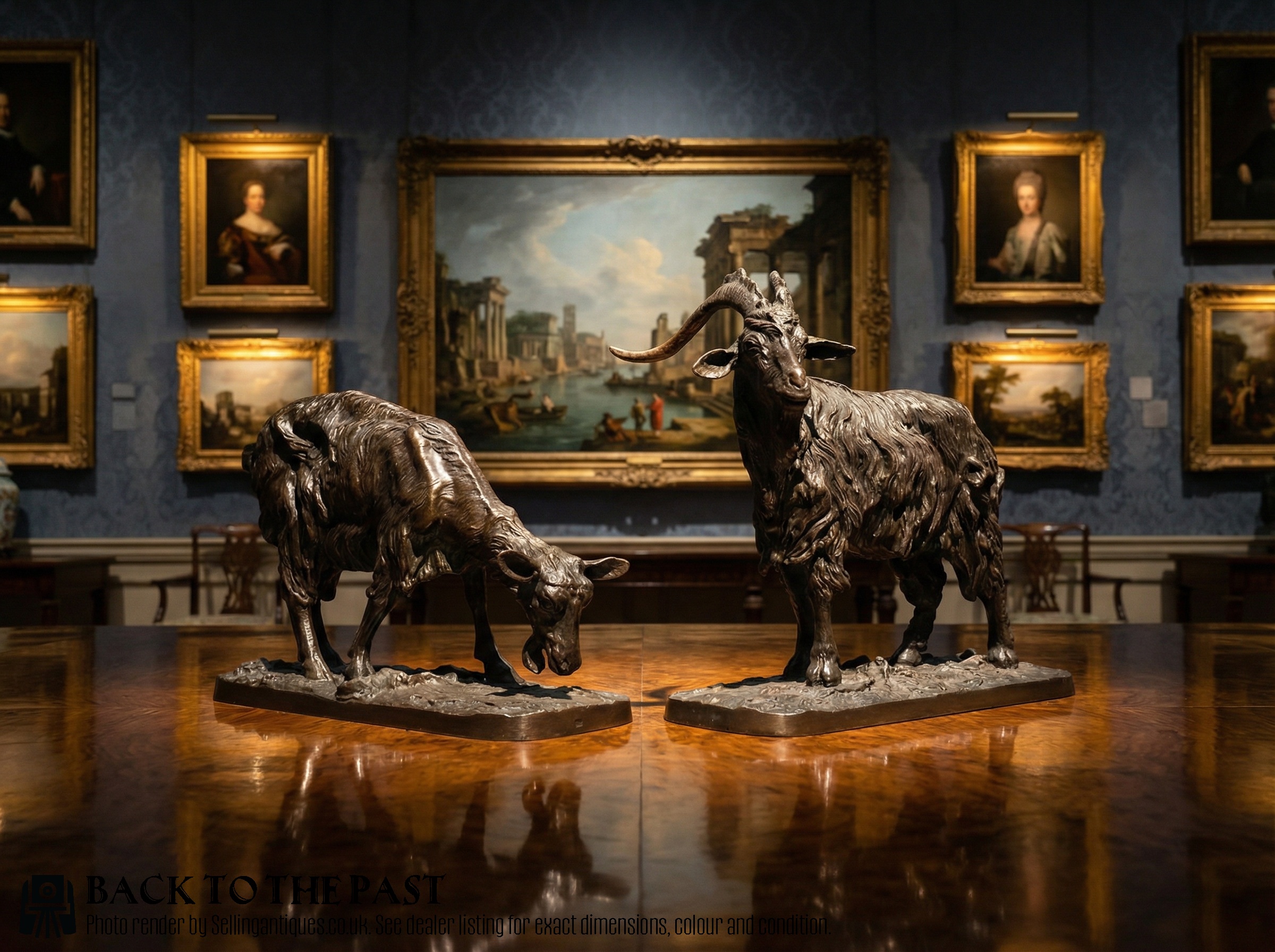
Pierre Jules Mene
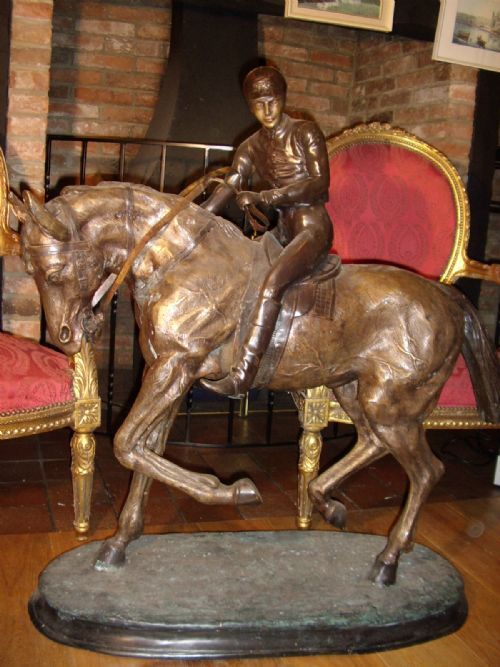
When searching for pierre jules mene, buyers encounter nineteenth century bronze sculptures depicting animals, sporting subjects, and the French Animalier school. The pieces range from intimate studies of dogs and birds to larger groups of horses, stags, and hounds.
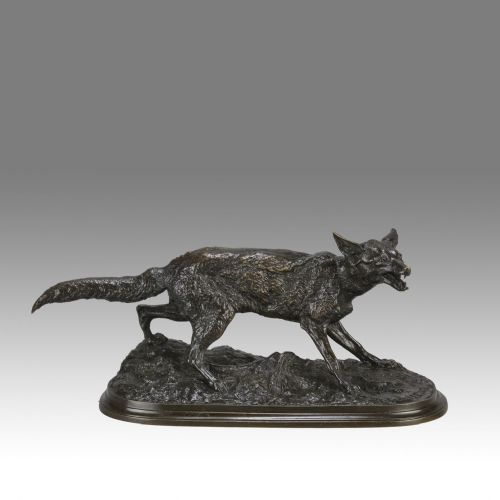
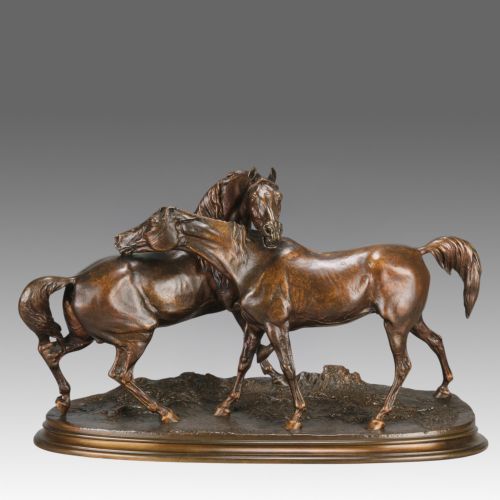
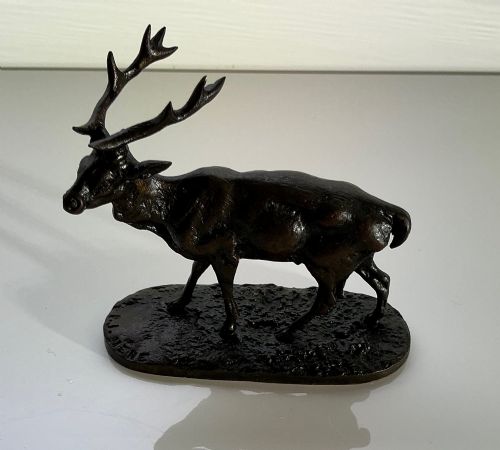
Most examples originate from the nineteenth century, including works produced during the lifetime of the artist as well as later nineteenth century casts and subsequent editions. The forms vary from single figures like the Standing Stag or Reynard to pairs of bookends and complex groups such as L'Accolade.
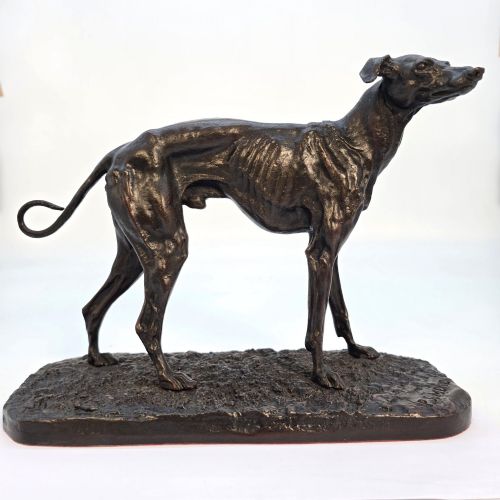
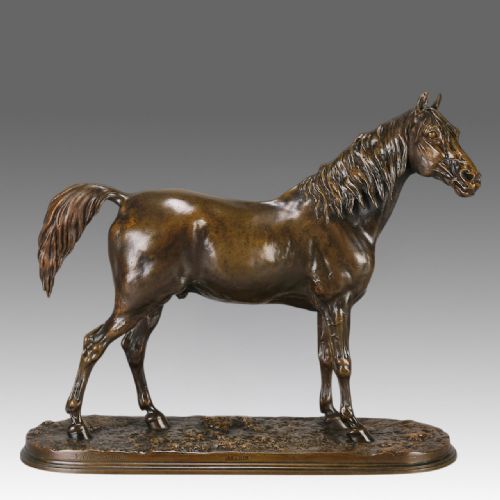
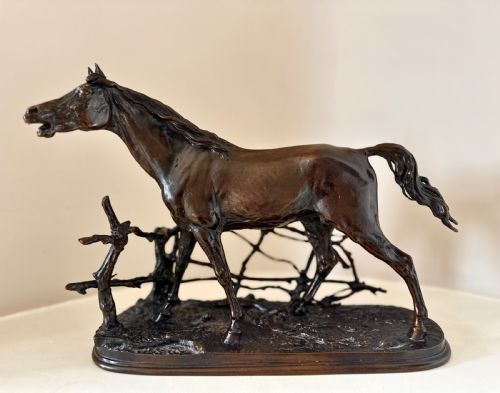
The dominant aesthetic is firmly rooted in the French Animalier tradition, capturing precise anatomical detail and lifelike movement in subjects like the Arab falconer, sighthound, and various game birds. These works reflect the period fascination with naturalism and sporting life.
Distinctions in sculpture quality
Quality separates through the crispness of the chasing and the fidelity of the cast to the original model. Finer examples retain sharp definition in the musculature of horses and the fine texture of canine coats, whereas lesser casts lose these nuances in softer lines.
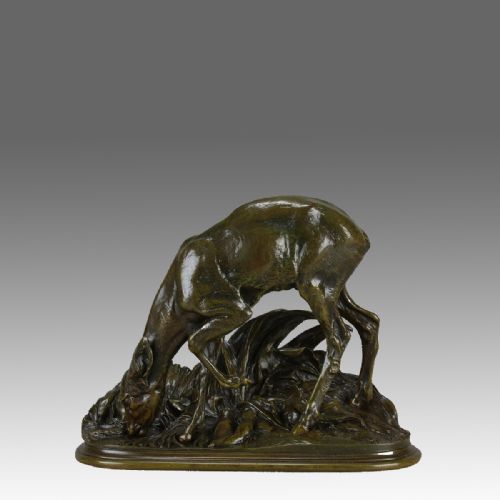
The depth and subtlety of the patination also dictate the visual success of a piece. A well-applied dark patina enhances the sculptural form and highlights the anatomical precision characteristic of the French Animalier school, while flat or uniform colouring diminishes the perceived depth of the work.
Greyhounds and whippets appear repeatedly in these bronze studies, seemingly frozen mid-play after a long afternoon chasing imaginary hares.
Pierre Jules Mene
The Pierre Jules Mene Glossary
- Animalier
- A nineteenth century artistic movement focused on the realistic depiction of animals, particularly in sculpture. Practitioners of this style closely observed wildlife and domestic beasts in motion.
- Patinated bronze
- Bronze sculpture treated with chemical solutions to produce a specific surface colour or dark tone. This process protects the metal and defines the sculptural contours.
- Chasing
- The finishing process where a metalworker refines the surface of a raw bronze cast using chisels and punches. This step restores detail lost during the casting process.
- Foundry mark
- An stamp or inscription applied by the casting workshop to identify the maker or producer of the bronze. These marks assist in establishing the origin of the piece.
Pierre Jules Mene: Frequently Asked Questions
What is an animalier bronze sculpture?
An animalier bronze sculpture represents animals in realistic poses, capturing the natural anatomy and behaviour of wildlife or domestic pets. These works became popular during the nineteenth century in France.
Artists focused closely on subjects like horses, dogs, and stags, rendering them with high levels of physical accuracy and expressive detail.
How do I identify a period cast?
Period casts from the nineteenth century generally exhibit crisp detail in the fur, feathers, and musculature. The quality of the chasing work and the depth of the patination help distinguish earlier editions.
Signatures or foundry inscriptions on the bronze base also provide clues to the production era and origin of the sculpture.
Where should I display these sculptures?
These bronzes suit tabletops, mantelpieces, and dedicated display cabinets where their detailed modelling can be appreciated from multiple angles. Pairing them with stable wooden or stone surfaces ensures safe placement.
Keeping them away from direct heat sources helps preserve the condition of the patinated bronze and any associated marble bases.
Are these pieces signed by the artist?
Many examples feature the signature of Pierre Jules Mene cast directly into the bronze base or incorporated into the naturalistic groundwork. These signatures confirm the connection to the original models.
Some later editions or pieces created after his models may also bear comparable signatures or foundry stamps.