


Pierced Wood Wall Frame
A pierced wood wall frame brings intricate fret-cut detail and reflective depth to an interior, offering a masterclass in period craftsmanship.
Pierced Wood Wall Frame
A pierced wood wall frame primarily manifests as a decorative mirror or occasionally a textile display, designed to hang upon a wall. When searching for a pierced wood wall frame, buyers encounter pieces that rely heavily on openwork fret-cut patterns for their visual impact.
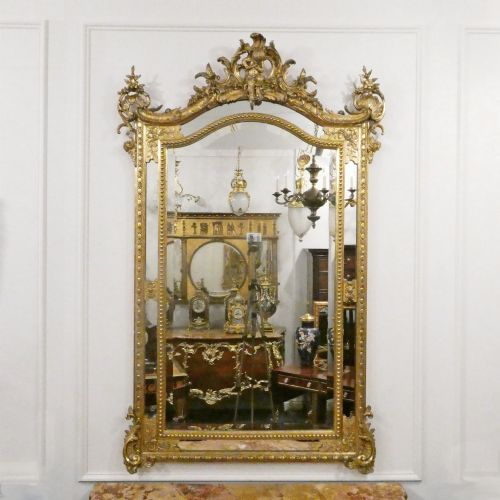
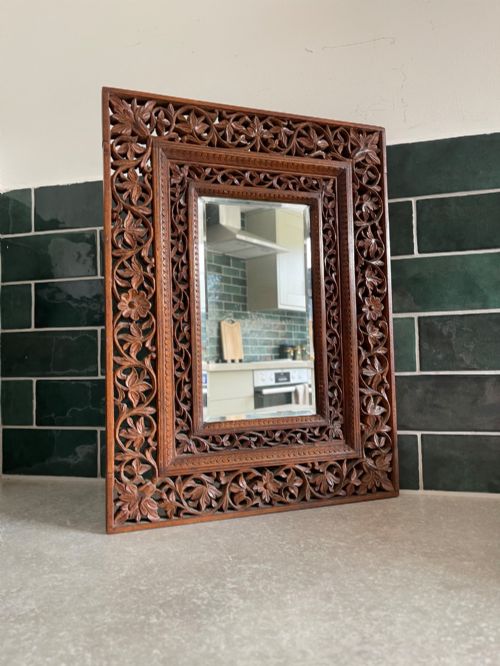
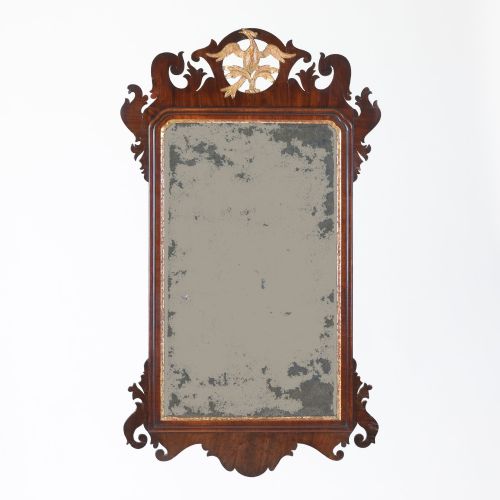
The selections range across distinct regional and historical idioms, including Georgian fret-cut mirrors, Anglo-Indian hardwood carvings, and ornate Italian Florentine giltwood examples. Among these, carved mahogany and giltwood pieces reflecting Georgian and Rococo styles appear with notable frequency.
Makers utilised various supporting elements such as mirror glass, brass inlay, and needlework panels to complete these wall-mounted objects. The resulting variety spans the 18th century, the 19th century, and into the early 20th century.
How they were made
Artisans constructed these frames using timber such as mahogany, oak, hardwood, and gessoed bases that accepted intricate hand-carving and piercing. Piercing required meticulous jigsaw or fretsaw work to create open lattice designs and delicate edge profiles.
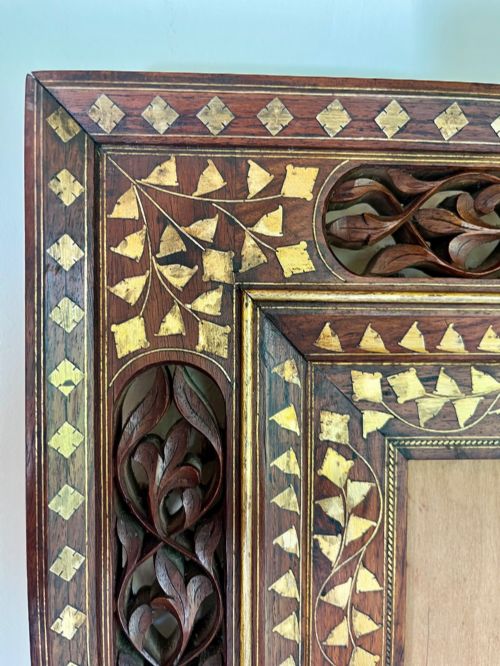
Many frames received surface treatments involving gold leaf or plain gilding over gesso, while others displayed the natural grain of bleached or polished timber. Anglo-Indian and Kashmiri workshops incorporated contrasting brass inlay directly into the wooden structure.
Several Georgian mirrors feature a carved Ho-ho bird perched atop the fretwork, watching over the room with wooden amusement.
What varies in quality
The sharpness and depth of the hand-carved fretwork distinguish superior examples from simpler productions, particularly where delicate scrolls and bird motifs are involved. Crisp lines in the pierced wooden edges demonstrate the carver's precision.
The quality of the gilding and the preservation of original gold leaf or mirror glass significantly influence the character of giltwood and Florentine frames. Consistency in the timber selection and the integrity of the joined frame corners also indicate higher standards of workshop construction.
The Pierced Wood Wall Frame Glossary
- Fret-cut
- Woodwork pierced with decorative patterns using a fretsaw. This technique creates lightweight, ornamental openwork borders.
- Giltwood
- Timber coated with gold leaf or metallic paint over a preparation layer. It provides a reflective, opulent surface often seen in Georgian and Rococo frames.
- Gesso
- A plaster-like mixture applied to wood surfaces to create a smooth base for carving and gilding. It allows for crisp relief details.
- Anglo-Indian
- Describing objects made in India during the British period, often combining local wood-carving traditions with European furniture forms.
- Florentine frame
- An ornate carved wooden frame originating from Florence, typically featuring lavish surface decoration and deep profiles.
Pierced Wood Wall Frame: Frequently Asked Questions
What is a pierced wood wall frame?
A pierced wood wall frame is a decorative wall-hanging object, usually a mirror, featuring intricate openwork carved from timber. These frames utilise fret-cut techniques to produce light, ornamental patterns around a central glass plate or picture.
Originating across various periods from the eighteenth century onwards, they serve both functional and purely aesthetic roles in interior decoration.
How do I hang a heavy carved wooden frame safely?
Heavy carved wooden frames require secure wall fixings suited to the specific weight and wall construction of the room. Using appropriate wall plugs and heavy-duty picture wire or brackets attached directly to the frame structure ensures safety.
Positioning the frame at eye level helps distribute visual weight evenly across the wall space.
Where should I place a decorative wall mirror?
Placing a decorative wall mirror opposite a window allows it to reflect natural light and brighten darker corners of a room. They also function effectively above mantlepieces, consoles, or in hallways as a focal point.
Keeping the surrounding wall space uncluttered lets the intricate woodwork and piercing stand out.
How do I care for antique giltwood and carved wood?
Antique giltwood and carved wood require gentle dusting with a soft, dry brush to prevent debris settling in the carved recesses. Avoiding moisture and direct sunlight protects the delicate gold leaf and timber from deterioration.
Chemical cleaners must be avoided entirely to preserve the original surface patina.