


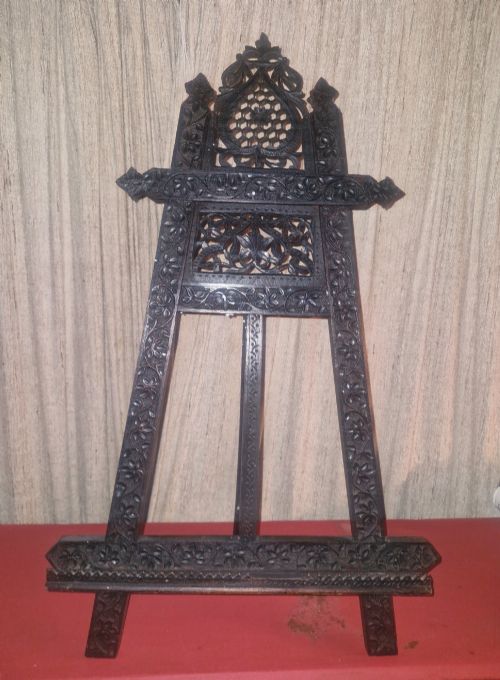
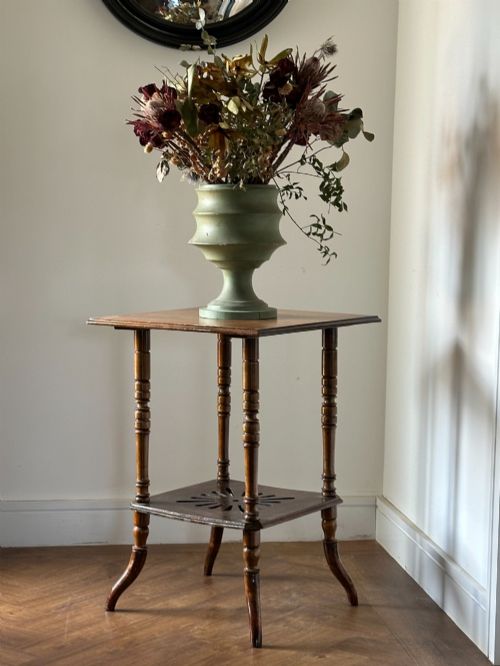
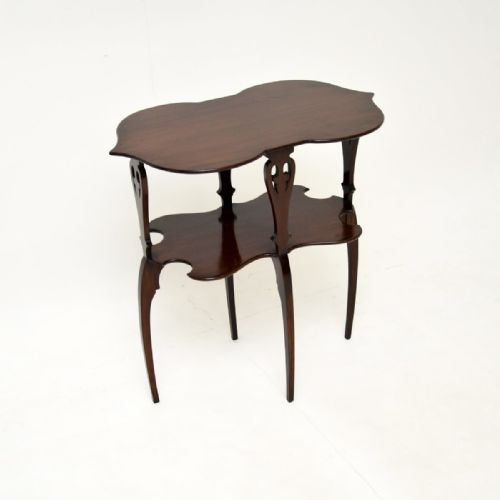
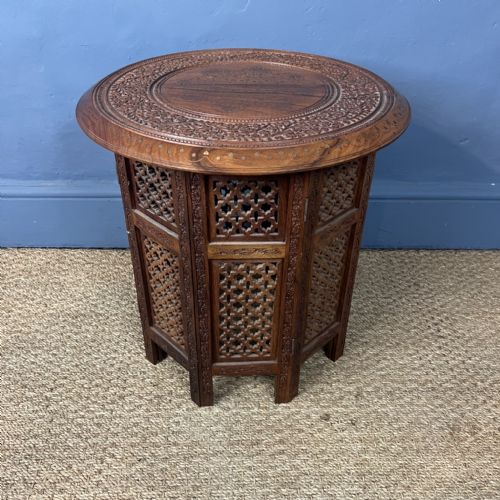
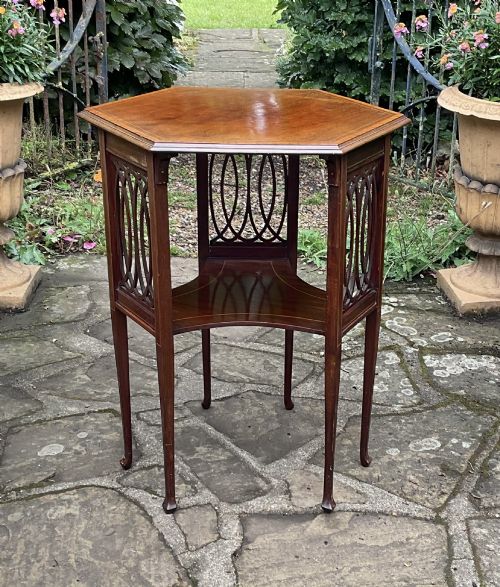
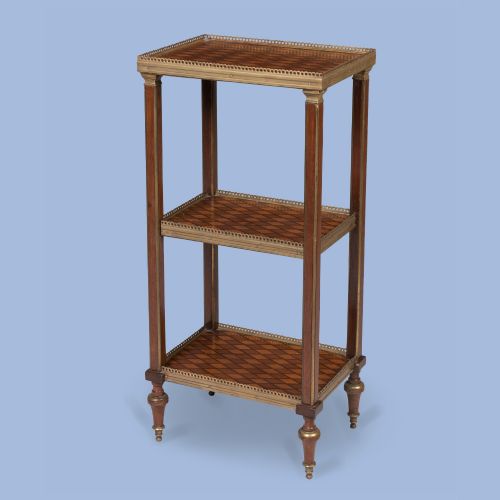
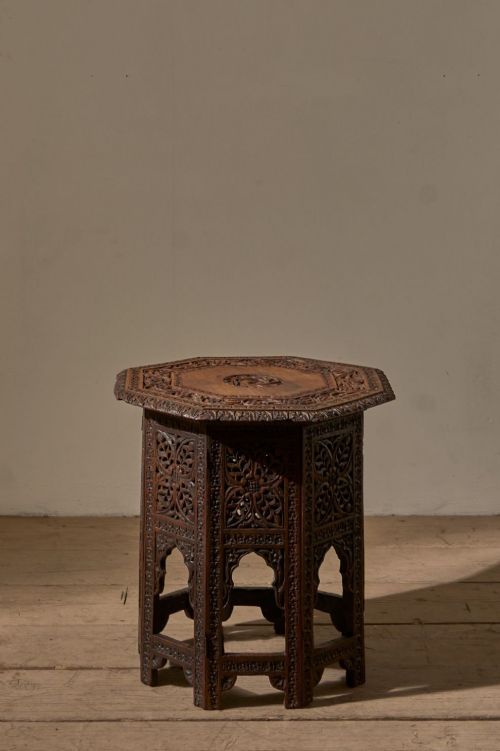


Pierced Wood Stand
A pierced wood stand brings intricate craftsmanship to a room, holding everything from vessels to books.
Pierced Wood Stand
A pierced wood stand serves primarily as a decorative or functional support for objects, taking forms such as vase stands, plant pedestals, and occasional tables. These pieces emerge predominantly from nineteenth-century Victorian and Edwardian periods, alongside traditional Asian workshops.
Buyers seeking a pierced wood stand encounter a diverse selection originating from Anglo-Indian, Chinese, and British makers. Common configurations include small side tables, folding campaign furniture, and low display bases designed to elevate prized ornaments.
Materials and construction
Craftsmen built these supports using dense timbers such as teak, mahogany, padouk, rosewood, and general hardwoods capable of holding delicate openwork patterns. Pierced decoration requires meticulous hand-carving or fretsawing through the timber to create light, intricate lattices.
Many examples incorporate contrasting materials, combining carved woodwork with brass inlay, copper tops, or silk panels. Joinery often includes folding mechanisms for portability or sturdy pegged construction suited to heavy table tops and display shelves.
Listings feature teak, mahogany, padouk, rosewood, and walnut across nineteenth-century and early twentieth-century periods.
Judging quality in pierced woodwork
Quality rests upon the crispness of the openwork carving and the depth of the relief work. Superior pieces display smooth, undercut pierced designs with no splintering in the timber grain.
The selection of timber dictates the overall durability and visual weight of the stand. Dense hardwoods like padouk and rosewood retain sharper carved edges over generations compared to softer woods.
The Pierced Wood Stand Glossary
- Pierced work
- Wood or metal pierced right through by carving or sawing to create a patterned opening. This technique lightens the visual weight of heavy furniture.
- Padouk
- A heavy tropical hardwood with a reddish hue used frequently in colonial and Asian furniture. It polishes to a fine finish.
- Canterbury
- A low stand featuring partitions for holding sheet music or books. Some versions incorporate pierced scroll divisions.
- Jardiniere stand
- A pedestal or table designed specifically to hold a plant pot or flower bowl. These often feature raised edges and sturdy tops.
- Occasional table
- A small, movable table used for subsidiary purposes in a room. They appear frequently in folding and fixed formats.
Pierced Wood Stand: Frequently Asked Questions
Where should I place a pierced wood stand?
These stands suit corners, beside seating, or in entryways where their detailed woodwork remains visible.
Position them away from direct heat sources to protect the carved timber from splitting.
How do I clean carved wood stands?
Dust the intricate pierced sections regularly using a soft-bristled brush to prevent dirt accumulation.
Apply occasional natural wax and buff gently with a cloth, avoiding heavy liquid polishes.
Are these stands structurally strong?
Most pieces handle everyday items like lamps, books, and small plants securely.
Foldable versions require careful handling around hinges and joints to maintain stability.
How do I identify the wood type?
Examine the grain pattern, weight, and natural colour beneath any applied finish.
Teak and mahogany exhibit distinct reddish or golden brown tones with notable density.