
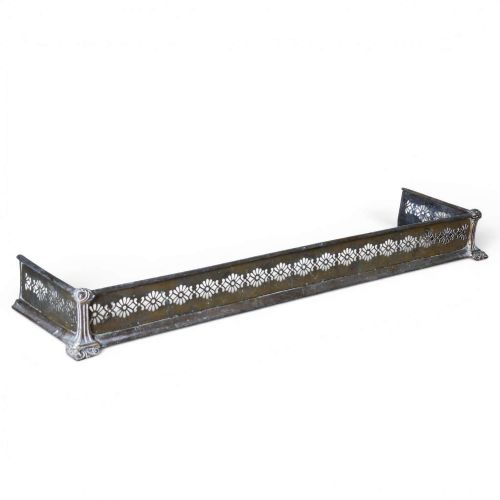
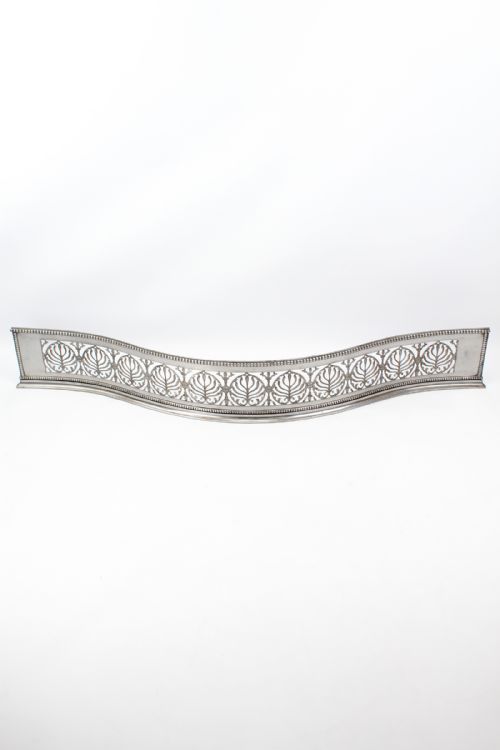


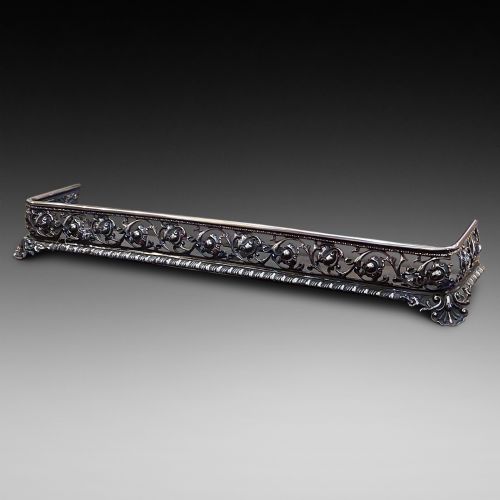
Pierced Steel Fire Fender
These pieces of pierced steel fire fender are functional hearth guards that protect carpets from embers while bringing fine metalwork into a room.
Pierced Steel Fire Fender
A pierced steel fire fender forms the protective boundary around a hearth, keeping stray coals contained while framing the fireplace itself. These items appear in forms ranging from straightforward geometric pierced guards to elaborate serpentine shapes designed for grander rooms.
The selection on this page centres on examples from the Georgian and Victorian periods, alongside items from around 1750, 1800, 1850, and the nineteenth century. Buyers encounter styles spanning Georgian, Victorian, Art Nouveau, and Regency designs.
Most items combine steel with brass or iron details, creating contrast around the hearth floor. Forms include hearth fenders, curb fenders, and fireplace accessories built to sit directly on the floor.
How they were made
Makers shaped sheet steel and iron by hand, cutting intricate pierced patterns through the metal to let firelight through and soften the heavy weight of the guard. Brass mounts, mouldings, and decorative feet were often attached to the steel bodies.
Surfaces were finished with polished steel or black metal treatments, while decorative elements incorporated floral motifs, dragons, and serpentine curves. Smithing techniques of the eighteenth and nineteenth centuries ensured the heavy metal frames remained rigid near the heat of the fire.
Listings feature steel, brass, and iron materials across Georgian, Victorian, and Regency styles.
What varies in quality
Quality rests in the crispness of the pierced metalwork and the precision of the serpentine or straight angles. Fenders with deeply carved or cleanly punched patterns display a higher grade of craftsmanship than simpler, coarser plates.
The integration of brass and polished steel elements shifts the visual balance of a piece. Strong construction that maintains its shape across wider spans distinguishes superior examples from heavier, less refined ironwork.
The Pierced Steel Fire Fender Glossary
- Fender
- A low metal guard placed around a hearth to keep burning coals from rolling onto the floor. They are typically made of steel, iron, or brass.
- Serpentine
- A curved shape that undulates outward and inward in a gentle wave. This outline was popular on Georgian fireplace fenders to soften rigid hearth angles.
- Curb
- The outer frame or border of a hearth fender that defines its perimeter. It rests directly on the floorboards or stone surround.
- Pierced
- Metalwork perforated with decorative holes or slotted patterns. This technique lightens the visual weight of heavy steel fire guards.
Pierced Steel Fire Fender: Frequently Asked Questions
How do I measure for a fire fender?
Measure the width and depth of the hearth space where the guard will rest, leaving a small clearance for the sides. Check that the opening accommodates the specific serpentine or straight front profile.
Take into account the floor type and whether the fender needs to sit entirely on stone or overlap surrounding flooring.
Can these fenders be used with modern fires?
These metal guards fit around working fireplaces, gas grates, and decorative hearths alike. Steel and iron handle standard room temperatures near active fires without issue.
Ensure the dimensions match the clearance requirements of the specific hearth installation in the room.
How do I care for polished steel?
Keep the metal dry and dust it regularly with a soft cloth to prevent surface moisture accumulation. Avoid abrasive cleaners that can strip historic finishes or protective coatings.
Light applications of suitable metal preservatives help maintain the polished surface over years of domestic use.
How do I tell a Georgian fender from a Victorian one?
Georgian examples often feature restrained serpentine lines and precise piercing, reflecting neoclassical or earlier design traditions. Victorian and later pieces frequently introduce mixed metals, bolder brass mounts, and varied stylistic influences like Art Nouveau.
Examining the construction methods and the style of decoration helps clarify the period of manufacture.